How to Paraphrase Without Plagiarising: A Simple 4-Step Method (UK)

Paraphrasing sounds simple: put a source into your own words. In practice, it is one of the easiest places to slip into accidental plagiarism, because changing a few words here and there feels like rewriting when it is not. Knowing how to paraphrase properly protects your marks, keeps your similarity score honest, and, more importantly, shows you genuinely understand the material. This guide gives you a reliable four-step method, clear examples, and the one rule most students forget.

The reassuring news is that good paraphrasing is a skill, not a talent. Once you follow a deliberate process rather than editing the original sentence in place, it becomes second nature, and your writing improves as a side effect.

Paraphrasing vs quoting vs summarising

These three are often confused, so it helps to separate them. Quoting reproduces an author’s exact words inside quotation marks, with a citation and usually a page number. Paraphrasing restates a specific passage fully in your own words and structure, with a citation but no quotation marks. Summarising condenses a larger chunk of material, such as a whole article, into a brief overview of its main points, again in your own words and cited.

Most of your academic writing should be paraphrase, with the occasional quote reserved for wording that is precise, memorable or contested. Relying too heavily on quotes can read as padding and suggests you are letting sources speak for you instead of demonstrating your own understanding. Paraphrasing, done well, is the stronger and more academic default.

The thread running through all three is attribution. Whether you quote, paraphrase or summarise, you credit the source. That principle is the foundation of everything that follows.

The 4-step paraphrasing method

The mistake most students make is editing the original sentence directly, nudging words around until it “looks different”. That almost always produces patchwriting, which keeps the original structure and counts as plagiarism. The four-step method avoids this by separating you from the source while you write.

1: Understand

Read the passage until you genuinely understand the idea, not just the words. If you cannot explain it to a friend in a sentence, you are not ready to paraphrase it. Understanding first is what allows you to express the idea in a truly new way rather than rearranging someone else’s phrasing.

2: Rewrite from memory

Close the source, or look away from it, and write the idea in your own words as if explaining it to someone. This single habit is the heart of the method. Because you are not looking at the original, you naturally use your own vocabulary and sentence structure rather than mirroring theirs.

3: Compare

Now reopen the source and compare. Check two things: that your version is accurate and has not distorted the meaning, and that it is genuinely different in wording and structure, not just synonym-swapped. If whole phrases still match, rework them. This is also the moment to catch any unintentional copying.

4: Cite

Add the citation. This is the step students most often forget, and it is the one that matters most. A paraphrase in your own words still presents someone else’s idea, so it must be credited. Our UK referencing styles explained guide shows exactly how to format the citation in your required style.

What ‘patchwriting’ is and why it’s risky

Patchwriting, sometimes called mosaic plagiarism, is the halfway state where you take the original sentence and swap a few words for synonyms while keeping the same structure. It feels like paraphrasing, but it is not, because the underlying expression is still the author’s. Markers spot it easily because the rhythm and structure of the original survive, and text-matching software often flags it too.

Here is why the four-step method beats it: when you rewrite from memory, you cannot patchwrite, because you do not have the original sentence in front of you to edit. Patchwriting only happens when you keep one eye on the source. Remove the source from view, and the problem largely disappears.

If you want the security of original, properly cited work to learn from, our custom writing service produces model assignments written from scratch, so you can study how ideas are paraphrased and attributed correctly throughout.

Worked paraphrasing examples

Examples make the difference obvious. Take this original sentence: “Regular physical activity has been shown to reduce the risk of cardiovascular disease and improve mental wellbeing.”

A patchwritten, unacceptable version: “Frequent physical exercise has been demonstrated to lower the danger of heart disease and enhance mental health.” Notice the structure is identical; only individual words have been swapped. This would be flagged.

A proper paraphrase: “Exercising consistently appears to protect against heart problems while also supporting better mental health (Author, Year).” The structure is different, the idea is intact, and crucially it is cited. That is the standard to aim for.

A second example. Original: “The study found that students who used active recall performed better in exams than those who relied on rereading.” Proper paraphrase: “According to Author (Year), revising through active recall led to stronger exam results than simply rereading notes did.” Again, the idea is preserved, the wording and order are genuinely changed, and the source is credited.

Do you still cite a paraphrase? (Yes)

This deserves its own section because it is the single most common misunderstanding. Yes, you must always cite a paraphrase. Putting an idea fully in your own words changes the expression, not the ownership. The idea, finding or argument still belongs to its original author, and presenting it without credit is plagiarism, even if not a single word matches.

A simple rule of thumb: if you did not know it before you read the source, cite it. The only exception is genuine common knowledge, such as widely known facts that any reader would accept without a reference. When in doubt, cite. Over-citing is a minor stylistic issue; under-citing is academic misconduct. Our guide on how to avoid plagiarism at university explains how this fits into the wider picture of originality.

What about AI paraphrasing tools?

You will see plenty of tools that promise to paraphrase for you. Be cautious. Many produce awkward or subtly inaccurate text, and relying on them means you skip the understanding step that paraphrasing is supposed to demonstrate. More importantly, submitting machine-reworded text as your own can breach university rules, a topic we cover in our discussion of whether Turnitin can detect ChatGPT. The four-step method is slower than clicking a button, but it builds a skill that a tool cannot give you and keeps you firmly on the right side of academic integrity.

When you should quote instead of paraphrase

Although paraphrase should be your default, there are moments when a direct quote is the better choice. Quote when the exact wording carries legal or technical weight, such as a precise definition, a statutory phrase or a contested term where any rewording would change the meaning. Quote when an author’s phrasing is so distinctive or authoritative that restating it would weaken your point. And quote when you intend to analyse the language itself, as you often do in literature, law or close textual analysis.

Outside those situations, paraphrase. A useful self-check is to ask whether the value lies in the idea or in the specific words. If it is the idea, paraphrase; if it is genuinely the words, quote and keep the quotation short. Even then, integrate the quote into your own sentence and follow it with your interpretation, so the analysis remains yours rather than the source’s.

Build paraphrasing into how you read

The students who paraphrase well rarely do it as a separate task at the writing stage. They build it into how they take notes. Instead of copying sentences from a source into their notes to “use later”, they write notes in their own words from the outset, capturing the idea rather than the phrasing. This small change removes the single biggest cause of accidental plagiarism, which is copied text sitting in your notes and quietly migrating into your draft.

Pair this with recording the full source details next to every note, and the four-step method becomes almost automatic by the time you write. You will already understand the idea, you will already have it in your own words, and you will already have what you need to cite. Good paraphrasing, in other words, starts long before you open your document, and treating it as a reading habit rather than a last-minute fix is what makes it reliable.

Conclusion

Knowing how to paraphrase without plagiarising comes down to a deliberate process: understand the idea, rewrite it from memory, compare for accuracy and originality, and always cite. Avoid the trap of editing the original sentence in place, which produces patchwriting, and remember that a paraphrase in your own words still needs a reference. Master this, and you will write more confidently and far more safely.

If you would like original, correctly referenced work to model your own writing on, the team at AssignmentFix can help through our professional assignment writing service. Every piece is written from scratch with sources properly paraphrased and attributed, giving you a trustworthy example to learn from.

How to Write a Nursing Assignment in the UK: Evidence, Reflection and the NMC Code

Nursing assignments are unlike most others. You are not only being assessed as a student but trained as a future professional, which means your writing must combine academic rigour with clinical relevance and the standards of your profession. Learning how to write a nursing assignment well means mastering evidence-based practice, careful referencing, reflective writing and patient confidentiality, all at once. This guide brings those threads together so you can approach your next assignment with confidence.

Nursing students are often juggling demanding placements alongside study, so time is tight. The good news is that nursing assignments reward a clear, methodical approach, and once you understand what markers are looking for, the writing becomes more manageable.

What makes nursing assignments different

The defining feature of nursing writing is that it must connect theory to practice. A purely theoretical essay that never touches clinical application will struggle, as will a description of practice with no theoretical or evidence base. Markers want to see that you can apply knowledge to patient care, and that your decisions are grounded in evidence rather than habit or assumption.

There is also a professional dimension that other subjects lack. Your writing is expected to reflect the values and standards of the nursing profession, including accountability, compassion and respect for patients. This is why nursing assignments so often blend formats, combining academic argument, reflection on practice, and adherence to professional codes within a single piece. Understanding this blend is the first step to writing well.

Evidence-based practice in your writing

Evidence-based practice sits at the heart of modern nursing, and it should sit at the heart of your assignments too. In practical terms, this means supporting your points with current, high-quality evidence, ideally recent peer-reviewed research, clinical guidelines and systematic reviews, rather than opinion or outdated sources.

When you make a claim about care, ask yourself what evidence supports it and how strong that evidence is. A strong nursing assignment does not just cite a source; it considers the quality of that source and how it applies to the specific patient or context. This critical appraisal is exactly the analytical skill that distinguishes higher grades, and it draws on the same source-evaluation approach as our guide on how to write a literature review. Prioritise recent evidence where you can, because clinical knowledge evolves and an outdated reference can undermine an otherwise sound argument.

Referencing and the importance of accuracy

Nursing courses typically use Harvard or APA referencing, and accuracy matters more here than almost anywhere, because in clinical practice, tracing the source of guidance can be a patient-safety issue. Sloppy referencing in an assignment signals a habit that has no place in healthcare. Cite every claim drawn from a source, format consistently, and keep meticulous records as you research.

If referencing is something you find fiddly, our UK referencing styles explained guide covers Harvard and APA in detail. Getting this right also protects you from accidental plagiarism, which universities treat seriously regardless of intent. For nursing students especially, precise attribution is part of professional discipline, not just an academic formality.

If you are balancing placements with deadlines and would value subject-aware support, our university assignment help service works with students across healthcare subjects to strengthen their academic writing while keeping it genuinely their own.

Reflective writing and clinical experience

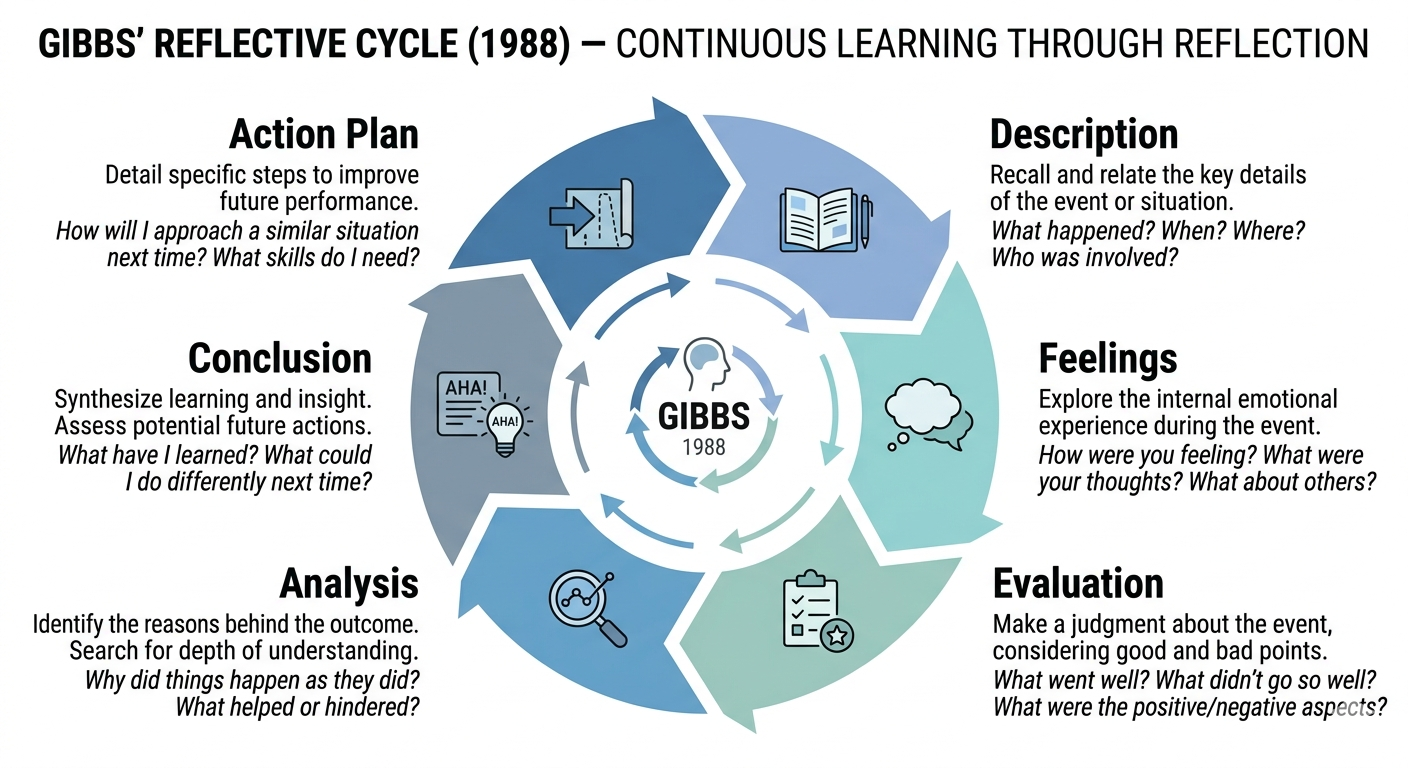
Reflection is woven through nursing education because learning from practice is central to becoming a safe, effective nurse. Many assignments ask you to reflect on a clinical experience using a structured model, and Gibbs’ Reflective Cycle is among the most widely used. It carries you from describing an experience through analysing it to planning how you will act differently in future.

The key to strong reflective writing in nursing is to link your experience to evidence and professional standards, not just to recount what happened or how you felt. A reflection that connects a clinical moment to evidence-based practice and to your professional responsibilities demonstrates exactly the kind of thinking your course is developing. Our dedicated guide on reflective writing and Gibbs’ Reflective Cycle walks through the model stage by stage with a healthcare example.

Patient confidentiality and anonymisation

This is a non-negotiable feature of nursing assignments, and getting it wrong is a serious professional matter. Whenever you write about a real patient, placement or colleague, you must protect their identity. That means never using real names and removing or changing any details that could identify an individual, such as specific locations, dates or unusual circumstances.

The standard approach is to use a pseudonym and to state that you have done so to maintain confidentiality, often with a brief note that this is in line with professional requirements. Confidentiality is a core duty in nursing, set out in the professional code that governs the profession, and your assignment is treated as an extension of that duty. When in doubt, anonymise more rather than less; protecting a patient’s privacy always takes priority over the richness of your example.

Meeting NMC expectations

The Nursing and Midwifery Council sets the professional standards for nurses in the UK through its Code, which covers prioritising people, practising effectively, preserving safety and promoting professionalism and trust. Your assignments are part of how your fitness to practise is developed and assessed, so they are expected to reflect these standards.

In practice, this means writing that demonstrates patient-centred thinking, evidence-based decision-making, and an understanding of accountability and professional boundaries. Referencing the principles of the Code where relevant, and showing that your reasoning aligns with them, signals professional awareness to your markers. The NMC Code is publicly available, and reading it closely is worthwhile, because its themes recur throughout your assignments and your future career. Treating it as a live reference rather than a box to tick is one of the marks of a strong nursing student.

Bringing it all together

A strong nursing assignment, then, is one that applies current evidence to practice, references it accurately, reflects critically on clinical experience, protects patient confidentiality without exception, and aligns with NMC standards throughout. None of these is especially difficult on its own; the skill is combining them in a single coherent piece. Planning your assignment around these elements from the outset, rather than bolting them on at the end, is what produces work that feels professional as well as academic.

A practical tip is to read your brief and marking criteria specifically for these themes before you start, so you know which to emphasise. Some assignments weight reflection heavily; others prioritise evidence-based argument. Matching your effort to the criteria is the most efficient route to a strong mark.

Structuring a typical nursing assignment

While formats vary, many nursing assignments follow a recognisable shape that you can plan around. A clear introduction sets out what the assignment will address and why it matters to practice. The main body then develops your argument or analysis in themed sections, each making a point, supporting it with evidence and explaining its relevance to patient care. Where reflection is required, it usually sits in its own clearly signalled section using a model such as Gibbs.

A strong conclusion draws the threads together and, in many nursing assignments, points towards implications for your future practice, which mirrors the forward-looking action plan in reflective work. Throughout, signpost clearly so your marker can follow your reasoning. Because nursing assignments often blend academic argument with reflection and professional standards, planning the structure before you write is especially valuable; it stops the different elements competing for space and ensures each gets the attention the criteria demand.

Common mistakes nursing students make

A few recurring errors hold otherwise capable nursing students back. The most common is staying descriptive, recounting what happened on placement or what a guideline says without analysing why it matters or appraising the evidence. Closely related is relying on weak or outdated sources, such as general websites, when current peer-reviewed research and clinical guidelines are expected.

Other frequent slips include neglecting confidentiality by leaving in identifying details, treating reflection as a personal diary rather than a structured, evidence-linked analysis, and writing in a way that ignores the professional standards your work is meant to demonstrate. Time pressure from placements makes rushed, last-minute writing another quiet culprit. The reassuring point is that every one of these is avoidable with planning and a clear understanding of what markers want, which is exactly what this guide has set out. Reviewing your draft against this short list before submission catches most problems while there is still time to fix them.

Conclusion

Knowing how to write a nursing assignment means weaving together evidence-based practice, accurate referencing, critical reflection, strict confidentiality and the standards of the NMC Code. Treat your writing as an extension of your developing professional practice, ground every claim in good evidence, and never compromise on patient privacy. Approach assignments methodically and these expectations become a checklist rather than a burden.

If you are balancing placements and deadlines and would value expert, subject-aware support, the team at AssignmentFix can help through our professional assignment writing service. We provide model nursing work that shows how evidence, reflection and professional standards come together, so you can build these skills for your studies and your career.

How to Write a Literature Review: A Step-by-Step Guide for UK Students

How to Write a Literature Review (UK Student Step-by-Step Guide)

The literature review is the part of a dissertation or research project that most students underestimate. It looks straightforward, just summarise what others have written, but that is exactly the trap. A list of summaries is not a literature review. Learning how to write a literature review properly means learning to synthesise sources into a coherent map of what is known, what is contested, and where the gap is that your work will address. This guide takes you through it stage by stage.

Done well, a literature review does more than survey the field. It builds the foundation and justification for your own research, showing your reader why your question is worth asking. Get this right, and the rest of your project has a clear purpose.

What a literature review is for

A literature review has three jobs. First, it demonstrates that you understand the existing research on your topic. Second, it organises that research into themes and arguments rather than a sequence of individual studies. Third, and most importantly, it identifies the gap your study will fill, the question that the existing literature has not fully answered.

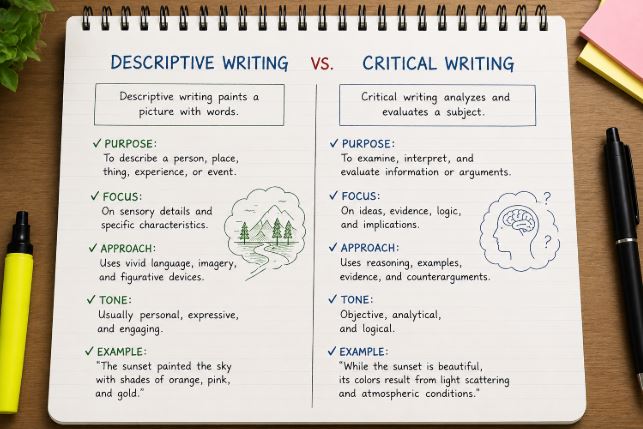
That third job is what makes a review critical rather than descriptive. A weak review tells the reader what each source says. A strong review tells the reader what the body of literature collectively shows, where it disagrees, and what remains unknown. The difference is the same shift from describing to analysing that we explore in our guide on descriptive vs critical writing.

It is worth being clear about length expectations too. A literature review is often a substantial section, frequently around 20 to 30 per cent of a dissertation, though this varies widely. Always follow your own brief and word count rather than a general figure.

Searching and selecting credible sources

Before you can synthesise, you need the right material. Start broad with your key concepts, then narrow as you learn the vocabulary of your field. Academic databases and tools such as Google Scholar are far more useful than a general web search, because they surface peer-reviewed journal articles, which carry more weight than blogs or news pieces.

As you search, be selective. Quality and relevance matter far more than quantity. Prioritise recent peer-reviewed studies and the seminal works that shaped the field, even if older. A common beginner mistake is to include every source you find; a stronger approach is to include only those that genuinely contribute to your argument. Keep careful records of each source from the start, including everything you will need to reference it later, which our UK referencing styles explained guide covers in detail.

A simple test for each source is to ask: does this help me build, support or challenge a theme in my review? If it does not, it probably does not belong, however interesting it is.

Thematic vs chronological structure

Once you have your sources, you need a structure. The two most common approaches are thematic and chronological. A thematic review organises the literature around key themes or debates, such as causes, effects and interventions, and is usually the stronger choice because it naturally encourages synthesis. A chronological review traces how thinking developed over time and works well when the evolution of an idea is itself the point.

For most students, thematic structure is the better default. It forces you to group sources by what they say rather than when they were written, which is exactly the organisation that leads to analysis. Within each theme, you can still note how thinking has changed over time, getting the best of both approaches.

Whatever structure you choose, signpost it clearly. Tell the reader at the start how the review is organised, then use theme-based subheadings so they never lose the thread.

Synthesising sources instead of summarising

This is the skill that separates a high mark from a low one. Summarising means describing sources one after another: “Smith found X. Jones found Y. Patel found Z.” Synthesising means weaving them together around an idea: “While Smith and Jones both report X, Patel’s findings complicate this by showing Z, suggesting the effect may depend on context.”

A practical tool is a synthesis matrix, a simple grid with your themes across the top and your sources down the side. Filling it in shows you at a glance which sources speak to which themes and where they agree or clash. From there, you write about the themes, citing multiple sources within each paragraph, rather than writing about the sources one by one.

If you are working on a longer research project and want expert support with the research and synthesis stages, our research paper help service pairs you with writers experienced in your field who can model how strong synthesis is built.

Identifying the research gap

Everything in your review should lead to the gap. As you synthesise, you will naturally notice questions the literature has not answered, contradictions it has not resolved, or contexts it has not explored. These are your candidate gaps. The best gap is one that is genuinely unaddressed, important enough to matter, and small enough for you to investigate within your project’s limits.

State the gap explicitly near the end of your review, and connect it directly to your research question or aims. This is the hinge between your literature review and the rest of your work, and it is where examiners look to see whether your study has a clear purpose. If you are still shaping that question, our guide on how to write a dissertation proposal walks through turning a broad topic into a focused, researchable aim.

Referencing and avoiding accidental plagiarism

Because a literature review is built almost entirely on other people’s work, careful referencing is non-negotiable. Every claim drawn from a source needs a citation, every paraphrase must be genuinely in your own words, and every direct quote needs quotation marks and a page number. The density of sources makes this section a common place for accidental plagiarism, so keep your notes meticulous and reference as you write rather than at the end.

Synthesising in your own words is also your best protection against over-quoting. If you understand the literature well enough to weave it together, you will naturally express it in your own voice, which is both better writing and safer practice.

A simple workflow you can follow

To pull this together, a reliable order of work is: search and gather sources, read and take structured notes, build a synthesis matrix, group your sources into themes, draft theme by theme using multiple sources per paragraph, identify and state your gap, then edit for flow and check every citation. Working in this sequence stops you writing too early, which is the usual cause of a review that reads as a list.

Give yourself more time than you expect for the reading and note-taking stages, because the quality of your synthesis depends entirely on how well you understood the sources in the first place. Rushed reading produces shallow summary; careful reading produces genuine synthesis.

Common literature review mistakes to avoid

A handful of errors appear again and again in weaker reviews, and knowing them in advance helps you sidestep all of them. The most frequent is the “annotated bibliography in disguise”, where each paragraph covers one source in turn with no connections drawn between them. The second is including sources that do not earn their place, padding the review to hit a perceived quantity rather than serving the argument.

A third common mistake is a review that never reaches a gap, drifting to an end without telling the reader why any of it matters for the study to come. A fourth is uncritical acceptance, where every source is reported as equally reliable with no comment on methodology, sample size or limitations. Finally, many reviews lean too heavily on direct quotation instead of paraphrase, which both weakens the writing and raises the risk of accidental plagiarism. Each of these is fixable in editing if you read your draft specifically looking for them.

Reading critically, not just widely

Reading widely is necessary, but reading critically is what produces a strong review. As you work through each source, do not just record what it found; record how it found it and how convincing that is. Note the methodology, the sample, the context and any limitations the authors acknowledge. These details are what allow you to evaluate sources rather than simply report them.

This critical reading pays off directly when you synthesise, because the most insightful comparisons often come from differences in method or context. Two studies that reach opposite conclusions may both be correct within their own settings, and noticing that is exactly the kind of analysis that earns higher marks. Treat every source as something to question, not just to absorb, and your review will read as the work of a researcher rather than a reporter.

Conclusion

Knowing how to write a literature review comes down to one shift: stop summarising sources and start synthesising them around themes and debates that build towards a clear research gap. Search selectively, organise thematically, put your sources into conversation, and reference meticulously as you go. Do that, and your review will justify your research rather than just preceding it.

If you would value expert support at the research and writing stages, the team at AssignmentFix can help through our professional assignment writing service. We provide model literature reviews that show synthesis in action, so you can apply the same approach to your own project with confidence.

Using AI vs a Human Case Study Writing Service: What UK Students Should Know in 2026

Artificial intelligence has become a major part of academic life in the UK. From generating assignment outlines and summarising research papers to drafting entire essays, tools like ChatGPT, Gemini, and Claude are changing how students approach coursework. As universities continue refining their AI policies in 2026, many students are now faced with an important question: should they rely on AI tools, a professional case study writing services, or a combination of both?

The answer is not as straightforward as many students assume. While AI can quickly generate content and assist with brainstorming, academic assignments often require far more than basic text generation. University assessments are designed to evaluate critical thinking, subject knowledge, evidence-based analysis, research skills, and the ability to apply theories to real-world situations. This is particularly true for case studies, reports, MBA assignments, PhD-level projects, and UK resit assignments, where depth and accuracy play a significant role in determining grades.

At the same time, demand for assignment help UK services continues to grow as students balance academic responsibilities with part-time jobs, personal commitments, and increasingly complex coursework requirements. Professional providers such as AssignmentFix offer specialised academic support, giving students access to subject experts who understand university standards, assessment criteria, and discipline-specific expectations.

However, choosing between AI-generated assistance and human academic support involves more than comparing convenience. Students must consider factors such as research quality, assignment accuracy, referencing standards, customisation, affordability, academic integrity, and overall learning outcomes. What appears to be the cheapest or fastest option may not always deliver the best academic results.

This guide explores the key differences between AI tools and a human case study writing service, helping UK students understand where each option excels, where limitations exist, and how to make informed decisions based on their academic goals. Whether you need online assignment help, assignment writing help, report writing services, affordable MBA assignment services, PhD assignment help, or support with a custom assignment, understanding these differences can help you choose the most effective approach in 2026.

Why More UK Students Are Comparing AI Tools with Case Study Writing Services

The debate between artificial intelligence and professional academic support has become increasingly relevant for UK students in 2026. As AI writing tools become more accessible and assignment requirements continue to evolve, students are exploring different ways to manage their academic workload while maintaining quality and meeting university expectations.

Several factors are driving this shift. Modern university students often juggle multiple responsibilities, including lectures, coursework deadlines, part-time employment, internships, and personal commitments. Managing these competing demands can make it difficult to dedicate sufficient time to researching, planning, writing, and editing assignments. As a result, many students seek external support to improve efficiency and reduce academic pressure.

The growing popularity of online assignment help services reflects this demand. Students are no longer looking solely for completed papers; many seek guidance with research, structuring arguments, analysing case studies, improving academic writing, and understanding assessment criteria. Professional student assignment services have evolved to provide specialised support across various disciplines and academic levels.

At the same time, AI tools have emerged as an attractive alternative. Students can generate assignment ideas, create outlines, summarise articles, and receive instant responses to academic questions within seconds. This speed and accessibility have led many students to wonder whether AI can replace traditional assignment writing help or even perform the same role as a professional case study writing service.

However, the comparison is not simply about convenience. Academic assignments require a combination of research skills, critical thinking, subject expertise, evidence evaluation, and accurate referencing. While AI can assist with certain aspects of the writing process, many students discover that university-level assessments demand a deeper level of analysis than automated tools can consistently provide.

This has created a growing discussion among students across undergraduate, postgraduate, MBA, and PhD programmes. Rather than asking which option is faster, students are increasingly asking which option provides better academic value, stronger learning outcomes, and a greater likelihood of meeting university assessment standards.

To understand the differences properly, it is important to first examine what AI assignment writing tools actually do, how they work, and where their strengths and limitations become apparent in academic environments.

What Is an AI Assignment Writing Tool?

AI assignment writing tools are software applications that use advanced language models to generate, analyse, and refine written content based on user prompts. In 2026, tools such as ChatGPT, Gemini, Claude, and Microsoft Copilot are widely used by students for various academic tasks, ranging from topic research and brainstorming to drafting assignment sections and summarising complex information.

The growing adoption of AI in education has transformed how students approach coursework. Instead of spending hours gathering initial ideas, students can now receive instant suggestions, explanations, and content outlines. This convenience has made AI an increasingly popular resource among those seeking quick academic support.

What Can AI Tools Help Students With?

AI writing tools can assist with several stages of the assignment process, including:

  • Generating assignment topic ideas
  • Creating essay and report outlines
  • Explaining academic concepts in simple terms
  • Summarising journal articles and research papers
  • Suggesting potential arguments and discussion points
  • Improving grammar and sentence structure
  • Helping students organise their thoughts before writing

For students looking for basic online assignment help, AI can act as a useful starting point by reducing the time required to begin a project.

Why Students Find AI Attractive

One of the biggest advantages of AI tools is accessibility. Most platforms are available 24/7 and can provide responses within seconds. Students facing tight deadlines often use AI to overcome writer’s block, understand unfamiliar topics, or generate initial drafts that can later be refined.

AI also offers a cost advantage compared to many traditional academic support options. Since many tools provide free or low-cost access, students searching for affordable academic assistance may view AI as an alternative to professional assignment writing help.

The Limitations of AI for Academic Assignments

Despite its advantages, AI has significant limitations when applied to university-level coursework.

AI Can Produce Inaccurate Information

AI models generate responses based on patterns in data rather than genuine understanding. As a result, they may present outdated information, incorrect facts, or fabricated references that appear credible but cannot be verified.

AI Often Struggles With Critical Analysis

University assessments are designed to evaluate analytical thinking rather than content generation alone. While AI can summarise information effectively, it often struggles to provide the depth of evaluation, argument development, and critical discussion required in high-scoring assignments.

Generic Responses Can Affect Assignment Quality

Many AI-generated outputs follow predictable structures and broad explanations. This can make assignments appear generic, especially when students rely heavily on generated content without adding original insights or subject-specific analysis.

Assignment Brief Interpretation Remains a Challenge

Complex assessments often include detailed marking rubrics, learning outcomes, and specific instructions. AI may overlook subtle requirements, resulting in content that does not fully address the expectations of the assignment brief.

AI Is a Tool, Not a Complete Academic Solution

While AI can support learning, research preparation, and content planning, it should not be viewed as a complete replacement for academic expertise. The effectiveness of AI largely depends on how students use it, their subject knowledge, and their ability to verify and improve the generated content.

This raises an important question: if AI has both strengths and limitations, what additional value does a professional case study writing service provide that automated tools cannot consistently deliver?

What Does a Professional Case Study Writing Service Actually Provide?

While AI tools focus primarily on generating text, a professional case study writing service is designed to provide structured academic support that aligns with university requirements, assessment criteria, and subject-specific expectations. Rather than producing generic content based on prompts, human academic experts apply research skills, critical thinking, and disciplinary knowledge to help students develop stronger assignments.

For many UK students, the value of a professional service extends beyond writing alone. Academic assignments are often complex projects that require evidence-based arguments, accurate referencing, analytical depth, and a clear understanding of the learning outcomes being assessed. These are areas where human expertise can make a significant difference.

Subject-Specific Academic Expertise

One of the key advantages of a professional case study writing service is access to writers who specialise in particular academic disciplines. Whether a student is studying business management, healthcare, finance, engineering, law, marketing, or education, subject specialists understand the theories, frameworks, and academic standards expected within that field.

This level of expertise is particularly important for assignments that require:

  • Case study analysis
  • Strategic business evaluations
  • Research-based reports
  • MBA coursework
  • PhD-level assignments
  • UK resit assignments

Unlike AI-generated content, subject experts can interpret complex scenarios, evaluate evidence, and apply relevant theories in a way that demonstrates genuine academic understanding.

Comprehensive Research and Evidence Evaluation

High-quality assignments are built on credible academic research. Professional writers typically conduct structured research using scholarly sources such as peer-reviewed journals, academic databases, industry reports, and authoritative publications.

This allows them to:

  • Support arguments with reliable evidence
  • Compare different viewpoints
  • Critically evaluate findings
  • Apply theory to practical situations
  • Develop stronger academic discussions

For case studies in particular, research quality often determines the overall strength of the assignment.

Accurate Referencing and Academic Formatting

Referencing mistakes can lead to grade deductions even when the content itself is strong. Professional assignment writing help often includes support with citation styles commonly used by UK universities, including:

  • Harvard Referencing
  • APA Referencing
  • OSCOLA Referencing
  • MHRA Referencing

This helps ensure that sources are properly acknowledged and presented according to institutional requirements.

Tailored and Customised Academic Support

Every assignment brief is unique. Professional providers offering custom assignment help typically tailor their work according to:

  • Assignment objectives
  • Learning outcomes
  • Assessment rubrics
  • University guidelines
  • Specific module requirements

This customised approach allows students to receive support that directly addresses the requirements of their coursework rather than relying on generalised content.

Support Across Multiple Assignment Types

Many student assignment services provide assistance across a wide range of academic tasks, including:

  • Case study writing services
  • Assignment writing help
  • Report writing services
  • MBA assignments
  • PhD assignment help
  • Research projects
  • UK resit assignments
  • Custom assignments

This breadth of support reflects the diverse academic challenges students face throughout their educational journey.

Where Services Like Assignment Fix Fit In

Professional academic support providers such as Assignment Fix aim to bridge the gap between academic expectations and student challenges by offering subject-focused assistance tailored to individual assignment requirements. For students dealing with complex coursework, limited time, or demanding academic standards, such services can provide structured guidance that complements their learning process.

However, understanding what both options offer individually is only part of the decision-making process. To determine which approach is more effective, students need to compare AI tools and human academic experts across the factors that directly influence assignment quality and academic outcomes.

AI vs Human Writers – The Complete Comparison for UK Students

Both AI tools and professional academic writers can help students complete assignments, but they do so in very different ways. The real question is not whether one is universally better than the other, but which option performs best in the areas that directly influence academic success. For UK students seeking assignment help UK services or considering a professional case study writing service, understanding these differences is essential before making a decision.

Research Accuracy

Research forms the foundation of every high-quality academic assignment. Without credible evidence and reliable sources, even well-written content can struggle to achieve strong grades.

AI tools can quickly generate information and summarise topics, but they do not always verify the accuracy of their responses. In some cases, AI may present outdated facts, misinterpret research findings, or generate references that do not exist. Students must therefore spend additional time checking sources and validating information before using it in their assignments.

Human academic writers approach research differently. They typically rely on scholarly journals, academic databases, textbooks, industry reports, and peer-reviewed studies. This allows them to build arguments using credible evidence and ensure that supporting information aligns with academic standards.

Winner: Human Writers

Understanding Assignment Briefs

University assignments often include detailed instructions, marking rubrics, learning outcomes, and specific assessment criteria. Successfully addressing these requirements is crucial for achieving higher grades.

AI can analyse assignment instructions and generate relevant content, but it may overlook subtle details or fail to fully interpret complex academic expectations. As a result, students may receive content that addresses the topic generally but does not fully satisfy the marking criteria.

Professional assignment writing help services are typically structured around assignment briefs. Human experts can evaluate assessment requirements, identify key objectives, and tailor content to meet the expectations outlined by the university.

Winner: Human Writers

Critical Thinking and Analysis

Critical analysis is one of the most important factors in higher education, particularly for case studies, MBA assignments, business reports, and postgraduate coursework.

AI is highly effective at summarising information and presenting existing knowledge. However, it often struggles to evaluate competing perspectives, challenge assumptions, identify limitations, and develop sophisticated arguments.

Human writers can apply critical thinking by analysing evidence, comparing viewpoints, identifying strengths and weaknesses, and developing reasoned conclusions. This depth of evaluation is often necessary for achieving higher academic grades.

Winner: Human Writers

Referencing Accuracy

Accurate referencing demonstrates academic integrity and allows readers to verify supporting evidence.

AI can generate citations in various styles, including Harvard, APA, OSCOLA, and MHRA. However, citation errors remain common, particularly when sources are incorrectly formatted or entirely fabricated.

Professional writers generally follow referencing guidelines carefully and ensure that sources are cited correctly throughout the assignment. This reduces the likelihood of formatting issues and helps maintain academic credibility.

Winner: Human Writers

Subject Expertise

AI systems are trained on broad datasets covering a wide range of topics. While this enables them to discuss many subjects, their knowledge remains generalised.

Professional writers often specialise in specific disciplines. A finance expert understands financial modelling, a healthcare specialist understands clinical frameworks, and an MBA specialist understands strategic management concepts. This subject-specific expertise allows them to provide deeper analysis and more relevant insights.

For complex projects such as affordable MBA assignment services, PhD assignment help, or advanced case study writing services, specialized knowledge can significantly improve assignment quality.

Winner: Human Writers

Originality and Customisation

Every assignment should address a unique brief, learning objective, and academic context.

AI-generated content frequently follows common structures and patterns. While the content may appear original, it can lack the customisation needed to address specific assignment requirements effectively.

Professional custom assignment help focuses on tailoring content to individual instructions, module requirements, and academic expectations. This personalised approach often produces work that is more relevant, targeted, and aligned with the student’s objectives.

Winner: Human Writers

Speed and Accessibility

This is one area where AI has a clear advantage.

AI tools can generate responses instantly, provide immediate feedback, and remain available around the clock. Students can access support at any time without waiting for a writer or consultant.

Human services require time for research, planning, writing, and quality assurance. While professional services can accommodate urgent deadlines, they cannot match the immediate response times offered by AI tools.

Winner: AI Tools

Cost Considerations

Many students initially compare AI and professional services based on affordability.

AI tools often provide free versions or low-cost subscription plans, making them attractive for students seeking budget-friendly support. Professional services involve higher costs because they include human expertise, research, quality control, and customised assistance.

However, cost should be evaluated alongside quality. The cheapest assignment writing service may not always provide the best academic value, particularly for complex assignments where expertise directly impacts outcomes.

Winner: AI for Cost, Human Writers for Value

Academic Risk and Reliability

Universities across the UK are continuing to refine their policies regarding AI-generated content. Students who rely heavily on AI without reviewing or verifying outputs may face issues related to academic integrity, factual accuracy, or assignment quality.

Human academic support services provide greater control over research quality, assignment structure, and alignment with assessment criteria. When used responsibly, professional guidance can help students better understand academic requirements while reducing the risks associated with unverified AI-generated content.

Winner: Human Writers

The Overall Comparison

AI is highly effective for brainstorming, learning support, topic exploration, and generating initial ideas. It offers speed, convenience, and affordability that make it attractive for students managing busy schedules.

However, when assignments require advanced research, critical analysis, discipline-specific expertise, accurate referencing, and alignment with university standards, human academic experts continue to hold a significant advantage.

This distinction becomes even more important when evaluating case study assignments, where analytical depth and practical application often play a decisive role in grading outcomes. Understanding these requirements helps answer the next critical question: which option is more likely to produce a high-scoring case study assignment?

Which Option Produces Better Case Study Assignments?

To determine whether AI or a professional case study writing service delivers better results, it is important to understand what university assessors actually look for when grading case study assignments. Contrary to popular belief, high marks are not awarded simply for presenting information. Instead, students are assessed on their ability to analyse situations, apply relevant theories, evaluate evidence, and develop practical recommendations supported by academic research.

This is where the differences between AI-generated content and human academic expertise become most apparent.

What Makes a High-Scoring Case Study?

Although assessment criteria vary across universities and subjects, most case study assignments are expected to demonstrate the following:

  • Clear identification of the core problem or issue
  • Application of relevant theories, models, and frameworks
  • Critical evaluation of evidence and alternative perspectives
  • Logical analysis supported by credible research
  • Practical recommendations based on findings
  • Strong academic structure and referencing
  • Well-developed conclusions linked to the analysis

Whether the assignment involves business management, healthcare, finance, marketing, education, or engineering, these elements typically form the foundation of a strong case study.

How AI Approaches Case Study Writing

AI tools are capable of producing structured responses and summarising information quickly. They can identify common theories, generate basic explanations, and organise content into a logical format.

For simple academic tasks, this can be helpful. Students may use AI to:

  • Understand a case scenario
  • Generate discussion points
  • Create assignment outlines
  • Identify relevant theories
  • Brainstorm potential recommendations

However, AI often encounters difficulties when deeper analysis is required. Many case studies involve complex business environments, conflicting stakeholder interests, industry-specific challenges, and nuanced decision-making processes. These situations require critical judgement rather than content generation alone.

As a result, AI-generated case studies may appear well-structured but frequently lack the analytical depth that university assessors expect.

How Human Experts Approach Case Study Analysis

A professional case study writing service typically focuses on interpreting the case rather than simply describing it. Subject specialists examine the context, identify key challenges, assess available evidence, and apply appropriate academic frameworks to support their analysis.

Human writers can:

  • Evaluate multiple perspectives
  • Identify strengths and weaknesses within the case
  • Apply theories appropriately to real-world situations
  • Develop evidence-based recommendations
  • Adapt analysis to the assignment’s marking criteria
  • Align arguments with academic expectations

This deeper level of engagement often produces assignments that demonstrate stronger critical thinking and a clearer understanding of the subject matter.

The Importance of Practical Recommendations

One area where human expertise often outperforms AI is recommendation development.

Many case study assignments require students to move beyond analysis and propose realistic solutions. These recommendations must be practical, justified by evidence, and linked directly to the issues identified within the case.

AI frequently generates broad or generic recommendations that may not fully address the complexities of the situation. Human experts, on the other hand, can tailor recommendations based on industry context, organisational objectives, and academic theory.

This distinction can significantly influence grading outcomes, particularly in MBA assignments, business reports, and strategic management case studies.

Which Option Delivers Better Academic Results?

For introductory tasks such as brainstorming, topic familiarisation, and content planning, AI can be a valuable learning tool. It provides speed and convenience that many students find useful during the early stages of assignment preparation.

However, when the goal is to produce a comprehensive, research-driven, and analytically strong case study, human expertise generally delivers superior results. Professional assignment writing help provides the depth of analysis, subject knowledge, and academic precision that complex university assessments often require.

The decision ultimately depends on the assignment’s complexity, academic level, and grading expectations. For simple support tasks, AI may be sufficient. For high-stakes coursework, MBA assignments, PhD projects, UK resit assignments, and detailed case studies, many students find that professional academic guidance offers greater value.

Of course, academic quality is only one side of the decision-making process. Students must also consider affordability, pricing structures, and whether the additional investment in human expertise justifies the potential improvement in assignment outcomes.

Quality vs Price – What UK Students Need to Consider

For many students, the decision between AI tools and professional academic support ultimately comes down to one question: is the additional cost of a human case study writing service worth it? While affordability is an important factor, focusing exclusively on price can sometimes lead to disappointing academic outcomes.

The most effective approach is to evaluate both cost and quality together. An assignment that costs less initially may require extensive revisions, contain research weaknesses, or fail to meet assessment criteria, potentially creating greater academic and financial costs in the long run.

Why Cheap Assignments Often Create Problems

The demand for online cheap assignments and low-cost academic support has increased significantly in recent years. While budget-friendly options may appear attractive, students should be cautious when choosing services based solely on price.

Extremely cheap assignment providers often face challenges such as:

  • Limited subject expertise
  • Generic or template-based content
  • Insufficient research depth
  • Poor referencing accuracy
  • Inadequate quality control
  • Missed assignment requirements
  • Limited customer support

In many cases, students discover that the work requires substantial editing before submission, reducing the value of the initial savings.

What Determines the Cost of Assignment Help?

Professional assignment writing help services typically calculate pricing based on several factors.

Academic Level

Assignments at postgraduate, MBA, and PhD levels generally require more advanced research, critical analysis, and subject expertise than undergraduate coursework.

Deadline Requirements

Urgent assignments often involve accelerated research and writing schedules, which can increase service costs.

Assignment Complexity

A short reflective essay requires significantly less work than a detailed case study, research report, or dissertation chapter.

Research Requirements

Assignments requiring extensive academic research, industry data analysis, or specialised sources generally demand greater time and expertise.

Understanding these factors helps students assess whether pricing reflects the level of work involved rather than assuming that lower prices automatically represent better value.

Affordable MBA Assignment Services vs Cheap MBA Assignment Help

MBA assignments provide a useful example of the relationship between quality and pricing.

Many students search for affordable MBA assignment services because they want academic support that fits within a realistic budget. However, there is an important difference between affordability and simply choosing the cheapest provider available.

MBA coursework often involves:

  • Strategic analysis
  • Business case evaluations
  • Financial decision-making
  • Leadership frameworks
  • Market research
  • Organisational problem-solving

These assignments require specialist knowledge and analytical skills. While cheap MBA assignment help may reduce upfront costs, it may not provide the level of expertise necessary to address complex business scenarios effectively.

Affordable services focus on balancing quality and cost, ensuring students receive meaningful academic support without paying excessive prices.

Is the Cheapest Assignment Writing Service Always the Best Option?

Students frequently search for the cheapest assignment writing service when facing financial constraints. While budget considerations are understandable, academic support should be evaluated based on overall value rather than price alone.

Before selecting a service, students should consider:

  • Writer qualifications
  • Subject expertise
  • Research quality
  • Revision policies
  • Academic standards
  • Customer reviews
  • Communication and support

A slightly higher investment in quality support may produce significantly stronger academic outcomes than a service chosen solely because it is the least expensive option.

Evaluating Value Instead of Cost Alone

The most successful students often assess assignment support based on the value it provides rather than the amount charged. High-value support helps students understand assignment requirements, strengthen their academic work, and improve the quality of their submissions.

Whether choosing AI tools, professional assignment writing help, or a combination of both, the goal should be to maximise academic outcomes while remaining within budget.

However, this does not mean AI lacks value. In fact, there are several situations where AI can be an effective and practical resource for students when used appropriately alongside their academic efforts.

When AI May Be Useful for Students

Although human expertise offers clear advantages for complex academic work, this does not mean AI should be dismissed entirely. In fact, AI tools have become valuable resources for many students when used responsibly and as part of the learning process. The key is understanding where AI adds value and where its limitations begin to affect assignment quality.

Rather than viewing AI as a replacement for academic support, students can benefit from using it as a supplementary tool that assists with planning, organisation, and understanding unfamiliar topics.

Brainstorming Assignment Ideas

One of the most practical uses of AI is idea generation. Students who are unsure how to approach a topic can use AI tools to explore potential angles, identify key themes, and generate discussion points.

This can be particularly helpful during the early stages of:

  • Case study assignments
  • Business reports
  • Research projects
  • MBA coursework
  • Reflective assignments

By providing a starting point, AI can help students overcome writer’s block and begin the research process more efficiently.

Understanding Complex Concepts

University modules often introduce theories, models, and frameworks that can initially seem difficult to understand. AI tools can explain concepts in simpler language, helping students build foundational knowledge before conducting deeper academic research.

Students frequently use AI to gain a basic understanding of:

  • Strategic management models
  • Marketing theories
  • Financial concepts
  • Leadership frameworks
  • Research methodologies

However, these explanations should be supplemented with academic sources rather than relied upon exclusively.

Creating Assignment Outlines

Many students struggle with structuring their assignments effectively. AI can help organise ideas into logical sections and suggest potential frameworks for essays, reports, and case studies.

For example, AI can assist with:

  • Introduction planning
  • Section organisation
  • Topic sequencing
  • Developing discussion points
  • Creating preliminary assignment structures

This allows students to focus more time on research and analysis rather than formatting their work from scratch.

Supporting Revision and Editing

AI can also be useful during the revision stage. Students may use AI tools to:

  • Improve sentence clarity
  • Identify grammatical errors
  • Simplify complex wording
  • Enhance readability
  • Check content flow

When used carefully, these features can help students refine their writing and improve overall presentation.

Learning and Study Support

Many students use AI as a study companion rather than a writing tool. It can assist with:

  • Summarising lecture notes
  • Generating practice questions
  • Explaining academic terminology
  • Creating revision materials
  • Identifying key topics for examination preparation

Used in this way, AI can contribute positively to independent learning and academic development.

Where Students Should Exercise Caution

Despite these benefits, students should remain aware of AI’s limitations. AI-generated outputs should always be reviewed, verified, and supported by credible academic sources. Blindly copying content can result in factual inaccuracies, weak analysis, and assignments that fail to meet university expectations.

AI is most effective when used to support the learning process rather than replace it. Students who treat AI as an assistant rather than an author generally achieve better outcomes and maintain greater control over the quality of their work.

While AI performs well in areas such as brainstorming, outlining, and study support, certain academic situations demand a level of expertise, analysis, and subject knowledge that automated tools cannot consistently provide. These are the situations where a professional case study writing service often becomes the more effective option.

When a Human Case Study Writing Service Is the Better Choice

AI can be a valuable academic tool, but there are situations where the complexity of an assignment demands more than automated content generation. Certain assessments require advanced research, critical evaluation, discipline-specific expertise, and a clear understanding of university expectations. In these cases, a professional case study writing service often provides a level of support that AI cannot consistently match.

For students dealing with high-stakes coursework, challenging deadlines, or specialised academic requirements, human expertise can make a significant difference in both assignment quality and overall academic performance.

Complex MBA Case Studies

MBA assignments are designed to assess strategic thinking, business analysis, leadership decision-making, and problem-solving abilities. These assessments often require students to evaluate real-world business situations, apply theoretical frameworks, and develop practical recommendations supported by evidence.

While AI can identify common business models and generate general discussions, it often struggles to provide the depth of strategic analysis expected at postgraduate level.

This is why many students seeking affordable MBA assignment services or cheap MBA assignment help prefer professional academic support for:

  • Strategic management case studies
  • Business consultancy reports
  • Leadership evaluations
  • Financial analysis projects
  • Organisational change assessments

Specialist writers can apply industry knowledge and academic theory more effectively to complex business scenarios.

PhD-Level Research Assignments

Doctoral-level assignments demand a high degree of originality, critical evaluation, and academic rigour. At this level, students are expected not only to discuss existing research but also to identify gaps, evaluate methodologies, and contribute meaningful insights to their field.

AI can assist with literature exploration and topic familiarisation, but it lacks the ability to engage with research at the depth often required for doctoral work.

Professional PhD assignment help may be particularly valuable when students need support with:

  • Literature reviews
  • Research proposals
  • Methodology discussions
  • Data interpretation
  • Advanced academic writing

These tasks require specialist knowledge and a strong understanding of academic research standards.

UK Resit Assignments

Resit assignments present unique challenges because students are often expected to improve upon previous submissions and address feedback provided by their lecturers or assessors.

Success in a resit frequently depends on understanding:

  • Why the original submission underperformed
  • Which assessment criteria were not met
  • How feedback should be incorporated
  • What improvements are necessary to achieve a passing grade

Professional support for a UK Resit Assignment can help students identify weaknesses, strengthen arguments, and align their work more closely with assessment expectations.

Business and Academic Reports

Report writing differs significantly from traditional essay writing. Reports require structured analysis, evidence-based findings, data interpretation, and practical recommendations.

Many report writing services specialise in helping students complete:

  • Business reports
  • Market analysis reports
  • Financial reports
  • Management reports
  • Research-based evaluations

Because reports often involve specific formatting and analytical requirements, human expertise can provide greater accuracy and clarity than automated tools.

Tight Deadlines and Heavy Workloads

Students frequently seek help with assignments when multiple deadlines occur simultaneously. Balancing coursework with employment, internships, family responsibilities, and personal commitments can create significant academic pressure.

Although AI can generate content quickly, students still need time to verify information, improve analysis, and ensure compliance with assignment requirements. Professional support can reduce this burden by providing structured assistance tailored to the assignment brief.

This can be particularly beneficial for students facing:

  • Multiple concurrent assignments
  • Unexpected personal commitments
  • Urgent submission deadlines
  • Complex research projects

Assignments Requiring Deep Critical Analysis

Perhaps the strongest argument for human expertise is the ability to engage in sophisticated critical thinking. University assessors often reward students who can evaluate evidence, compare competing viewpoints, identify limitations, and develop reasoned conclusions.

These skills are especially important in:

  • Case study writing services
  • Custom assignment help projects
  • MBA coursework
  • Postgraduate assignments
  • Research-intensive modules

Human experts are generally better equipped to provide the analytical depth necessary for these assessments.

Choosing the Right Support for the Right Situation

There is no single solution that works for every assignment. AI may be highly effective for brainstorming, outlining, and learning support, while human expertise often proves more valuable for complex academic tasks requiring research, analysis, and subject-specific knowledge.

The challenge for students is not simply deciding whether they need support, but identifying which type of support is most appropriate for their specific academic needs. Unfortunately, many students make this decision based on the wrong criteria, leading to poor experiences and unsatisfactory results.

Understanding these common mistakes can help students make more informed choices when selecting assignment support services.

Common Mistakes Students Make When Choosing Assignment Help

Finding academic support is easier than ever, but choosing the right support remains a challenge for many students. Whether they are considering AI tools, a professional case study writing service, or other forms of assignment help UK, students often make decisions based on convenience, assumptions, or price alone. Unfortunately, these mistakes can lead to poor-quality work, wasted money, and disappointing academic outcomes.

Understanding the most common pitfalls can help students make more informed decisions and maximise the value they receive from any academic support service.

Choosing Solely Based on Price

One of the most common mistakes is selecting a service purely because it offers the lowest price. Students searching for online cheap assignments or the cheapest assignment writing service are often attracted by heavily discounted offers without evaluating the quality of support being provided.

While affordability is important, extremely low prices can sometimes indicate:

  • Limited research quality
  • Generic content
  • Inexperienced writers
  • Poor customer support
  • Lack of quality assurance processes

The goal should be to find the best balance between quality, expertise, and affordability rather than focusing exclusively on cost.

Ignoring Subject Expertise

Not all assignments require the same level of knowledge. A writer with a general academic background may not be equipped to handle specialised MBA coursework, technical reports, healthcare case studies, or PhD-level research projects.

Students sometimes overlook the importance of subject expertise and assume that any writer can complete any assignment effectively. In reality, specialist knowledge often plays a major role in determining assignment quality.

Before choosing assignment writing help, students should consider whether the support provider has experience within their specific academic discipline.

Assuming AI Content Is Always Accurate

AI tools have become increasingly sophisticated, but many students place too much trust in generated content without verifying the information provided.

Common problems include:

  • Incorrect facts
  • Outdated information
  • Weak evidence
  • Misinterpreted theories
  • Fabricated references

AI can be an excellent learning resource, but academic content should always be reviewed carefully and supported with credible sources.

Buying Pre-Written Assignments

Students searching terms such as assignment buy or buy assignments online UK may encounter providers offering pre-written papers for immediate download.

Although these options may appear convenient, they often create several problems:

  • Lack of alignment with assignment briefs
  • Generic content that fails to meet learning outcomes
  • Outdated research
  • Limited relevance to specific modules
  • Higher risk of duplication issues

Assignments are typically more effective when they are tailored to the individual requirements of the student and the assessment.

Failing to Review Service Credibility

Many students focus on pricing and turnaround times while neglecting to evaluate the credibility of the provider itself.

Before using any academic support service, students should review factors such as:

  • Writer qualifications
  • Subject expertise
  • Service transparency
  • Revision policies
  • Customer feedback
  • Communication channels
  • Quality assurance procedures

Taking the time to assess these factors can help students avoid unreliable providers and identify services that genuinely prioritise academic quality.

Looking for Shortcuts Instead of Academic Support

Another common mistake is viewing assignment assistance as a shortcut rather than a learning resource. The most effective use of academic support involves improving understanding, strengthening research, and enhancing assignment quality.

Students who focus exclusively on completing tasks as quickly as possible often miss opportunities to develop valuable academic skills and achieve better long-term outcomes.

Making Better Decisions About Assignment Support

Whether students choose AI tools, professional assignment writing help, or a combination of both, success depends on selecting support that aligns with their academic goals and assignment requirements.

Avoiding these common mistakes can significantly improve the quality of assistance received. However, knowing what mistakes to avoid is only part of the process. Students also need a practical framework for identifying trustworthy providers and determining which case study writing service is most likely to meet their academic needs.

How to Choose a Reliable Case Study Writing Service in the UK

With hundreds of providers offering assignment help UK services, choosing the right academic support can feel overwhelming. While many services claim to deliver high-quality work, the reality is that standards vary significantly across the industry. Students who take the time to evaluate providers carefully are more likely to receive meaningful academic support and avoid the risks associated with unreliable services.

Rather than focusing on marketing claims alone, students should assess a case study writing service based on several key quality indicators.

Look for Subject-Specific Expertise

A reliable service should have access to writers with knowledge and experience in specific academic disciplines. Case studies often require a detailed understanding of industry practices, academic theories, and subject-specific frameworks.

For example:

  • MBA assignments require business and management expertise
  • Finance projects require analytical and quantitative knowledge
  • Healthcare assignments require familiarity with clinical concepts
  • PhD assignments demand advanced research capabilities

Subject expertise helps ensure that assignments are academically relevant and aligned with university expectations.

Evaluate Research Standards

Strong academic work is built on credible research. Before selecting a provider, students should determine whether the service prioritises evidence-based writing and academic source integration.

A reliable provider should demonstrate the ability to:

  • Use scholarly journals and academic databases
  • Support arguments with credible evidence
  • Apply current research findings
  • Integrate relevant theories and frameworks
  • Maintain academic objectivity

Research quality often separates high-performing assignments from average submissions.

Check Referencing and Formatting Capabilities

Universities expect students to follow specific referencing conventions. A trustworthy service should be capable of working with commonly used citation styles, including:

  • Harvard
  • APA
  • OSCOLA
  • MHRA

Attention to referencing accuracy reflects a provider’s understanding of academic standards and helps minimise avoidable marking penalties.

Assess Transparency and Communication

Reliable academic support providers are generally transparent about their services, processes, and expectations. Students should be able to access clear information regarding:

  • Service scope
  • Pricing structures
  • Revision policies
  • Delivery timelines
  • Customer support options

Good communication becomes particularly important when assignments involve complex instructions or specific academic requirements.

Review Quality Assurance Measures

Before choosing assignment writing help, students should consider how a provider maintains quality standards.

Key indicators include:

  • Editorial review processes
  • Proofreading procedures
  • Quality checks before delivery
  • Consistency in academic formatting
  • Compliance with assignment requirements

Quality assurance helps reduce errors and improves the overall standard of the final work.

Consider Support Across Different Assignment Types

Students often require assistance with more than one type of assessment during their academic journey. A versatile provider should be able to support a range of services, including:

  • Case study writing services
  • Custom

The Future of Assignment Help UK in the AI Era

The relationship between AI tools and professional academic support is not a competition where one option completely replaces the other. Instead, the future of assignment help UK is increasingly moving toward a hybrid model where technology and human expertise work together to support students more effectively.

As universities adapt to rapid technological change, students must also adjust their approach to academic support. The strategies that were effective a few years ago may no longer be sufficient in an educational environment shaped by AI, evolving assessment methods, and stricter academic integrity expectations.

AI Will Continue to Play a Larger Role in Student Learning

AI tools are becoming more sophisticated and accessible every year. Students are already using them for:

  • Topic exploration
  • Research preparation
  • Study support
  • Assignment planning
  • Revision assistance
  • Content refinement

As these technologies improve, they will likely become a standard part of the academic workflow rather than an optional resource.

However, universities are increasingly aware of AI’s capabilities and limitations. This means students will be expected to use AI responsibly while still demonstrating their own understanding, judgement, and analytical abilities.

Universities Are Placing Greater Emphasis on Critical Thinking

One of the most significant trends in higher education is the growing focus on skills that AI cannot easily replicate.

These include:

  • Critical evaluation
  • Independent analysis
  • Evidence-based reasoning
  • Problem-solving
  • Reflective thinking
  • Practical application of knowledge

As a result, assignments are likely to become more analytical and context-specific, requiring students to demonstrate deeper engagement with their subject matter.

This shift may increase the demand for professional assignment writing help that focuses on academic guidance, analytical development, and subject-specific expertise.

The Rise of Hybrid Academic Support Models

Many students are no longer choosing exclusively between AI and human assistance. Instead, they are combining both resources to maximise efficiency and quality.

A typical workflow may involve:

  1. Using AI to explore a topic and generate initial ideas.
  2. Conducting independent research using academic sources.
  3. Seeking professional support for complex analysis and structure.
  4. Using AI tools again for proofreading and language refinement.

This hybrid approach allows students to benefit from the speed of AI while maintaining the depth and quality associated with human expertise.

Increased Demand for Specialist Academic Services

As academic assessments become more sophisticated, demand for specialised support is expected to grow.

Students are increasingly seeking assistance with:

  • Case study writing services
  • Report writing services
  • MBA assignments
  • PhD-level research
  • UK resit assignments
  • Custom assignment help

These areas often require advanced subject knowledge and analytical skills that generic AI outputs cannot consistently provide.

Academic Integrity Will Become Even More Important

Universities across the UK are continuing to develop policies related to AI-generated content. Students will need to demonstrate that they understand how to use technology ethically while maintaining academic integrity.

This means success will depend not on finding shortcuts, but on using available resources responsibly and strategically.

Students who combine technology with genuine learning and academic development are likely to achieve better outcomes than those who rely entirely on automated solutions.

What This Means for UK Students in 2026 and Beyond

The future of academic support is not about choosing between AI and human expertise. It is about understanding the strengths and limitations of each option and using them appropriately.

AI will continue to improve efficiency, accessibility, and learning support. Human academic experts will continue to provide the critical thinking, subject knowledge, research expertise, and analytical depth required for complex assignments.

For students seeking stronger academic outcomes, the most effective approach is often to view AI as a tool and human expertise as a source of specialised academic guidance. Understanding this balance helps students make smarter decisions about assignment support and prepares them for the evolving demands of higher education.

Ultimately, the question is no longer whether AI or human support is better in every situation. The real question is which option delivers the greatest value for your specific academic goals and assignment requirements.

Final Verdict – AI or a Human Case Study Writing Service?

The rise of AI has undoubtedly transformed the way students approach academic work. From generating ideas and explaining concepts to creating outlines and improving writing clarity, AI tools offer convenience, speed, and accessibility that can help students manage their workload more efficiently.

However, after comparing research accuracy, critical thinking, assignment brief interpretation, subject expertise, referencing quality, and academic reliability, it becomes clear that AI and human academic support serve different purposes.

AI performs best when students need:

  • Topic exploration and brainstorming
  • Study assistance and concept explanations
  • Assignment planning and structuring
  • Revision support and language refinement
  • Quick access to information and ideas

These strengths make AI a valuable learning tool, particularly during the early stages of the assignment process.

On the other hand, a professional case study writing service offers advantages that AI cannot consistently replicate. Human academic experts provide:

  • Subject-specific knowledge
  • Advanced critical analysis
  • Evidence-based research
  • Accurate academic referencing
  • Personalised assignment support
  • Stronger alignment with university assessment criteria

These qualities become increasingly important for complex coursework such as MBA assignments, PhD projects, business reports, custom assignments, and UK resit assignments, where analytical depth and academic precision often determine final grades.

For most UK students in 2026, the decision should not be viewed as a choice between technology and expertise. Instead, the most effective approach is often to use each resource for its strengths. AI can support learning, research preparation, and productivity, while professional academic guidance can help students navigate more challenging assessments that require specialist knowledge and higher-level analysis.

Ultimately, students seeking assignment help UK services should focus on the quality of support they receive rather than simply choosing the fastest or cheapest option available. Academic success is rarely achieved through shortcuts; it is achieved through informed decisions, effective learning strategies, and access to reliable support when needed.

Whether you are working on a case study, report, MBA assignment, PhD project, or resit assessment, understanding the differences between AI and human expertise allows you to choose the solution that best aligns with your academic objectives.

For students who require personalised academic support, AssignmentFix provides access to experienced subject specialists who understand the demands of UK higher education and the expectations associated with complex academic assignments.

Contact Us

Need Professional Assignment Help UK?

If you’re looking for reliable academic support tailored to your university requirements, AssignmentFix is here to help. Whether you’re struggling with a complex case study, an MBA assignment, a business report, a PhD-level project, or a UK resit assignment, our team of subject specialists can provide guidance designed around your specific academic needs.

We understand that every assignment comes with unique objectives, marking criteria, and deadlines. That’s why our approach focuses on personalised support, thorough research, and academically structured solutions that help students navigate challenging coursework with greater confidence.

Our Academic Support Services Include:

  • Case Study Writing Service
  • Assignment Writing Help
  • Online Assignment Help
  • Custom Assignment Help
  • Student Assignment Services
  • Report Writing Services
  • Affordable MBA Assignment Services
  • PhD Assignment Help
  • UK Resit Assignment Support
  • Research and Academic Writing Assistance

Why Students Choose AssignmentFix

  • Subject-specific academic expertise
  • Support across multiple disciplines
  • Research-focused approach
  • Structured and customised solutions
  • Assistance for undergraduate, postgraduate, MBA, and PhD students
  • Responsive customer support
  • Commitment to academic quality

Whether you need help understanding a complex assignment brief, improving your analysis, strengthening your research, or managing a tight deadline, AssignmentFix can provide the academic support you need to move forward with confidence.

Get in Touch Today

Contact AssignmentFix today to discuss your assignment requirements and discover how professional academic support can help you achieve your educational goals.

Using ChatGPT for Assignments Safely: What UK Students Need to Know

This article answers a high-interest informational query about using ChatGPT for assignments without breaching university rules. The target reader is a UK student who wants to use AI tools but is anxious about academic misconduct and confused by claims about AI detectors. The piece solves that by distinguishing legitimate from risky uses, explaining why AI detection is unreliable, and stressing that policies vary by institution. Within the Assignment Help Hub it links to plagiarism, paraphrasing and Turnitin detection. The priority internal link points to the Custom Writing Service page, framed as ethical, original model work rather than AI-generated text submitted as a student’s own.

Using ChatGPT for Assignments Safely: What UK Students Need to Know

Artificial intelligence tools have changed how students work, and the questions arrive faster than universities can answer them. Can you use ChatGPT at all? Will you be caught? Is it cheating? The honest answer is that using ChatGPT for assignments sits in a genuine grey area, and where the line falls depends heavily on your university’s rules and how you use the tool. This guide separates the legitimate uses from the risky ones so you can make informed decisions.

The principle that runs through everything here is simple: AI can be a useful study aid, but the work you submit must be genuinely your own. Cross that line, knowingly or not, and you are into academic-misconduct territory. Staying safe is mostly about understanding where that line is.

Can you use ChatGPT at university?

There is no single national rule. Each UK university sets its own policy on generative AI, and those policies have been evolving quickly. Some institutions permit AI for certain supportive tasks and ask students to declare its use; others prohibit it for assessed work entirely; many sit somewhere in between, with rules that differ by module and assignment type.

This is the single most important takeaway: you must check your own university’s and your module’s specific guidance, because what is acceptable on one course may be misconduct on another. Do not rely on what a friend at another institution tells you, on general advice online, or on this article as a substitute for your own university’s policy. When the rules are unclear, ask your tutor directly and in writing, so you have a record of the guidance you were given.

Assuming permission is dangerous. The safest default, until you have confirmed otherwise, is to treat AI-generated text as something you may not submit as your own work. It is also worth remembering that policies are still changing, sometimes from one academic year to the next, so guidance you relied on last term may have been updated. Re-checking at the start of each module takes a few minutes and removes any excuse for an honest mistake.

Legitimate vs risky uses

Within the rules, there is a meaningful difference between using AI to support your learning and using it to replace your work. On the supportive side, students reasonably use AI to explain a difficult concept in simpler terms, to suggest a structure for an essay they then research and write themselves, to generate practice questions, or to brainstorm angles on a topic before doing their own thinking. Used this way, AI is closer to a study partner than a ghostwriter.

The risky side is where the AI does the work you are being assessed on. Generating whole paragraphs or essays and submitting them as your own, having AI write your analysis, or passing off AI-produced text as evidence of your understanding all undermine the purpose of the assessment and typically breach university rules. The test is useful to remember: is the AI helping you learn, or is it doing the thinking you are supposed to demonstrate? If you would value original, properly referenced model work to learn from instead, our custom writing service provides human-written examples created ethically for that purpose.

Why AI detectors are unreliable

A lot of student anxiety centres on AI detectors, and here the picture is genuinely murky. AI-detection tools are far less reliable than the text-matching systems used for plagiarism. They produce false positives, flagging human-written work as AI-generated, and false negatives, missing AI text, and their accuracy is widely questioned by educators and researchers alike.

This unreliability cuts both ways. It means you should not assume AI use is undetectable, but it also means honest students are sometimes wrongly accused, particularly non-native English speakers, whose writing can trip detectors. The practical lesson is not to play a cat-and-mouse game with detection but to make sure your work genuinely reflects your own understanding, so that any review of it supports you. We explore the related question of text matching in our guide on whether Turnitin can detect ChatGPT. Keeping your drafts, notes and version history is a sensible safeguard, because they evidence your authorship far more convincingly than any detector score.

Accuracy, bias and the limits of AI

Beyond the rules, there are good academic reasons to be cautious about leaning on AI. Generative tools can produce confident but incorrect information, including fabricated references to studies and authors that do not exist, a phenomenon often called hallucination. Submitting work containing invented citations is both an academic and a credibility disaster, and it is surprisingly easy to do if you trust AI output uncritically.

AI can also reflect biases in its training data and lacks genuine understanding of your specific module, marking criteria and reading list. It does not know what your tutor values or what this term’s lectures emphasised. For these reasons, anything an AI tells you should be verified against authoritative sources before it goes anywhere near your assignment. Treat it as a starting point to check, never as a final authority. A useful rule is that you should be able to defend every sentence in your assignment from your own reading, so if a claim only exists because the AI said so, it has no place in your work until you have confirmed it independently.

Staying on the right side of the rules

Pulling this together, a few habits keep you safe. Always check and follow your university’s and module’s AI policy, and declare AI use where required. Use AI for genuine support such as explanation and brainstorming, not to produce assessed content. Verify any facts or references it gives you. Keep your own drafts and notes as evidence of your process. And when in doubt, ask your tutor rather than guessing.

Most importantly, make sure the thinking in your work is yours. The whole point of an assignment is to develop and demonstrate your own understanding, and no tool can do that for you. Genuine learning is also far more durable than anything you could shortcut, which connects to the wider habits of originality covered in our guide on how to avoid plagiarism at university and the rewriting skills in our how to paraphrase without plagiarising guide.

Practical examples of using AI well

It can help to see what responsible use looks like in practice. Suppose you have read three journal articles but cannot see how they connect. Asking an AI tool to suggest possible themes can prompt your own thinking, as long as you then return to the articles, verify those themes against what the authors actually say, and write the analysis yourself. The AI sparked an idea; you did the work.

Another sound use is comprehension. If a lecture left you confused about a concept, asking for a plain-English explanation can get you unstuck faster than re-reading dense notes, provided you confirm the explanation against your course materials. You might also ask an AI to generate practice questions to test yourself before an exam, or to suggest a possible essay structure that you then fill entirely with your own researched content and argument.

The common thread is that in every legitimate case, the AI supports a process you remain in control of. You read the sources, you verify the output, and you produce the assessed work. The moment the tool starts generating the content you submit, you have moved from study aid to substitution, and that is the boundary to respect regardless of how tempting a deadline makes it.

What to do if you’re wrongly accused

Because detectors are imperfect, honest students are occasionally accused of using AI when they did not. If this happens to you, do not panic. The most powerful response is evidence of your own process, which is exactly why keeping drafts, notes, outlines and version history matters. A document’s editing history, your handwritten planning, and your research notes together tell a far more convincing story than any detector’s percentage.

Engage with the process calmly and factually. Ask what specifically prompted the concern, explain how you produced the work, and provide your supporting materials. Universities generally recognise that detection tools are not conclusive, and a clear account of your writing process, backed by evidence, is usually persuasive. The students who struggle in these situations are often those with nothing to show for their process, which is the strongest practical argument for working in a way that naturally leaves a trail.

Conclusion

Using ChatGPT for assignments safely comes down to knowing your university’s rules, using AI to support rather than replace your learning, and never submitting AI-generated text as your own work. Remember that detectors are unreliable in both directions, that AI can invent facts and references, and that the thinking you are assessed on must genuinely be yours. Check your policy, verify everything, and keep your drafts.

If you would prefer original, human-written work to learn from, produced ethically and tailored to your brief, the team at AssignmentFix can help through our professional assignment writing service. We give you trustworthy model material to build your own understanding, with none of the risks that come from passing off AI text as your own.

How to Choose a Trustworthy Custom Writing Service in the UK

The demand for assignment help UK services has grown significantly as students face increasing academic pressure, tighter deadlines, complex coursework requirements, and the challenge of balancing studies with part-time jobs and personal commitments. From undergraduate essays and college assignments to MBA projects, PhD research, and UK resit assignments, many students seek professional academic support to manage their workload more effectively.

As a result, the market for online assignment help and custom writing services has expanded rapidly. While this provides students with more options than ever before, it also creates a new challenge: identifying which providers are genuinely trustworthy. Not every assignment writing help service delivers the same level of quality, expertise, originality, or customer support. Some providers focus on academic standards and student success, while others rely on unrealistic promises, extremely low prices, and poor-quality work that can negatively impact academic performance.

For students looking for help with assignments, choosing the right provider is about more than finding the lowest price. Factors such as writer qualifications, plagiarism policies, subject expertise, revision support, confidentiality, and adherence to UK academic standards all play an important role in determining whether a service offers real value. This becomes even more important when seeking specialised support such as affordable MBA assignment services, report writing services, case study writing services, PhD assignment help, or assistance with resit coursework.

This guide explores the essential factors that distinguish a reliable custom writing service from an unreliable one. It explains how to evaluate quality, compare pricing, assess writer expertise, identify warning signs, and make informed decisions before choosing a provider. Whether you are considering student assignment services for the first time or comparing established providers such as AssignmentFix with other options in the market, this article will help you understand what to look for and how to choose academic support that aligns with your educational goals.

Why UK Students Use Custom Writing Services

The increasing popularity of custom writing services is closely linked to the changing demands of higher education in the UK. University students are expected to complete multiple assignments throughout the academic year while maintaining high academic standards across different modules. As coursework becomes more research-intensive and deadlines become increasingly demanding, many students look for additional academic support to manage their responsibilities effectively.

Growing Academic Pressure in UK Higher Education

Modern degree programmes require students to demonstrate critical thinking, independent research, analytical writing, and subject-specific knowledge across a wide range of assessments. In many cases, students must simultaneously manage essays, reports, presentations, case studies, group projects, and examinations within the same semester.

For many learners, especially those balancing part-time employment, family responsibilities, internships, or personal commitments, meeting every academic requirement can become challenging. This has contributed to the growing demand for assignment help UK services that provide structured academic guidance and writing support.

Common Reasons Students Seek Assignment Writing Help

Students use assignment writing help for various reasons, including:

  • Managing multiple deadlines across different modules
  • Understanding complex assignment requirements
  • Improving academic writing and research skills
  • Receiving support with referencing and citations
  • Accessing subject-specific expertise
  • Overcoming language barriers for international students
  • Preparing stronger submissions for resit assignments
  • Balancing studies with work commitments

Seeking help with assignments is often less about avoiding academic work and more about gaining access to additional support when academic demands become difficult to manage independently.

Types of Assignments Students Commonly Need Support With

Different academic tasks require different levels of expertise and research. As a result, many student assignment services offer support across multiple assignment categories.

Some of the most commonly requested assignment types include:

Essays and Coursework Assignments

Essay-based assessments remain one of the most common forms of university evaluation. Students often seek online assignment help when working on argumentative essays, reflective writing, literature reviews, and research-based coursework.

Report Writing Assignments

Academic and business reports require a structured approach, evidence-based analysis, and professional formatting. This is why report writing services continue to be in high demand among business, management, healthcare, and engineering students.

Case Study Assignments

Case studies require students to analyse real-world scenarios, identify problems, evaluate solutions, and make recommendations. Many learners seek case study writing services when dealing with complex business, healthcare, law, and management topics.

MBA Assignments

MBA programmes often involve strategic analysis, leadership evaluations, financial assessments, and consultancy-style projects. Due to the advanced nature of these assignments, students frequently search for affordable MBA assignment services that combine subject expertise with practical business knowledge.

PhD-Level Assignments and Research Projects

Doctoral students face some of the most demanding academic requirements. PhD assignment help may involve advanced research methodologies, critical analysis, literature synthesis, and discipline-specific academic writing standards.

UK Resit Assignments

Students who are required to resubmit coursework often seek support to better understand previous feedback, address weaknesses, and improve the quality of their revised submissions. This has increased demand for specialised UK resit assignment assistance.

The Growing Need for Reliable Academic Support

As the demand for online assignment help continues to increase, students are faced with a growing number of providers offering similar services. However, not all custom writing services deliver the same level of quality, transparency, or academic expertise.

Understanding why students seek academic support is only the first step. The next challenge is determining which providers can genuinely be trusted to deliver high-quality, original, and academically sound work.

This raises an important question: what exactly makes a custom writing service trustworthy?

What Makes a Custom Writing Service Trustworthy?

Not all custom writing services operate to the same standards. While many providers claim to offer expert assignment help UK students can rely on, the true measure of trustworthiness lies in the systems, processes, and quality controls behind the service. A reliable provider demonstrates transparency, academic expertise, originality, and consistent support throughout the customer journey.

Understanding these trust indicators helps students separate reputable academic support providers from services that may compromise quality, confidentiality, or academic standards.

Transparent Business Information and Clear Policies

One of the first signs of a trustworthy custom writing service is transparency. Reputable providers openly share information about their business, services, policies, and support channels.

Students should look for:

  • Clearly displayed contact information
  • Transparent pricing structures
  • Revision and refund policies
  • Privacy and confidentiality policies
  • Terms and conditions
  • Secure payment systems

When important information is difficult to find or intentionally hidden, it may indicate a lack of accountability. Reliable student assignment services make it easy for users to understand what they are purchasing and what level of support they can expect.

Qualified Academic Writers with Subject Expertise

The quality of any assignment writing help service ultimately depends on the expertise of its writers. Academic assignments require more than strong writing skills; they demand subject-specific knowledge, research capabilities, and familiarity with UK university expectations.

A trustworthy provider should have writers who:

  • Possess relevant academic qualifications
  • Understand UK higher education standards
  • Are familiar with discipline-specific requirements
  • Have experience with various assignment formats
  • Understand academic referencing systems

This becomes particularly important for specialised services such as affordable MBA assignment services, PhD assignment help, report writing services, and case study writing services, where subject expertise directly affects the quality of the final work.

Commitment to Original and Research-Based Content

Originality remains one of the most important factors when evaluating a custom assignment help provider. Universities place significant emphasis on academic integrity, making plagiarism-free work essential.

Reliable services prioritise:

  • Original content creation
  • Independent research
  • Proper citation practices
  • Accurate referencing
  • Quality assurance checks

Students should be cautious of providers offering unrealistically fast turnaround times at extremely low prices, as these services may rely on recycled or poorly researched content.

Consistent Quality Across Different Assignment Types

Trustworthy providers maintain quality standards regardless of assignment complexity. Whether a student requires online assignment help for coursework, support with a UK resit assignment, or assistance from a PhD assignment writer, the service should demonstrate consistency across all academic levels.

Quality indicators include:

  • Logical structure and organisation
  • Strong academic research
  • Critical analysis
  • Evidence-based arguments
  • Accurate referencing
  • Clear communication of ideas

A provider’s ability to deliver quality across multiple assignment categories often reflects the strength of its internal quality control processes.

Responsive Customer Support and Communication

Academic deadlines are often time-sensitive, making communication an essential part of the customer experience. Students should be able to access support before, during, and after placing an order.

Reliable providers typically offer:

  • Prompt responses to enquiries
  • Order progress updates
  • Revision assistance
  • Clear communication channels
  • Ongoing customer support

Strong communication demonstrates professionalism and reduces uncertainty throughout the assignment process.

Genuine Customer Reviews and Reputation

Reviews can provide valuable insights into a provider’s reliability, but students should focus on overall patterns rather than individual testimonials.

When evaluating reviews, consider:

  • Consistency of feedback
  • Quality-related comments
  • Customer support experiences
  • Deadline performance
  • Revision satisfaction

Established providers such as AssignmentFix often build credibility through long-term customer relationships, repeat clients, and positive user experiences rather than relying solely on promotional claims.

Academic Support Rather Than Empty Promises

Perhaps the strongest indicator of trustworthiness is how a service presents itself. Reputable providers focus on delivering quality academic support, while questionable services often rely on exaggerated promises.

Students should be cautious of claims such as:

  • Guaranteed distinction grades
  • Guaranteed A+ results
  • Instant assignment completion
  • Unrealistically cheap pricing
  • Risk-free academic outcomes

No legitimate academic support provider can guarantee specific grades because university assessments depend on numerous factors beyond the assignment itself.

Trust Begins with Verification

Choosing a trustworthy custom writing service requires evaluating multiple factors rather than relying on price or marketing claims alone. Transparency, qualified writers, originality, customer support, and a proven reputation all contribute to a provider’s credibility.

However, understanding positive trust signals is only half of the evaluation process. Students must also learn to recognise warning signs that could indicate poor-quality or unreliable services.

The next step is identifying the red flags that students should never ignore when choosing an assignment help provider.

Red Flags That Suggest an Assignment Service Should Be Avoided

Understanding what makes a custom writing service trustworthy is important, but students must also recognise the warning signs that often indicate poor-quality or unreliable providers. As the market for assignment help UK services continues to expand, some companies prioritise sales over academic quality, leaving students vulnerable to missed deadlines, substandard work, and unnecessary financial losses.

Identifying these red flags early can help students make informed decisions and avoid services that fail to meet academic expectations.

Unrealistic Grade Guarantees

One of the most common warning signs is the promise of guaranteed academic results. While professional academic support can improve the quality of an assignment, no provider can legitimately guarantee specific grades because final assessments depend on university marking criteria, instructor expectations, and individual student performance.

Students should be cautious of providers that advertise:

  • Guaranteed distinctions
  • Guaranteed A+ grades
  • Guaranteed first-class results
  • Guaranteed academic success

Reliable assignment writing help services focus on quality, research, and academic standards rather than making promises they cannot control.

Extremely Low Prices That Seem Too Good to Be True

Affordability is important for students, but there is a significant difference between affordable academic support and unrealistically cheap services.

Many students searching for online cheap assignments or the cheapest assignment writing service are attracted to low prices without considering the potential consequences. Extremely low-cost providers often reduce expenses by:

  • Hiring inexperienced writers
  • Reusing previously written content
  • Conducting minimal research
  • Eliminating quality control processes
  • Offering little or no revision support

While cost should be considered when comparing providers, quality and reliability should remain the primary factors in the decision-making process.

Lack of Writer Qualifications and Expertise

Trustworthy academic support depends on knowledgeable writers who understand both the subject matter and UK academic standards.

Students should be cautious when providers:

  • Do not mention writer qualifications
  • Provide no information about subject expertise
  • Refuse to discuss writer experience
  • Claim all writers can complete every type of assignment regardless of discipline

This issue becomes particularly concerning for complex assignments such as MBA projects, case studies, research reports, and PhD-level work, where specialised knowledge is essential.

Poor Website Transparency

A professional academic support provider should clearly explain its policies, services, and business practices.

Potential warning signs include:

  • Missing contact information
  • No privacy policy
  • No refund policy
  • No revision policy
  • Unclear service descriptions
  • Hidden fees

When a company lacks transparency, students may struggle to resolve disputes or obtain support if problems arise.

Generic Service Descriptions and Vague Claims

High-quality custom assignment help providers usually explain their processes, areas of expertise, and assignment categories in detail.

By contrast, low-quality services often rely on broad statements such as:

  • “We do every assignment.”
  • “Best writers in the world.”
  • “100% guaranteed success.”

Without supporting evidence, these claims provide little information about the actual quality of the service.

Limited or Unresponsive Customer Support

Communication is essential when working with any academic support provider. Students may need updates, clarifications, revisions, or assistance before important deadlines.

Red flags include:

  • Delayed responses
  • No live support options
  • Difficulty reaching representatives
  • Unanswered questions
  • Poor communication throughout the order process

A lack of support often reflects broader operational and quality issues.

Suspicious Reviews and Testimonials

Reviews can help students evaluate service quality, but not all testimonials are genuine.

Warning signs may include:

  • Only perfect five-star reviews
  • Repetitive review wording
  • No detailed customer experiences
  • Reviews that appear copied or fabricated
  • Lack of independent review sources

Students should assess overall reputation rather than relying solely on testimonials displayed on a provider’s website.

No Clear Revision Process

Even experienced writers may occasionally require revisions based on customer feedback or changing assignment requirements.

Reliable providers explain:

  • How revisions work
  • Revision eligibility criteria
  • Revision timelines
  • Communication procedures

If revision policies are absent or unclear, students may have limited options if the delivered work requires modifications.

Pressure-Based Sales Tactics

Trustworthy providers allow students to evaluate services carefully before making a decision. Aggressive sales tactics often indicate a greater focus on conversions than customer satisfaction.

Examples include:

  • Constant pressure to order immediately
  • Artificial countdown timers
  • Extreme discount claims
  • Urgent “limited-time” offers without justification

Students should view these tactics cautiously and focus on service quality rather than marketing pressure.

Trustworthy Services Earn Confidence Through Transparency

The absence of one red flag does not automatically make a service reliable, but the presence of multiple warning signs should encourage students to proceed with caution. Trustworthy providers demonstrate transparency, professionalism, and academic expertise, while unreliable services often reveal weaknesses through exaggerated claims, poor communication, and questionable business practices.

After identifying potential risks, the next step is understanding one of the most important considerations for students: how to balance quality and affordability when choosing assignment help services.

Quality vs Price: How to Evaluate Value Instead of Cost

When searching for assignment help UK services, many students naturally focus on price. University life often comes with financial constraints, making affordability an important consideration. However, choosing a custom writing service based solely on cost can be a costly mistake in the long run. The real objective should not be finding the cheapest option available but identifying the service that delivers the best value for the investment.

A well-written assignment can contribute to stronger academic performance, while poor-quality work may require extensive revisions, result in lower grades, or fail to meet university expectations. This is why understanding the relationship between quality and price is essential when comparing academic support providers.

Why Assignment Prices Vary

Not all assignments require the same level of expertise, research, or time commitment. Several factors influence pricing within the academic support industry.

Common pricing factors include:

  • Academic level (undergraduate, postgraduate, MBA, or PhD)
  • Assignment complexity
  • Subject difficulty
  • Research requirements
  • Word count
  • Deadline urgency
  • Referencing requirements
  • Data analysis or technical components

For example, a short undergraduate essay typically requires less research and expertise than a complex MBA strategy report or a PhD-level research assignment.

The Difference Between Affordable and Cheap Assignment Help

Students often confuse affordability with low pricing. In reality, affordable services aim to balance cost and quality, whereas extremely cheap services frequently reduce quality to maintain low prices.

Affordable Assignment Services Typically Offer:

  • Qualified academic writers
  • Original research-based content
  • Quality assurance checks
  • Revision support
  • Subject-specific expertise
  • Responsive customer service
  • Clear communication throughout the project

Extremely Cheap Services Often Involve:

  • Generic or recycled content
  • Limited research
  • Inexperienced writers
  • Poor academic structure
  • Minimal customer support
  • Weak quality control processes
  • Higher risk of missed deadlines

This distinction is particularly important for students seeking online cheap assignments, where low pricing may initially appear attractive but can ultimately compromise assignment quality.

Evaluating Value Beyond the Price Tag

Rather than asking, “Which service is the cheapest?” students should ask, “What am I receiving for the price?”

A value-based evaluation should consider:

Writer Expertise

Does the provider employ writers with relevant academic backgrounds and subject knowledge?

Quality Assurance Processes

Is the work reviewed before delivery to ensure academic quality and accuracy?

Originality Standards

Does the provider prioritise plagiarism-free and properly referenced content?

Customer Support

Can students easily communicate with the service before and after placing an order?

Revision Availability

Are revisions available if changes or improvements are needed?

When these factors are considered together, students gain a more accurate understanding of the true value being offered.

Affordable MBA Assignment Services: Why Expertise Matters

MBA assignments often require advanced business knowledge, strategic analysis, and practical application of management theories. Students searching for affordable MBA assignment services or cheap MBA assignment help should be especially cautious when evaluating providers.

MBA coursework frequently involves:

  • Strategic management reports
  • Financial analysis
  • Marketing plans
  • Leadership evaluations
  • Business case studies
  • Operations management projects

Because these assignments require specialised expertise, choosing a provider based solely on low pricing can significantly affect the quality of the final submission.

Hidden Costs of Choosing the Cheapest Provider

Many students focus on upfront pricing without considering potential hidden costs associated with poor-quality services.

These costs may include:

  • Paying for additional revisions
  • Reordering assignments from another provider
  • Missing submission deadlines
  • Receiving lower grades
  • Spending additional time correcting errors
  • Increased academic stress

In many cases, a slightly higher investment in a reputable provider delivers greater academic value and reduces long-term risks.

How Trustworthy Providers Balance Cost and Quality

Established academic support providers understand that students need affordable solutions without sacrificing quality. Rather than competing solely on price, reliable services focus on delivering value through qualified writers, strong quality control processes, transparent pricing, and ongoing customer support.

Providers such as AssignmentFix position themselves around this balance by focusing on academic standards, subject expertise, and student support rather than relying on unrealistic discount claims or exceptionally low pricing.

Smart Students Compare Value, Not Just Price

Price should always be part of the decision-making process, but it should never be the only factor. The most effective approach is to evaluate what a service offers in return for the cost. By focusing on value, students can identify providers that combine affordability with academic quality, helping them achieve better outcomes while avoiding the risks associated with low-cost, low-quality services.

Once students understand how to assess value, the next step is evaluating another critical factor that directly influences assignment quality: the expertise and qualifications of the writers responsible for completing the work.

How to Assess Writer Expertise Before Ordering

The quality of any custom writing service ultimately depends on the expertise of its writers. Even the most attractive website, competitive pricing structure, or impressive marketing claims cannot compensate for a lack of academic knowledge and subject-specific experience. Before choosing an assignment help UK provider, students should carefully evaluate whether the writers have the qualifications and skills necessary to handle their academic requirements.

Writer expertise directly influences the accuracy of research, depth of analysis, quality of arguments, and overall academic standard of an assignment. This is particularly important for complex coursework where subject knowledge plays a significant role in achieving strong academic outcomes.

Why Writer Qualifications Matter

Academic assignments are designed to assess a student’s understanding of a specific subject area. As a result, writers must possess more than general writing skills; they need a strong grasp of the discipline itself.

Qualified writers are generally better equipped to:

  • Interpret assignment briefs accurately
  • Conduct credible academic research
  • Apply relevant theories and frameworks
  • Develop critical arguments
  • Follow university assessment criteria
  • Use appropriate academic referencing styles

Without these capabilities, even a well-written assignment may fail to meet the expectations of university assessors.

Look for Subject-Specific Expertise

Different academic disciplines require different approaches to research and writing. A writer who excels in business management may not necessarily possess the expertise needed for nursing, engineering, law, or psychology assignments.

Students should look for providers that offer support across specialist subject areas, including:

Business and Management

Assignments may involve:

  • Strategic analysis
  • Leadership theories
  • Marketing frameworks
  • Financial evaluation
  • Organisational behaviour

Healthcare and Nursing

Assignments often require:

  • Evidence-based practice
  • Clinical analysis
  • Healthcare policies
  • Ethical considerations

Law

Legal assignments demand:

  • Case law analysis
  • Statutory interpretation
  • Legal argumentation
  • Academic referencing accuracy

Engineering and Technology

Technical assignments require:

  • Problem-solving methodologies
  • Data interpretation
  • Technical calculations
  • Industry-specific knowledge

A provider’s ability to match assignments with subject specialists often reflects the strength of its academic team.

Assess Experience Across Academic Levels

The expectations placed on undergraduate students differ significantly from those required at postgraduate, MBA, and doctoral levels.

A trustworthy custom assignment help provider should be capable of supporting multiple academic levels, including:

Undergraduate Assignments

Focus areas often include:

  • Foundational concepts
  • Academic writing structure
  • Research skills
  • Referencing requirements

Postgraduate Coursework

Requires:

  • Critical evaluation
  • Independent research
  • Advanced academic analysis
  • Complex argument development

MBA Assignments

MBA coursework frequently combines academic theory with practical business application. Students seeking affordable MBA assignment services should ensure writers understand both business concepts and real-world organisational challenges.

PhD-Level Support

Students searching for PhD assignment help should evaluate whether providers employ experienced researchers capable of handling:

  • Advanced methodologies
  • Literature reviews
  • Research frameworks
  • Scholarly analysis
  • Academic publication standards

The expertise required at doctoral level is considerably more specialised than that needed for standard coursework assignments.

Understanding UK Academic Standards

One of the most overlooked aspects of writer expertise is familiarity with UK university expectations.

A qualified writer should understand:

  • UK marking criteria
  • Academic integrity requirements
  • Critical analysis expectations
  • Evidence-based argumentation
  • Independent research practices
  • Common referencing systems

Writers who are unfamiliar with UK higher education standards may produce work that appears well-written but fails to align with assessment requirements.

Evaluate Referencing and Research Skills

Proper referencing is a core component of academic writing. Regardless of the assignment type, writers should be comfortable working with commonly used citation styles such as:

  • Harvard Referencing
  • APA
  • MLA
  • Chicago
  • OSCOLA

Strong research skills are equally important. Reliable writers support their arguments using credible academic sources rather than relying on unsupported claims or generic information.

Questions Students Should Ask Before Ordering

When evaluating assignment writing help providers, students can gain valuable insights by asking specific questions.

Examples include:

  • Do writers specialise in my subject area?
  • What academic qualifications do writers hold?
  • Can writers handle postgraduate, MBA, or PhD-level work?
  • Are writers familiar with UK university standards?
  • How is assignment quality reviewed before delivery?
  • What experience do writers have with case studies and reports?
  • How do writers ensure originality and proper referencing?

The answers to these questions often reveal far more about a provider’s credibility than promotional claims alone.

Expertise Is the Foundation of Assignment Quality

Every aspect of assignment quality, from research and analysis to structure and referencing, depends on the expertise of the writer completing the work. Students who take the time to evaluate qualifications, subject knowledge, and academic experience are more likely to select a provider capable of meeting their expectations.

However, writer expertise is only one part of the equation. Different assignment types require different approaches, skills, and subject knowledge. Understanding these differences can help students identify the most suitable academic support for their specific needs.

The next step is exploring the various assignment services available and understanding what students should expect from each type of academic support.

Assignment-Specific Services and What to Expect

Not all academic assignments are created equal. Each type of coursework has its own structure, assessment criteria, research requirements, and learning objectives. As a result, students should avoid assuming that every custom writing service is equally equipped to handle every assignment format.

A trustworthy assignment help UK provider understands these differences and offers specialised support tailored to the unique requirements of each assignment type. Before choosing a service, students should understand what quality support looks like for the specific academic task they need help with.

Report Writing Services

Report writing is one of the most commonly assigned forms of academic assessment across UK universities. Unlike traditional essays, reports require a structured format that presents information clearly, logically, and professionally.

Many students seek report writing services because reports often involve:

  • Extensive research and data analysis
  • Business or organisational evaluations
  • Evidence-based recommendations
  • Formal academic formatting
  • Critical discussion of findings

High-quality report writing support should include:

  • Clear report structure and organisation
  • Executive summaries where required
  • Logical analysis of evidence
  • Well-supported recommendations
  • Accurate referencing throughout

Whether the assignment involves business management, healthcare, engineering, or education, writers should understand the specific reporting standards relevant to the discipline.

Case Study Writing Services

Case studies require students to evaluate real-world situations and apply theoretical concepts to practical scenarios. These assignments are designed to assess analytical thinking, problem-solving abilities, and decision-making skills.

Students often use case study writing services when dealing with complex scenarios that require detailed evaluation and strategic recommendations.

A strong case study should demonstrate:

  • Thorough understanding of the scenario
  • Identification of key issues and challenges
  • Application of relevant theories and frameworks
  • Critical analysis of available options
  • Evidence-based recommendations

Because case studies are widely used in business, healthcare, law, and management programmes, subject-specific expertise is particularly important when selecting a provider.

MBA Assignment Support

MBA programmes are designed to develop advanced business knowledge and leadership capabilities. Consequently, MBA assignments often require a combination of academic research and practical business insight.

Students frequently search for affordable MBA assignment services because MBA coursework can be both demanding and time-intensive.

Common MBA assignment types include:

  • Strategic management reports
  • Marketing plans
  • Leadership analyses
  • Financial evaluations
  • Operations management projects
  • Organisational behaviour assessments

Quality MBA support should demonstrate:

  • Understanding of contemporary business environments
  • Application of established management theories
  • Strategic thinking and problem-solving
  • Real-world business analysis
  • Strong use of academic and industry sources

When evaluating cheap MBA assignment help options, students should ensure that affordability does not come at the expense of expertise or quality.

PhD Assignment Help and Advanced Academic Support

Doctoral-level assignments require a significantly higher standard of research and analysis than undergraduate or postgraduate coursework. Students seeking PhD assignment help often require assistance with highly specialised academic tasks.

These may include:

  • Literature reviews
  • Research proposals
  • Methodology chapters
  • Conceptual frameworks
  • Advanced academic analysis
  • Scholarly discussions

A qualified PhD assignment writer should possess:

  • Advanced subject knowledge
  • Strong research capabilities
  • Understanding of academic methodologies
  • Experience working with scholarly literature
  • Familiarity with doctoral-level expectations

Because doctoral research often contributes to broader academic discussions, precision and academic rigour are essential.

UK Resit Assignment Support

Resit assignments present unique challenges for students. In many cases, learners must address previous weaknesses while demonstrating a stronger understanding of module requirements.

Students often seek UK resit assignment support when:

  • Revising previously submitted coursework
  • Responding to tutor feedback
  • Working within limited resubmission deadlines
  • Improving academic performance after an unsuccessful attempt

Effective resit support should focus on:

  • Understanding previous assessment feedback
  • Identifying areas for improvement
  • Strengthening analysis and argumentation
  • Enhancing research quality
  • Meeting revised assignment objectives

Rather than simply rewriting content, quality support should help students address the issues that affected their original submission.

Custom Assignment Help Across Multiple Disciplines

In addition to specialist services, many students require assistance with general coursework, essays, research assignments, and module-specific projects.

Reliable custom assignment help providers typically offer support across disciplines such as:

  • Business and Management
  • Marketing
  • Nursing and Healthcare
  • Law
  • Psychology
  • Education
  • Engineering
  • Information Technology
  • Finance and Accounting

The ability to provide subject-specific expertise across a broad range of disciplines is often a strong indicator of a provider’s academic capabilities.

Different Assignments Require Different Expertise

The quality of academic support depends not only on the skills of individual writers but also on their ability to adapt to different assignment formats and academic levels. Whether a student requires report writing services, case study writing services, MBA assignment assistance, PhD-level support, or help with a UK resit assignment, specialised expertise plays a critical role in achieving quality outcomes.

Understanding the services available is important, but students must also know how to compare providers effectively. With numerous options available, having a structured evaluation framework can make the selection process far more reliable.

The next step is learning how to compare multiple assignment help providers and identify the service that offers the best combination of quality, expertise, transparency, and value.

How to Compare Multiple Assignment Help Providers

With hundreds of companies offering assignment help UK services, choosing the right provider can feel overwhelming. Many websites make similar promises regarding quality, affordability, originality, and expert writers, making it difficult for students to identify meaningful differences between providers.

Rather than relying on marketing claims alone, students should use a structured evaluation process to compare providers objectively. A systematic approach helps minimise risk and increases the likelihood of selecting a trustworthy custom writing service that meets both academic and budget requirements.

Start with Reputation and Credibility

A provider’s reputation often provides valuable insight into its reliability and consistency. While no company can satisfy every customer, a strong overall reputation generally indicates that the service has successfully supported students over time.

When evaluating reputation, consider:

  • Overall customer feedback
  • Consistency of positive reviews
  • Length of time in operation
  • Transparency of customer experiences
  • Evidence of repeat clients

Students should focus on patterns rather than isolated reviews. Consistent praise for quality, communication, and reliability is usually a stronger indicator than a handful of overly positive testimonials.

Compare Writer Expertise

The expertise of writers remains one of the most important factors when assessing assignment writing help providers.

Students should evaluate whether providers can demonstrate:

  • Subject-specific knowledge
  • Academic qualifications
  • Experience across different disciplines
  • Familiarity with UK university standards
  • Capability to handle advanced academic work

This is especially important when seeking specialised support such as affordable MBA assignment services, report writing services, case study writing services, or PhD assignment help.

A provider with highly qualified writers is generally better positioned to deliver assignments that meet academic expectations.

Evaluate Quality Assurance Processes

Trustworthy providers typically have systems in place to maintain academic standards and ensure consistency across assignments.

Students should look for evidence of:

  • Quality reviews before delivery
  • Editing and proofreading procedures
  • Plagiarism checks
  • Research verification
  • Referencing accuracy

Strong quality control processes often reflect a provider’s commitment to delivering reliable academic support rather than simply completing orders as quickly as possible.

Assess Communication and Customer Support

Customer support plays a crucial role throughout the assignment process. Delayed responses or poor communication can create unnecessary stress, particularly when deadlines are approaching.

Consider the following:

  • Response times
  • Availability of support channels
  • Willingness to answer questions
  • Clarity of communication
  • Support during revisions

Reliable providers understand that academic support extends beyond writing and includes maintaining clear communication with students throughout the project.

Compare Pricing Transparently

Price should be evaluated alongside quality rather than in isolation.

When reviewing pricing structures, students should ask:

  • Are prices clearly displayed?
  • Are there hidden fees?
  • Does the service explain pricing factors?
  • Are revisions included?
  • Does the cost reflect the level of expertise required?

The goal is not necessarily to find the cheapest option but to identify the provider that offers the strongest balance between affordability and quality.

Review Assignment Coverage and Subject Range

A provider’s service range can reveal a great deal about its academic capabilities.

Students should determine whether the company offers support for:

  • Essays and coursework
  • Reports
  • Case studies
  • MBA assignments
  • PhD assignments
  • UK resit assignments
  • Research projects
  • Subject-specific coursework

Broad academic coverage often indicates access to a diverse team of specialists rather than a limited group of generalist writers.

Examine Policies and Transparency

Professional academic support providers are typically transparent about how their services operate.

Students should review:

  • Revision policies
  • Refund policies
  • Privacy commitments
  • Confidentiality measures
  • Terms and conditions

A lack of transparency may indicate potential issues if disputes arise later in the process.

Use a Provider Comparison Checklist

Before making a decision, students can compare providers using a simple evaluation framework.

Provider Evaluation Criteria

Reputation

  • Genuine customer feedback
  • Consistent positive experiences

Writer Expertise

  • Qualified academic writers
  • Subject specialists available

Quality Assurance

  • Editing and plagiarism checks
  • Research verification processes

Customer Support

  • Responsive communication
  • Ongoing assistance

Transparency

  • Clear policies and pricing

Assignment Coverage

  • Support across multiple assignment types and academic levels

Value for Money

  • Balance between quality and affordability

The provider that performs strongly across all categories is usually a safer choice than one that excels in only a single area, such as low pricing.

Why Established Providers Often Stand Out

Companies that have built a strong reputation over time often invest heavily in writer recruitment, quality assurance systems, customer support infrastructure, and academic standards.

For example, students comparing providers may consider factors such as:

  • Years of experience
  • Assignment category coverage
  • Writer expertise
  • Revision policies
  • Student satisfaction

Established providers such as AssignmentFix often focus on delivering long-term value through quality, transparency, and academic support rather than relying solely on promotional offers or aggressive discounting strategies.

A Structured Comparison Leads to Better Decisions

Selecting the right custom writing service requires more than reviewing a homepage or comparing prices. By assessing reputation, writer expertise, quality controls, communication, transparency, and overall value, students can make more informed decisions and reduce the risks associated with choosing an unsuitable provider.

Once students understand how to compare providers effectively, another important consideration remains: whether buying assignments online in the UK is safe and what factors should be considered before placing an order.

Is Buying Assignments Online in the UK Safe?

As more students turn to online assignment help, questions about safety, confidentiality, and academic integrity have become increasingly common. Many students researching assignment buy options or looking to buy assignments online UK want reassurance that their personal information, academic details, and financial transactions will remain secure.

The reality is that the safety of using a custom writing service largely depends on the provider chosen. Reputable academic support companies prioritise transparency, confidentiality, and quality assurance, while unreliable providers may expose students to unnecessary risks.

Understanding what makes an assignment service safe can help students make informed decisions and avoid common pitfalls.

Understanding Academic Support and Responsible Use

Before purchasing any academic assistance, students should understand the intended purpose of professional writing support.

Many students seek assignment writing help for reasons such as:

  • Understanding complex topics
  • Accessing research support
  • Reviewing assignment structure
  • Learning how academic arguments are developed
  • Managing heavy workloads
  • Improving writing and referencing skills

The most responsible approach is to use academic assistance as a learning resource and reference point while remaining mindful of institutional policies and academic integrity requirements.

Confidentiality and Data Protection

One of the primary concerns students have when using student assignment services is confidentiality. Trustworthy providers understand the importance of protecting customer information and maintaining privacy throughout the order process.

Students should verify whether a provider offers:

  • Confidential ordering processes
  • Secure payment systems
  • Privacy protection policies
  • Data security measures
  • Protection of personal information

A reliable provider should clearly explain how customer information is stored, processed, and protected.

Secure Payment Practices

Payment security is another important factor when evaluating online assignment help providers.

Students should look for services that offer:

  • Trusted payment gateways
  • Secure checkout processes
  • Transparent pricing
  • Clear refund policies
  • Protection against unauthorised transactions

If payment procedures appear suspicious or lack basic security features, students should proceed with caution.

How to Identify Safe Assignment Help Providers

A trustworthy custom writing service typically demonstrates several characteristics that contribute to a safer customer experience.

Key indicators include:

Transparent Business Information

Reliable providers openly display:

  • Contact details
  • Service information
  • Pricing structures
  • Terms and conditions
  • Customer support channels

Clear Revision and Refund Policies

Students should understand exactly what happens if revisions are required or if issues arise during the assignment process.

Professional Communication

Legitimate providers communicate clearly, answer questions honestly, and avoid unrealistic promises.

Qualified Academic Writers

Services that invest in subject specialists and experienced writers are generally more committed to quality and professionalism.

Risks Associated with Unreliable Providers

While reputable companies can provide valuable academic support, students should remain aware of potential risks associated with poorly managed services.

Common concerns include:

  • Missed deadlines
  • Low-quality work
  • Generic or poorly researched content
  • Limited customer support
  • Hidden charges
  • Weak confidentiality protections

These risks highlight the importance of evaluating providers carefully before placing an order.

Why Reviews and Reputation Matter

Customer feedback often provides useful insight into a provider’s reliability and overall service quality.

When assessing reviews, students should focus on:

  • Consistency of customer experiences
  • Feedback regarding quality
  • Communication standards
  • Revision support
  • Delivery reliability

A strong reputation built over time is often a better indicator of safety than marketing claims or temporary discounts.

Balancing Safety, Quality, and Value

Safety should not be viewed separately from quality. In most cases, providers that prioritise academic standards, transparency, and customer satisfaction are also more likely to offer secure and reliable services.

Students evaluating assignment help UK providers should consider:

  • Writer expertise
  • Quality assurance measures
  • Confidentiality protections
  • Pricing transparency
  • Customer support
  • Reputation and credibility

Together, these factors provide a more complete picture of whether a service can be trusted.

Making Informed Decisions

Buying assignments online in the UK can be a safe experience when students choose reputable providers that demonstrate professionalism, transparency, and strong academic standards. Rather than focusing solely on pricing or promotional offers, students should assess the overall reliability of a provider before making a decision.

By carefully evaluating confidentiality measures, writer expertise, quality assurance processes, and customer feedback, students can significantly reduce risks and identify services that provide genuine academic support.

At this stage, one final question remains: why do some providers consistently earn student trust while others struggle to maintain credibility? Understanding the role of experience, reputation, and long-term reliability can help students make even more confident decisions when selecting academic support services.

Why Established Brands Often Offer More Reliability

When evaluating assignment help UK providers, students often focus on pricing, turnaround times, and promotional offers. While these factors are important, long-term reliability is frequently a stronger indicator of service quality. Providers that have built a reputation over time typically have more robust systems, experienced writers, and established quality control processes than newer or less transparent alternatives.

Although no company is perfect, established brands often earn student trust through consistent performance rather than short-term marketing claims.

Experience Creates Stronger Academic Processes

Academic support is a complex service that involves research, writing, editing, proofreading, customer support, and quality assurance. Providers that have operated for an extended period often develop refined processes that help maintain consistency across assignments.

These processes may include:

  • Writer recruitment and training procedures
  • Multi-stage quality reviews
  • Assignment tracking systems
  • Revision management workflows
  • Customer support protocols

The more experience a provider has managing diverse assignment requirements, the better equipped it is to handle different academic challenges effectively.

Access to a Larger Network of Subject Specialists

One of the advantages of established academic support providers is their ability to maintain a broader team of writers with expertise across multiple disciplines.

This allows them to support assignments in areas such as:

  • Business and Management
  • Marketing
  • Nursing and Healthcare
  • Law
  • Psychology
  • Education
  • Engineering
  • Finance and Accounting
  • Information Technology

A larger specialist network often improves assignment matching, ensuring that students receive assistance from writers familiar with the specific requirements of their subject area.

Consistency Across Different Assignment Types

Students frequently require support with a wide range of academic tasks throughout their educational journey. A provider that performs well in one category but struggles in another may not offer the long-term reliability many students need.

Established services are generally better positioned to support:

  • Coursework assignments
  • Report writing services
  • Case study writing services
  • Research projects
  • MBA assignments
  • PhD assignment help
  • UK resit assignments

Consistency across multiple assignment formats is often a sign of strong internal quality standards and experienced academic teams.

Stronger Quality Assurance Standards

Quality assurance is one of the most important factors separating reputable providers from unreliable ones.

Trusted services typically implement procedures such as:

  • Academic quality reviews
  • Editing and proofreading checks
  • Referencing verification
  • Research validation
  • Originality assessments

These systems help ensure that assignments meet academic expectations before they are delivered to students.

Better Customer Support and Communication

Reliable customer support plays a significant role in the overall student experience. Established providers often invest more resources into communication systems because they understand the importance of maintaining long-term customer relationships.

Students generally benefit from:

  • Faster response times
  • Dedicated support channels
  • Clear communication throughout projects
  • Efficient handling of revisions
  • Ongoing assistance when needed

Strong customer support contributes significantly to trust and overall satisfaction.

Reputation Is Built Through Consistent Results

A positive reputation is rarely achieved overnight. Providers that consistently deliver quality work, maintain transparency, and support students effectively tend to develop stronger credibility over time.

Students evaluating providers should consider:

  • Customer feedback trends
  • Service transparency
  • Assignment quality standards
  • Writer expertise
  • Long-term industry presence

These factors often provide a more accurate picture of reliability than promotional claims or temporary discounts.

How AssignmentFix Supports UK Students

As students compare different custom writing services, they may encounter providers that focus on a broad range of academic support solutions. AssignmentFix, for example, offers assistance across multiple assignment categories, including assignment writing help, report writing services, case study writing services, MBA assignments, PhD-level support, and UK resit assignments.

Rather than focusing solely on pricing, students should evaluate providers such as AssignmentFix using the same criteria discussed throughout this guide:

  • Writer qualifications
  • Academic expertise
  • Quality assurance processes
  • Customer support standards
  • Transparency and reliability

Applying these evaluation principles allows students to make objective decisions based on quality and value rather than marketing claims alone.

Reliability Is Earned Through Consistency

Ultimately, students are not simply purchasing a document; they are selecting a service that may play a role in supporting their academic journey. Providers that demonstrate experience, transparency, strong quality controls, and subject expertise are often better positioned to deliver consistent results over time.

While pricing and convenience remain important considerations, reliability is usually the factor that has the greatest impact on the overall student experience. Choosing a provider with a proven track record can help reduce uncertainty and provide greater confidence throughout the assignment process.

Before making a final decision, students should take one final step: applying a practical checklist to ensure that every important trust factor has been considered.

Checklist Before Choosing Any Custom Writing Service

After researching providers, comparing pricing, evaluating writer expertise, and reviewing service quality, students should conduct a final assessment before placing an order. Even if a provider appears trustworthy at first glance, taking a few extra minutes to verify key details can help prevent costly mistakes and ensure a more positive experience.

This practical checklist combines all the factors discussed throughout this guide and provides a simple framework for evaluating any custom writing service before making a commitment.

1. Is the Company Transparent About Its Services?

Trustworthy providers clearly explain:

  • What services they offer
  • How the ordering process works
  • What students can expect
  • The scope of available support

If important information is difficult to find or intentionally vague, students should proceed with caution.

2. Are Contact Details Easily Accessible?

Reliable providers make it easy for students to reach them through:

  • Email support
  • Live chat
  • Contact forms
  • Customer service channels

A lack of accessible communication options may indicate limited accountability.

3. Does the Service Have Qualified Writers?

Before ordering, students should determine whether the provider employs writers with relevant academic backgrounds and subject expertise.

Important considerations include:

  • Academic qualifications
  • Subject specialisation
  • Experience with UK university standards
  • Ability to handle different academic levels

This is particularly important for specialised assignments such as MBA coursework, case studies, reports, and PhD projects.

4. Is the Pricing Structure Clear and Transparent?

Students should understand:

  • How pricing is calculated
  • Whether additional fees apply
  • What services are included
  • Whether revisions are covered

Transparent pricing helps eliminate unexpected costs later in the process.

5. Does the Provider Prioritise Originality?

Originality remains a critical aspect of academic writing.

Students should verify that the provider focuses on:

  • Research-based content
  • Proper citations
  • Accurate referencing
  • Academic integrity standards

A commitment to originality often reflects broader quality assurance practices.

6. Are Revision Policies Clearly Explained?

Even well-written assignments may occasionally require revisions.

Before ordering, students should confirm:

  • Whether revisions are available
  • How revision requests are handled
  • Any applicable conditions or limitations

Clear revision policies demonstrate professionalism and customer commitment.

7. Does the Provider Offer Subject-Specific Expertise?

Different assignments require different knowledge and skills.

Students should ensure that the service can support areas such as:

  • Assignment writing help
  • Report writing services
  • Case study writing services
  • Affordable MBA assignment services
  • PhD assignment help
  • UK resit assignments

Subject-specific expertise often leads to stronger academic outcomes.

8. Is Customer Support Responsive?

Before placing an order, consider testing the provider’s responsiveness by asking questions about services, pricing, or assignment requirements.

Evaluate:

  • Response speed
  • Professionalism
  • Clarity of communication
  • Willingness to provide assistance

Reliable communication is often a strong indicator of overall service quality.

9. Are Customer Reviews Credible?

Rather than focusing on individual testimonials, students should assess broader feedback trends.

Look for evidence of:

  • Consistent quality
  • Reliable delivery
  • Effective communication
  • Positive customer experiences

Patterns are generally more meaningful than isolated reviews.

10. Does the Service Provide Good Value for Money?

The final decision should not be based solely on price.

Students should consider:

  • Writer expertise
  • Quality assurance processes
  • Customer support
  • Assignment complexity
  • Overall reliability

A service that delivers quality, transparency, and professional support often provides greater value than the cheapest available option.

Final Pre-Order Evaluation Questions

Before selecting any assignment help UK provider, ask yourself:

  1. Do I understand exactly what the service offers?
  2. Are the writers qualified for my subject area?
  3. Is the pricing transparent?
  4. Are revision policies clearly explained?
  5. Does the company appear professional and trustworthy?
  6. Is customer support responsive?
  7. Does the provider have a positive reputation?
  8. Can the service handle my assignment type and academic level?
  9. Does the provider prioritise quality and originality?
  10. Am I choosing based on value rather than price alone?

Making a Confident Decision

Choosing a trustworthy custom writing service requires careful evaluation, but students who follow a structured assessment process are far more likely to find reliable academic support. By reviewing transparency, writer expertise, quality assurance standards, communication practices, and overall value, students can reduce risk and make informed decisions that align with their academic goals.

With these considerations in mind, the final step is bringing everything together and understanding the key principles that define a reliable custom writing service in the UK.

Conclusion

Choosing a trustworthy custom writing service in the UK involves far more than comparing prices or selecting the first provider that appears in search results. With a growing number of companies offering assignment help UK services, students must take a strategic approach to evaluating quality, reliability, expertise, and overall value.

Throughout this guide, we have explored the key factors that separate reputable providers from unreliable ones. From understanding why students seek academic support and recognising trust signals to identifying red flags, assessing writer expertise, comparing providers, and evaluating assignment-specific services, each step plays an important role in making an informed decision.

The most reliable custom writing services share several common characteristics:

  • Transparent pricing and policies
  • Qualified and experienced academic writers
  • Strong quality assurance processes
  • Commitment to originality and research-based content
  • Responsive customer support
  • Subject-specific expertise across multiple disciplines
  • Consistent delivery standards and professional communication

Students seeking online assignment help, report writing services, case study writing services, affordable MBA assignment services, PhD assignment help, or UK resit assignment support should focus on long-term value rather than simply choosing the lowest-priced option. A service that combines academic expertise with transparency and reliability is more likely to provide meaningful support and a positive overall experience.

Ultimately, selecting the right provider is about confidence. When students carefully evaluate reputation, quality standards, writer qualifications, and customer support, they are better equipped to choose a service that aligns with their academic needs and expectations.

By applying the principles discussed in this guide, students can make informed decisions, minimise risks, and find trustworthy academic support that contributes to their educational journey.

Contact AssignmentFix for Reliable Academic Support

Looking for dependable assignment help UK students can trust?

Whether you need support with coursework, online assignment help, report writing services, case study writing services, MBA assignments, PhD-level projects, or UK resit assignments, AssignmentFix is committed to providing professional academic support tailored to your requirements.

Our team works with students across a wide range of subjects and academic levels, helping them access well-structured, research-focused, and professionally written academic assistance. We prioritise quality, transparency, confidentiality, and customer satisfaction to ensure a smooth and reliable experience from start to finish.

If you would like to discuss your assignment requirements or learn more about our services, contact AssignmentFix today and discover how our academic support solutions can help you manage your workload more effectively.


Reflective Writing Explained: How to Use Gibbs’ Reflective Cycle (UK Guide)

Reflective Writing Explained: Using Gibbs’ Reflective Cycle

For many UK students, the first reflective assignment is a genuine shock. You have spent years being told to write objectively, avoid “I”, and stick to the evidence. Then a nursing, teaching or CIPD module asks you to reflect on your own experience in the first person, and the rules seem to flip overnight. Reflective writing is a distinct academic skill, and once you understand its purpose and a reliable structure, it becomes one of the more rewarding things you will write.

This guide explains what reflective writing is, walks through Gibbs’ Reflective Cycle stage by stage, and shows with a worked example how to stay analytical rather than slipping into a diary. By the end, you should be able to approach a reflective task with a clear plan rather than a blank page.

What reflective writing is (and isn’t)

Reflective writing explores an experience to learn from it. Rather than reporting facts about the world, you examine something you did or witnessed, unpack what happened and why, and draw out lessons that will change how you act in future. It is personal, but it is not casual. The goal is structured learning, not storytelling.

This is where many students go wrong. A reflective piece is not a diary entry that simply recounts events, nor is it a confession of feelings for its own sake. Feelings have a place, because they affect decisions, but they are a starting point for analysis, not the destination. The marks come from what you make of the experience: the insight, the connection to theory, and the concrete plan for doing better.

It is also not the place for vague generalities like “I learned a lot and will try harder. Strong reflection is specific. It names what happened, identifies exactly what you would change, and explains why that change is grounded in evidence or professional standards. That specificity is the difference between a pass and a strong mark.

Gibbs’ Reflective Cycle, stage by stage

One of the most widely used frameworks in UK courses is Gibbs’ Reflective Cycle, developed by Graham Gibbs in 1988 to give structure to learning from experience. The University of Edinburgh’s Reflection Toolkit explains the model clearly and is a reliable reference if you want to read more. The cycle has six stages, and its strength is that it carries you from simply describing an event all the way to planning future action.

Description and feelings

The first two stages set the scene. In the description stage, you explain what happened factually and concisely: the situation, who was involved and what you did. Keep this tight, because it is the lowest-scoring part. In the feelings stage, you note what you were thinking and feeling at the time. This matters because emotions shape decisions, and naming them honestly is the foundation for the analysis to come.

Evaluation and analysis

This is where the real marks live. In the evaluation stage, you weigh up what went well and what did not. In the analysis stage, you go deeper and ask why, bringing in theory, research or professional guidance to make sense of the experience. This is the point where reflective writing becomes genuinely academic, because you are connecting personal experience to a wider evidence base rather than just narrating.

Conclusion and action plan

In the conclusion stage, you summarise what you have learned and what you might have done differently. The action plan is the most forward-looking and often the highest-value stage: you set out specific, realistic changes for next time. Vague intentions score poorly here; concrete, evidence-informed actions score well. If you take one thing from Gibbs, make it a strong action plan.

Writing in the first person without rambling

Because reflective writing is about your experience, the first person is not only allowed but expected. “I felt unprepared because I had not reviewed the care plan” is exactly the right register. The challenge is keeping that personal voice analytical rather than chatty.

A useful discipline is to make sure every personal statement does some work. If you write “I felt anxious”, follow it with why that mattered and what it led to. The structure of a PEEL paragraph can help even here, with your point and feeling, the evidence of what happened, the explanation that links to theory, and the link forward to your action plan. The same critical instinct covered in our guide on descriptive vs critical writing applies: do not just describe the experience, interrogate it.

A worked reflective paragraph

Here is a short, anonymised example using the cycle. “During a placement shift, I was asked to explain a medication change to a patient and realised I did not fully understand the rationale myself (description). I felt exposed and worried about giving incorrect information (feelings). On reflection, I handled it reasonably by saying I would check and return, but I should not have been caught unprepared (evaluation). Linking this to the principle of evidence-based practice, my discomfort came from acting beyond my current knowledge rather than pausing to confirm it (analysis). I have learned that admitting uncertainty is safer than guessing (conclusion). In future, I will review medication rationales at the start of a shift and confirm anything unfamiliar before speaking with a patient (action plan).”

Notice how brief the description is and how much weight sits on analysis and action. That balance is what markers look for.

If a reflective assignment is looming and you would value expert guidance, our CIPD assignment help service supports HR and people-profession students with the reflective tasks built into many CIPD qualifications.

Where reflective writing is used: nursing, CIPD and education

Reflective writing is most common in professions where learning from practice is essential. Nursing and other healthcare courses use it heavily, partly because the Nursing and Midwifery Council expects reflective practice as part of professional development. CIPD qualifications in human resources and learning and development build reflection into many units, and teacher-training courses use it to develop classroom practice.

In each of these fields, reflection is not an academic box-ticking exercise; it mirrors what qualified professionals do throughout their careers. Learning to do it well now is a transferable skill that will follow you into practice. For healthcare students specifically, reflection sits alongside other discipline conventions, which we cover in our guide on how to write a nursing assignment.

How to balance your word count across the cycle

A practical question students always ask is how much to write at each stage. While there is no fixed formula, a useful rough split is to keep description and feelings to around a quarter of your word count combined, devote roughly half to evaluation and analysis, and use the final quarter for the conclusion and action plan. This deliberately starves the part that earns fewest marks and feeds the parts that earn most.

Many students do the opposite by instinct, because describing what happened is the easiest stage to write. If you find your draft is two-thirds description, that is a clear signal to cut. A good editing test is to ask of every sentence in the description: does the reader actually need this to understand my analysis? If not, remove it. The space you free up can go into deeper analysis or a more specific action plan.

Linking reflection to theory and models

What separates strong reflective writing from a personal account is the use of theory. In the analysis stage, naming a relevant model, concept or piece of evidence shows your tutor that you are making sense of the experience through a professional lens rather than relying on instinct alone. For a nursing student, that might mean referencing evidence-based practice or a communication framework; for an HR student, a model of feedback or change.

You do not need to drown the reflection in citations, but one or two well-chosen connections lift the whole piece. The trick is relevance: the theory should genuinely illuminate what happened, not be bolted on to look academic. When the link is real, your reader can see the moment where experience and knowledge meet, and that is exactly what reflective assessment is designed to capture.

Common reflective writing mistakes

A few recurring errors hold reflective writing back. The most common is spending too long on description and too little on analysis and action. Another is keeping the reflection entirely internal, with no link to theory, research or professional standards, which leaves it feeling like a personal anecdote. A third is writing an action plan so vague it could apply to anyone, such as “I will communicate better”, rather than a specific, checkable step.

Avoiding these comes down to balance and specificity. Keep the story short, do the thinking in the middle, and finish with an action plan you could actually be held to.

Conclusion

Reflective writing asks you to learn out loud, turning experience into insight and insight into a plan. Gibbs’ Reflective Cycle gives you a dependable route from describing what happened to deciding what you will do differently, with the analysis in the middle carrying most of the marks. Write personally but purposefully, link your experience to evidence, and finish with a concrete action plan.

If you would like support producing a polished, academically sound reflective piece, the team at Assignment Fix can help through our professional assignment writing service. We provide model reflective work that shows you exactly how to apply the cycle in your own field, so you can build the skill for the long term.

Descriptive vs Critical Writing: How to Add Critical Analysis to Your Assignments

Descriptive vs Critical Writing: How to Add Critical Analysis

There is one comment that appears on more UK assignments than almost any other: too descriptive, needs more critical analysis. If you have seen it, you know how frustrating it is. You understood the material, explained it clearly, and still lost marks. The problem is rarely effort or knowledge. It is that university rewards critical writing over description, and the two are genuinely different skills. This guide shows you the difference and, more importantly, how to make the switch.

The good news is that becoming more critical does not mean reading more or writing more. It means doing something different with what you already have. Once you can see the gap between describing and analysing, you can close it deliberately, paragraph by paragraph.

The feedback every student dreads: ‘too descriptive’

Description tells the reader what happened, what a theory says, or what a source claims. It is necessary, but on its own it is low-value at degree level. Critical writing goes further: it asks why something matters, how convincing the evidence is, and what follows from it. Markers reward that second move because it shows you are thinking, not just reporting.

Most students are excellent describers by the time they reach university, because school and college often reward accurate recall. The leap to critical analysis is not about abandoning description; you still need it to set up your points. The difference is the ratio. A descriptive answer is mostly what. A critical answer uses a little what and far more so what and how do we know.

This is also why working harder at the same approach rarely helps. Adding more description to a descriptive essay just makes it longer, not better. The fix is qualitative, and that is encouraging, because it means a relatively small change in how you write can lift your grade significantly.

Description vs analysis vs evaluation

It helps to separate three levels, because critical writing usually blends the last two on top of the first.

Description states the facts: The 2008 financial crisis led to widespread bank failures. Analysis breaks that down and explains relationships: Bank failures spread because institutions were highly interconnected, so one collapse undermined confidence in others. Evaluation makes a judgement about significance or quality: This suggests that interconnection, more than any single bank’s behaviour, was the critical vulnerability, which is why later reforms focused on systemic risk.

Notice that the facts barely change across the three. What changes is the work you do with them. Strong assignments move fluidly between these levels, anchoring each point in evidence and then interrogating it. If your writing tends to stop at the first level, that is your single biggest opportunity for improvement.

A side-by-side paragraph rewrite

Abstract advice only goes so far, so here is the shift in action. Imagine a paragraph in an education assignment.

Descriptive version: Formative assessment is assessment used during learning to give feedback. Many teachers use it. Black and Wiliam wrote about it. It is different from summative assessment, which happens at the end.

That is accurate and entirely descriptive. Now the critical version: Formative assessment is valued because it feeds back into learning while there is still time to act, unlike summative assessment, which arrives too late to change the outcome. Yet its impact depends heavily on what teachers do with the information; feedback that is not acted on adds little. This suggests the real variable is not whether assessment is formative in name, but whether it changes subsequent teaching, which complicates simple claims that formative assessment improves results.

The second paragraph uses the same sources and facts but weighs them, draws a conclusion and even raises a complication. That is critical writing, and it is the level markers are asking for when they write too descriptive.

If you would find it useful to see critical writing modelled in your own discipline, our professional assignment writing service produces subject-specific model answers you can study to see exactly how the analysis is built.

Question prompts that force critical thinking

The fastest way to become more critical is to interrogate your own sentences. After each point you make, pause and ask a short set of questions:

  • So what? Why does this point matter to my argument?
  • How do we know? What evidence supports this, and how strong is it?
  • According to whom? Whose claim is this, and do others disagree?
  • What follows? What does this imply or lead to?
  • What are the limits? Where might this not hold true?

You do not need to answer all five every time. Even applying one or two converts a flat statement into an analytical one. With practice, these questions become automatic, and your writing shifts from reporting to reasoning without you having to force it. Understanding the instruction words in your brief helps too, which is why our guide on UK assignment command words explained is a useful companion to this one.

Using sources to build an argument, not pad it

A subtle cause of descriptive writing is treating sources as things to report rather than tools to think with. If each paragraph simply says Author A found X, Author B found Y, you are summarising, not analysing. The critical move is to put sources into conversation: where do they agree, where do they clash, and what does that tension tell us?

For example, instead of Smith argues markets self-correct, and Jones argues they need regulation, you might write Smith’s confidence in self-correction sits awkwardly against Jones’s evidence of repeated market failures, suggesting that self-correction may work in stable conditions but break down precisely when it is most needed. Same sources, but now they are building an argument.

This skill underpins higher grades, which is why it connects so directly to the UK degree classifications markers use. It is also the engine of a strong PEEL paragraph, where the explain step is where your critical analysis lives.

Why critical writing feels hard at first

If critical writing feels uncomfortable, that is normal and even a good sign. Description feels safe because it is hard to be wrong when you are simply reporting facts. Analysis and evaluation require you to commit to a position, and committing feels risky. Many students hold back not because they cannot think critically, but because they are nervous about asserting a judgement in case the marker disagrees.

Here is the reassurance: markers are not looking for the right opinion. They are looking for a position that is reasoned and supported by evidence. You can argue that a theory is flawed or that a study is convincing, as long as you show your working. A well-argued conclusion the marker personally disagrees with will still score well, whereas a safe, fence-sitting summary will not. Permission to take a defensible position is often the unlock that turns a capable describer into a confident critical writer.

It also helps to remember that critical does not mean negative. Evaluating fairly means acknowledging strengths as well as weaknesses. A balanced critical paragraph might concede that a model is useful in certain conditions before explaining where it breaks down. That even-handedness is itself a marker of sophisticated thinking.

How this looks across different subjects

Critical analysis takes slightly different forms depending on your discipline, which is worth bearing in mind. In the sciences and social sciences, it often means evaluating methodology, sample sizes and the strength of evidence behind a claim. In business and management, it means weighing the practical limits of a model against real-world conditions. In the humanities, it means interrogating interpretations, assumptions and competing readings of a text or event.

Despite these differences, the underlying move is identical everywhere: do not just report, interrogate. Whatever your subject, the prompt questions in the previous section will guide you to the kind of critical engagement your markers expect, because they all push you from what towards so what.

A practical routine for your next assignment

To make this stick, try a simple editing pass. Once you have a draft, go through it highlighting every sentence that only describes. For each highlighted sentence, ask one of the prompt questions above and add a sentence of analysis or evaluation. You will often find your paragraphs roughly double in analytical content without becoming much longer, because you are replacing filler with reasoning.

If you are juggling several deadlines and want targeted help raising the analytical quality of a specific piece, our university assignment help service can review your draft and show you, line by line, where description could become analysis.

Conclusion

The difference between descriptive and critical writing is the difference between telling the reader what you know and showing the reader how you think. You do not need more facts; you need to do more with the facts you have, by asking why they matter, how strong the evidence is, and what follows. Apply the prompt questions, put your sources into conversation, and run an analytical editing pass before you submit.

If you want to see exactly what strong critical writing looks like in your subject, the team at AssignmentFix can help. Our model assignments and detailed feedback are designed to build your own analytical skills, so the next time you get feedback, it says something far better than too descriptive.

How to Avoid Plagiarism at University: Turnitin Similarity Score Explained

How to Avoid Plagiarism at University (Turnitin Similarity Score Explained)

The night before a deadline, a lot of students do the same thing: they submit to Turnitin, see a percentage, and panic. Is 18% too high? Is 8% safe? The truth is that learning how to avoid plagiarism has very little to do with chasing a magic number and everything to do with how you research, write and cite. This guide clears up the biggest myths, explains what your similarity score really shows, and gives you practical habits that keep your work genuinely original.

Plagiarism is one of the most serious issues in UK higher education, but it is also one of the most misunderstood. Most students who get into difficulty never intended to cheat. They simply did not realise that a habit they had picked up counted as plagiarism. Understanding the rules properly is the surest way to stay safe.

What plagiarism actually means in UK universities

At its simplest, plagiarism is presenting someone else’s words, ideas or work as your own. That covers obvious cases like copying a paragraph from a website, but it also covers subtler ones: paraphrasing a source too closely, reusing your own previously submitted work without permission (known as self-plagiarism), and failing to cite an idea even when you have rewritten it.

UK universities treat plagiarism as a form of academic misconduct, and crucially, intent is not always the deciding factor. You can breach the rules accidentally through poor referencing and still face consequences. This is why the most effective protection is not a clever tool but a careful, honest writing process. If you understand what counts as plagiarism, you can avoid it by default.

It also helps to know that universities distinguish between different behaviours. Sloppy referencing by a first-year is usually handled very differently from deliberate, large-scale copying. The system is designed to be fair, but it does expect you to learn the conventions, which is part of what your degree is teaching you.

The types of plagiarism students don’t realise

Most students picture plagiarism as copying and pasting from a website, but the cases that catch people out are usually quieter. Direct plagiarism, lifting text word for word without quotation marks, is the obvious one. Mosaic plagiarism, sometimes called patchwriting, is more common: you take a sentence and swap a few words for synonyms while keeping the structure, which still counts because the underlying expression is not yours.

Then there is plagiarism of ideas, where you correctly avoid copying the words but present someone’s argument or finding without crediting them. Self-plagiarism happens when you reuse your own earlier coursework in a new submission without permission. Finally, accidental plagiarism through lost or muddled references is perhaps the most frequent of all, and it is entirely preventable with good note-keeping. Recognising these categories is the first step, because you cannot avoid a problem you do not know exists.

How Turnitin works (and what it doesn’t do)

Turnitin is the text-matching software most UK universities use. When you submit, it compares your work against a vast database of websites, journals, books and previously submitted student papers, then produces a similarity report highlighting matching text and where it came from. You can read more about the tool on the official Turnitin website.

The single most important thing to understand is what Turnitin does not do: it does not detect plagiarism, and it does not understand meaning. It detects matching strings of text. A high score does not automatically mean you cheated, and a low score does not automatically mean you are in the clear. The report is a starting point for a human to interpret, not a verdict. Your marker decides what the matches mean.

That distinction matters because legitimate features of academic writing produce matches. Direct quotations, reference lists, common technical phrases and the assignment question itself can all light up a report without anything being wrong. Many universities configure Turnitin to exclude quotes and bibliographies, but not all do, which is one reason raw percentages are so unreliable.

What similarity percentage is ‘safe’?

This is the question everyone asks, and the honest answer is that there is no official safe number. Anyone who tells you “stay under 10%” or “20% is fine” is guessing. Context decides everything.

Consider two reports. The first shows 25% similarity, almost all of it from correctly quoted and cited sources and a reference list. The second shows 9%, but it is a single block of uncited text lifted from a website. The first is usually perfectly acceptable; the second is plagiarism despite the lower number. Markers look at where the matches are and whether they are properly attributed, not just the headline figure.

So rather than aiming for a percentage, aim for honest attribution. If everything that is not your own wording is quoted, cited and clearly someone else’s, the number will take care of itself. Trying to game the score, by swapping words or breaking up sentences to dodge matches, is both risky and a misuse of your time.

If you would rather hand in work you know is original and correctly referenced from the start, our custom writing service produces model assignments to your brief, written from scratch and checked for originality, so you can use them as a reliable learning reference.

Seven habits that keep you original

Staying original is mostly about process, not last-minute fixes. The students who never have to worry about a similarity report are usually the ones with good research habits, because original writing is a by-product of how they work rather than something they bolt on at the end. These seven habits do almost all of that work for you.

  1. Take notes in your own words from the start, rather than copying chunks you intend to reword later.
  2. Keep a clear record of every source as you research, including page numbers, so citing is easy.
  3. When you use an exact phrase, put it in quotation marks immediately, before you forget it was a quote.
  4. Cite every idea you borrow, even fully paraphrased ones, because the idea still belongs to its author.
  5. Separate your sources from your screen when you write, so you express ideas from understanding rather than copying.
  6. Reference as you write, not at the end, so nothing slips through unattributed.
  7. Leave time for a final check, reading your in-text citations against your reference list.

These habits matter more than any software setting. Our guide on how to paraphrase without plagiarising goes deeper on the rewriting skill behind habit five, and our UK referencing styles explained guide covers habits two and four in detail.

What about AI and Turnitin?

A newer worry is whether AI-written text triggers plagiarism flags. This is a fast-moving area, and AI detection is far less reliable than text matching. We cover it fully in our guide on whether Turnitin can detect ChatGPT, but the short version is the same as the rest of this article: submit work that genuinely reflects your own understanding and you have nothing to manufacture or hide.

What happens if you’re accused of misconduct

Knowing the process takes a lot of the fear out of it. If a marker has concerns, your work is usually referred for review under your university’s academic integrity procedures. You will typically be told what the concern is and given a chance to respond, often in a meeting or written statement. An academic conduct panel or officer then decides the outcome, which can range from advice and a capped mark to more serious penalties for deliberate, repeated breaches.

The key points to remember are that you have a right to put your side, that genuine mistakes are treated differently from intentional cheating, and that keeping your drafts and notes can be powerful evidence that the work is your own. Panic helps no one; preparation does.

If English is not your first language, or you are returning to study after time away, do not assume the rules are obvious. Referencing conventions vary between countries and even between schools, and what was acceptable elsewhere may not be here. Asking your tutor or academic skills team early is a sign of diligence, not weakness, and it is far better than discovering a problem after submission. Universities would much rather teach you the conventions than penalise you for not knowing them.

Conclusion

Learning how to avoid plagiarism comes down to a single principle: be honest about what is yours and what is borrowed, and make that clear through quotation and citation. Once you do that, the Turnitin similarity score stops being something to fear and becomes what it was always meant to be, a tool that confirms you have referenced properly. Forget the mythical safe percentage and focus on a clean, attributed writing process.

If you want the reassurance of original, properly referenced work to learn from, the team at AssignmentFix can help. Through our professional assignment writing service, every piece is written from scratch and checked for originality, giving you a trustworthy model to build your own skills on.

What Do UK Degree Classifications Mean? First, 2:1, 2:2 & Marking Criteria

What Do UK Degree Classifications Mean? (First, 2:1, 2:2 Explained)

Few things cause more quiet anxiety than not really understanding how your work is being judged. You hand in an assignment, get a number back, and have only a vague sense of what it means for your degree. Understanding UK degree classifications removes that fog. Once you know what each band actually requires, you can read your feedback differently and start writing towards the grade you want rather than hoping for it.

This guide explains the UK grading ladder in plain terms, then goes further than most by showing what genuinely separates a 2:2 from a 2:1 and a 2:1 from a First. The percentages are the easy part. The writing behaviours behind them are what really move your grade.

The UK classification system at a glance

UK undergraduate degrees are usually awarded in four classes. A First-class honours (often just “a First”) is the top band. Below it sits the upper second-class, written as 2:1 and spoken as “two-one”. Then comes the lower second-class, the 2:2 or “two-two”, followed by the third-class, or “third”.

The typical percentage boundaries are straightforward: a First is 70% and above, a 2:1 is 60–69%, a 2:2 is 50–59%, and a third is 40–49%. Your final classification is built from your module marks over the relevant years of study, usually with later years weighted more heavily. The exact weighting is set by your university, so check your programme regulations rather than assuming.

It is worth saying early that a 2:1 is the most commonly awarded class and the standard minimum for many graduate schemes and postgraduate courses. It is a strong result, not a consolation prize.

What each grade band actually requires

Percentages tell you where a piece of work landed, but not why. The real story is in the quality of thinking and writing. Here is what markers are typically looking for at each level.

First-class (70% and above)

First-class work does more than answer the question correctly. It argues a clear position, engages critically with evidence, and draws on wide and current reading. The structure feels deliberate, the referencing is accurate, and the writing is polished. Crucially, a First shows independent thought, where you are not just reporting what sources say but evaluating how convincing they are and reaching your own reasoned judgement.

Upper second / 2:1 (60–69%)

A 2:1 is solid, well-organised work that demonstrates good understanding and some critical analysis. The argument is generally clear and supported by relevant sources. What usually holds a 2:1 back from a First is depth: the analysis stays a little safe, the reading could be wider, or the argument does not push beyond the obvious. Closing that gap is often about adding evaluation rather than more content.

Lower second / 2:2 (50–59%)

A 2:2 shows reasonable understanding but tends to be more descriptive than analytical. It often summarises sources accurately without weighing them up, or answers the question on the surface without digging into the “why” and “so what”. Many capable students sit at a 2:2 not because they lack knowledge, but because they are describing when they should be analysing.

How tutors read a marking rubric

Marking is more consistent than it can feel. Most modules use a rubric with criteria such as critical engagement, use of evidence, structure and coherence, and presentation including referencing. When a marker assesses your work, they are matching it against grade descriptors for each criterion, then forming an overall judgement.

This is good news, because it means rubric language is a map. Phrases like “critical engagement with the literature” or “evidence of wider reading” are not vague praise; they are instructions. If your feedback repeatedly mentions one criterion, that is exactly where your marks are leaking. Our guide on UK assignment command words explained helps you decode the instruction verbs in your brief, which is the first step to hitting the rubric.

To make this concrete, imagine a rubric line that says “demonstrates critical evaluation of sources, worth 30% of the mark”. A descriptive answer that lists what three authors say might score poorly on that line even if every fact is correct, because it never evaluates. An answer that compares those authors, notes where they disagree and explains which is more convincing scores highly on the same line with broadly the same reading. The content is similar; the marks differ because of how the evidence is used. Reading your rubric this way, criterion by criterion, tells you precisely where to spend your effort.

If you want help interpreting your own rubric and feedback, our university assignment help service pairs you with subject specialists who can show you, on your own work, where the grade is being lost.

Turning feedback into a higher grade

Feedback is the most undervalued resource you have. Most students read the mark, feel a flash of emotion, and move on. The students who climb a classification do the opposite: they treat feedback as a checklist for the next assignment.

A practical method is to collect comments from several pieces of work and look for patterns. If “too descriptive”, “needs more critical analysis” or “where is your argument?” keeps appearing, the fix is consistent. After each point you make, ask “so what?” and “how do we know?”, then add the evidence and evaluation that answers those questions. This single habit is often what moves a paragraph from 2:2 to 2:1 quality.

Our guide on descriptive vs critical writing shows that shift in action with a before-and-after rewrite, and our breakdown of how to write a first-class university assignment covers the planning and structure habits that support higher marks.

A quick before-and-after example

Imagine a sentence in a marketing assignment: “Social media is widely used by brands to reach customers.” That is descriptive and true, but it earns little. A 2:1 version adds analysis: “Social media lets brands reach customers directly, but its effectiveness depends on platform fit; a campaign that thrives on a visual platform may fail on a text-led one, which suggests channel choice matters more than presence alone.” The second version weighs the idea, draws a conclusion, and signals critical thinking. That is the level shift markers reward.

Why so many students stall at a 2:2

The honest answer is that university rewards a different style of writing than school often did. Many students arrive able to explain and summarise extremely well, which is precisely what a 2:2 looks like. The leap to a 2:1 or First is not about working harder at the same thing; it is about changing what you do, by analysing, evaluating and arguing rather than reporting.

There is no trick or shortcut here, and you should be wary of any service that promises one. Genuine improvement comes from building the underlying skills, which is exactly what ethical academic support should help you do. If you are resitting a module after a disappointing result, our resit assignment help service focuses on understanding what went wrong so the next attempt is stronger.

What about Master’s grades and borderline marks?

Postgraduate study uses a different scale, which surprises many students moving up from a Bachelor’s degree. Taught Master’s degrees are usually classed as Distinction, Merit or Pass rather than First, 2:1 and 2:2. A Distinction is commonly awarded at 70% and above, a Merit at 60–69%, and a Pass at 50–59%, though the exact thresholds and any required average vary by institution and programme. Expectations also rise: at Master’s level, the critical analysis and independent argument that earn a First at undergraduate level are the baseline rather than the ceiling.

Borderline marks deserve a word too. If your average sits just below a boundary, many universities apply borderline or classification rules that can lift you into the higher band, for example where a certain proportion of your credits already sit in that band. These rules are set locally and are not automatic, so the safest approach is never to rely on them. Treat every assignment as if it could be the one that decides your classification, because cumulatively, it is.

A useful mindset is to stop thinking in terms of a single final number and start thinking module by module. Each assignment you lift from a 2:2 to a 2:1 nudges your weighted average upward. Small, consistent gains across a year add up to a different classification far more reliably than hoping for one standout result at the end.

Conclusion

UK degree classifications are not a mystery once you understand them. A First needs critical, well-evidenced, independent thinking; a 2:1 needs solid analysis with a clear argument; a 2:2 tends to describe where it should evaluate. Knowing this lets you read your rubric and feedback as practical instructions rather than judgements.

If you keep landing just below the band you are aiming for, focused support can make the difference. The team at AssignmentFix offers ethical guidance, model answers and detailed feedback through our professional assignment writing service, so you can see exactly what higher-grade work looks like in your subject and build the skills to produce it yourself.