High School Assignment Help for A-Level Students: Managing Deadlines During Exam Season

For many students across the UK, A-Level exam season is one of the most demanding periods of their academic journey. Alongside intensive revision schedules, mock examinations, coursework submissions, and subject-specific assessments, students are often required to meet multiple assignment deadlines within a limited timeframe. Balancing these responsibilities can become increasingly difficult, particularly when several subjects require extensive research, critical analysis, and independent study.

A-Level education is designed to prepare students for higher academic standards, which means learners are expected to manage their time effectively while maintaining strong performance across all subjects. However, the pressure of preparing for final examinations while completing coursework can lead to missed deadlines, declining grades, and increased academic stress. As workloads continue to grow, many students begin looking for practical ways to stay on track without compromising the quality of their work.

This is where high school assignment help becomes a valuable academic support option. Professional guidance can help students better manage their workload, understand assignment requirements, improve research quality, and meet important submission deadlines during busy exam periods. Whether students need assignment help UK, online assignment help, or specialised assignment writing help for a particular subject, accessing the right support can make a significant difference in both academic performance and overall wellbeing.

At the same time, choosing the right academic assistance is not simply about finding the cheapest service available. Students must understand the difference between affordability and quality, evaluate available support options, and identify services that align with UK academic standards. Reliable providers such as AssignmentFix aim to bridge this gap by offering structured academic support that helps students navigate challenging deadlines while maintaining educational integrity.

In this guide, we will explore why A-Level students often struggle with assignment deadlines during exam season, how professional academic support can help, what factors to consider when choosing an assignment help provider, and practical strategies for successfully balancing coursework with exam preparation.

Why A-Level Students Struggle with Assignment Deadlines During Exam Season

Managing assignments is challenging at any stage of education, but the pressure becomes significantly greater during A-Level studies. Unlike earlier academic levels, A-Level courses require students to demonstrate independent learning, advanced research skills, critical thinking, and subject-specific knowledge. When exam season arrives, these expectations often coincide with revision schedules, mock assessments, coursework submissions, and university application preparations, creating a demanding academic environment.

The Academic Demands of A-Level Education

A-Level qualifications are designed to prepare students for higher education and future careers. As a result, students are expected to handle more complex assignments that require deeper analysis, wider reading, and stronger academic writing skills than those encountered at GCSE level.

Many assignments involve:

  • Independent research from multiple sources
  • Evidence-based arguments and critical evaluation
  • Extended written reports and coursework
  • Subject-specific projects and assessments
  • Detailed referencing and academic formatting

Whether studying Mathematics, Chemistry, Geography, Philosophy, or Arts-related subjects, students must dedicate substantial time to completing coursework while simultaneously preparing for examinations. This dual responsibility often places considerable pressure on their schedules.

Common Causes of Missed Assignment Deadlines

Several factors contribute to deadline-related challenges during exam season.

Revision Overload

As exams approach, students naturally prioritise revision. Hours that would normally be allocated to coursework are redirected toward exam preparation, leaving less time for assignments.

Multiple Subject Deadlines

Most A-Level students study several subjects simultaneously. It is common for multiple assignments, projects, and assessments to be due within the same week, creating overlapping deadlines that can be difficult to manage effectively.

Time Management Difficulties

Not all students develop strong organisational skills immediately. Without a structured study plan, it becomes easy to underestimate the time required for research, drafting, editing, and final submission.

Academic Burnout

Continuous studying, revision sessions, and assignment completion can lead to physical and mental exhaustion. When students experience burnout, productivity often decreases, making it harder to complete tasks on time.

External Commitments

Many students balance academic responsibilities with part-time jobs, extracurricular activities, family commitments, or university application processes. These additional obligations can reduce the time available for assignment completion.

The Impact of Missing Assignment Deadlines

Failing to submit assignments on time can have consequences beyond simply losing marks. Missed deadlines often create a cycle of academic pressure that affects future performance.

Potential impacts include:

  • Lower coursework grades
  • Increased stress and anxiety
  • Reduced confidence in academic abilities
  • Difficulty catching up with future assignments
  • Poor preparation for university-level study

Over time, these challenges can affect overall academic progress and make exam season even more stressful.

As coursework requirements become more demanding and deadlines begin to overlap with intensive revision schedules, many students start exploring structured academic support options. Understanding what high school assignment help involves is the next step in identifying effective ways to manage both assignments and examinations successfully.

What Is High School Assignment Help?

As academic workloads increase during A-Level studies, many students seek additional support to help them stay organised, meet deadlines, and maintain the quality of their coursework. This growing demand has led to the rise of professional high school assignment help services that provide structured academic assistance for students facing time constraints or challenging assignments.

Rather than replacing the learning process, assignment support services are designed to help students better understand requirements, improve the quality of their work, and manage competing academic responsibilities more effectively.

Understanding the Purpose of High School Assignment Help

High school assignment help refers to academic assistance provided to students who need support with coursework, research, writing, editing, or subject-specific assignments. These services are particularly valuable during exam season when revision commitments often reduce the time available for completing assignments.

The primary objectives of assignment support include:

  • Helping students understand assignment requirements
  • Providing guidance on research and structure
  • Improving academic writing quality
  • Supporting deadline management
  • Enhancing overall learning outcomes

For A-Level students, professional support can act as an additional academic resource when workloads become difficult to manage independently.

Types of Assignment Support Available

Academic support services are available in various forms, depending on the student’s needs and subject requirements.

Online Assignment Help

Online assignment help offers flexible academic assistance that students can access from anywhere. This type of support is especially beneficial during exam periods when students require quick guidance, feedback, or assistance with multiple assignments.

Online support may include:

  • Assignment planning
  • Topic guidance
  • Research assistance
  • Draft reviews
  • Academic editing

Assignment Writing Help

Some students struggle with structuring arguments, maintaining academic tone, or presenting ideas effectively. Assignment writing help provides guidance on organisation, clarity, coherence, and academic standards to improve the overall quality of coursework.

Report Writing Services

Many A-Level subjects require analytical reports that demand strong research and evaluation skills. Report writing services can assist students in understanding report structures, presenting findings clearly, and developing evidence-based conclusions.

Custom Writing Services

Certain assignments involve unique requirements, assessment criteria, or specialised topics. Custom writing services offer tailored academic support based on individual project specifications and learning objectives.

Case Study Writing Service

Subjects such as Business, Psychology, Health and Social Care, and Economics frequently include case study-based assessments. A professional case study writing service can help students analyse scenarios, evaluate evidence, and apply theoretical concepts effectively.

Online Exam Help

During exam preparation periods, students often require additional academic guidance alongside assignment support. Online exam help can provide subject-specific explanations, revision support, and study strategies that complement coursework requirements.

Resit Assignment Help

Students preparing for resubmissions or retakes may benefit from resit assignment help, which focuses on addressing previous weaknesses and improving assignment quality to achieve better outcomes.

Manuscript Editing Services

Editing support plays an important role in academic success. Manuscript editing services can help students refine grammar, structure, clarity, referencing, and overall presentation before submission.

Why Assignment Help Has Become More Popular Among UK Students

The increasing complexity of coursework, combined with growing academic expectations, has made assignment support a common resource for students across the UK. Many learners use academic assistance not because they lack ability, but because they need help balancing competing priorities during demanding periods such as exam season.

When used responsibly, assignment help UK services can provide valuable support that enables students to maintain academic standards while managing revision, coursework, and personal commitments more effectively.

However, not every student requires assistance at the same stage of their academic journey. Understanding when to seek support is equally important, particularly during high-pressure exam periods where timing can significantly influence academic outcomes.

When Should A-Level Students Consider High School Assignment Help?

Not every assignment requires external support, and many A-Level students successfully manage their coursework independently. However, there are periods during the academic year, particularly around examinations, when workloads become unusually demanding. During these times, seeking high school assignment help can be a practical way to maintain academic performance while avoiding unnecessary stress and missed deadlines.

Recognising when support is needed is an important part of effective academic management. Students who seek help early are often better positioned to stay organised and complete their work to a high standard.

Signs You May Need Additional Academic Support

Many students wait until they are overwhelmed before looking for assistance. Identifying challenges early can help prevent small issues from becoming larger academic problems.

Common signs that support may be beneficial include:

Multiple Deadlines Falling Within the Same Week

A-Level students frequently face overlapping coursework submissions across several subjects. When multiple assignments require extensive research and preparation, managing them simultaneously can become difficult.

Falling Behind on Revision Plans

If assignment deadlines are consuming most of your study time, exam preparation may begin to suffer. This imbalance can create additional pressure as examinations approach.

Difficulty Understanding Assignment Requirements

Some assignments involve complex marking criteria, detailed instructions, or unfamiliar concepts. Students who are unsure how to approach a task may benefit from professional guidance.

Consistently Rushing Assignments

Submitting work at the last minute often affects quality. If you regularly find yourself rushing to meet deadlines, it may indicate that additional support or improved workload management is needed.

Academic Stress and Burnout

Persistent stress, lack of motivation, difficulty concentrating, and mental exhaustion can all negatively impact assignment performance. Seeking assistance during these periods can help reduce pressure and improve productivity.

Situations Where High School Assignment Help Can Be Most Valuable

While academic support can be useful throughout the year, certain situations make it particularly beneficial for A-Level students.

During Exam Season

Exam periods are one of the most common reasons students seek online assignment help. Balancing intensive revision with coursework submissions can become challenging, especially when several assessments are due close together.

For Coursework-Heavy Subjects

Subjects that require extensive written assignments, reports, case studies, or research projects often demand significant time and effort. Students managing multiple coursework-heavy subjects may require additional support to meet deadlines effectively.

When Preparing for Resubmissions

Students who need to improve previously submitted work may benefit from resit assignment help, particularly when attempting to strengthen grades while continuing with current coursework.

During Unexpected Personal Circumstances

Illness, family responsibilities, extracurricular commitments, or university application deadlines can temporarily affect a student’s ability to manage academic workloads. In such situations, assignment support can provide valuable flexibility.

When Academic Performance Begins to Decline

A sudden drop in assignment grades may indicate challenges with workload management, research quality, or academic writing. Seeking guidance early can help address these issues before they affect overall performance.

Seeking Support Is About Academic Management, Not Academic Weakness

One of the most common misconceptions is that students only seek assignment support when they are struggling academically. In reality, many high-performing students use academic assistance strategically to manage competing responsibilities and maintain consistent standards across all subjects.

Effective students understand that success is not simply about working harder, it is also about using available resources wisely. Professional academic support can provide structure, guidance, and expertise that help students navigate demanding academic periods more efficiently.

When used appropriately, high school assignment help can do more than assist with deadlines. It can also contribute to better organisation, improved assignment quality, and a more balanced approach to managing A-Level studies during exam season.

Benefits of Professional High School Assignment Help During Exam Season

Exam season is often characterised by tight schedules, increasing academic expectations, and mounting pressure to perform well across multiple subjects. During this period, even highly organised students can struggle to balance revision, coursework, and personal responsibilities. This is one reason why professional high school assignment help has become an increasingly valuable academic resource for A-Level students.

When used responsibly, academic support services can help students manage workloads more effectively while maintaining the quality of their assignments and reducing unnecessary stress.

Better Time Management and Workload Control

One of the biggest challenges A-Level students face during exam season is limited time. Coursework deadlines often overlap with revision timetables, making it difficult to give adequate attention to both responsibilities.

Professional assignment writing help can support students by:

  • Reducing pressure from multiple deadlines
  • Helping organise assignment schedules
  • Allowing more time for exam preparation
  • Improving overall productivity
  • Preventing last-minute submissions

By managing their workload more efficiently, students can create a healthier balance between coursework and revision.

Improved Assignment Quality

Assignments completed under significant time pressure often suffer from avoidable mistakes, weak analysis, poor structure, or insufficient research. Professional academic support can help students produce work that meets academic standards while addressing assignment requirements more effectively.

Quality support may contribute to:

  • Better organisation and structure
  • Stronger arguments and analysis
  • More effective research integration
  • Improved referencing accuracy
  • Enhanced clarity and coherence

These improvements not only benefit individual assignments but can also help students develop stronger academic writing skills over time.

Reduced Academic Stress During Exam Periods

Managing several assignments while preparing for exams can be mentally exhausting. Academic pressure is one of the most common concerns reported by students during examination periods, particularly when multiple deadlines occur simultaneously.

Professional online assignment help can reduce stress by:

  • Providing guidance on difficult tasks
  • Supporting workload management
  • Helping students stay on schedule
  • Reducing deadline-related anxiety
  • Creating more time for revision

When students feel more in control of their academic responsibilities, they are often better able to focus on exam preparation and overall performance.

Access to Subject-Specific Expertise

Different A-Level subjects require different academic skills. For example, Mathematics may involve complex calculations and problem-solving techniques, while Geography requires analytical writing and evidence-based discussion. Philosophy assignments demand critical thinking, whereas Chemistry coursework often requires scientific accuracy and detailed evaluation.

Subject-specific assistance can provide valuable guidance across areas such as:

  • Math assignment help
  • Calculus assignment help
  • Chemistry assignment help
  • Geography assignment help
  • Philosophy assignment help
  • Arts assignment help
  • Music assignment help

This specialised support allows students to better understand subject requirements and produce higher-quality work.

Stronger Understanding of Academic Standards

Many students struggle not because they lack subject knowledge, but because they are unfamiliar with academic expectations surrounding structure, formatting, research, and referencing.

Professional academic writing services can help students learn:

  • How to interpret assignment briefs
  • Effective research techniques
  • Proper academic writing conventions
  • Referencing and citation practices
  • Methods for presenting evidence effectively

Over time, these skills can contribute to greater academic confidence and independence.

Greater Flexibility During High-Pressure Periods

Exam season rarely unfolds exactly as planned. Unexpected circumstances such as illness, family commitments, extracurricular activities, or university application deadlines can create additional challenges.

Having access to reliable academic support provides flexibility when students face unforeseen workload pressures. Rather than falling behind or submitting rushed work, they can seek guidance that helps them remain on track academically.

Supporting Long-Term Academic Success

The benefits of professional assignment support extend beyond individual deadlines. Effective workload management, stronger academic skills, improved assignment quality, and reduced stress all contribute to a more positive learning experience.

For many A-Level students, the goal is not simply to submit assignments on time but to achieve strong academic outcomes while maintaining a healthy balance between coursework and exam preparation. Professional support can play an important role in helping students achieve both objectives.

However, not all assignment help services offer the same level of quality. While affordability is important, students should understand the potential risks of choosing services based solely on price and learn how to identify support providers that deliver genuine academic value.

Quality vs Cheap Assignment Help: What UK Students Should Know

When searching for high school assignment help, many students naturally focus on price. During A-Level studies, budgets are often limited, making affordability an important consideration. However, choosing an assignment help service based solely on cost can sometimes lead to disappointing results that affect both academic performance and learning outcomes.

The key is not simply finding the cheapest option available but identifying a service that delivers genuine value through quality academic support, subject expertise, and reliable assistance.

Why Extremely Cheap Assignment Help Can Be Risky

The growing demand for assignment help UK services has resulted in a highly competitive market. While some providers offer affordable and reliable support, others attract students with extremely low prices that may come at the expense of quality.

Common risks associated with low-cost services include:

Generic and Poorly Researched Content

Assignments completed without proper research often lack depth, critical analysis, and subject-specific understanding. Generic content rarely meets the academic standards expected at A-Level.

Increased Risk of Plagiarism

Some low-cost providers may recycle previously completed work or rely heavily on copied material. This creates significant academic integrity concerns and can negatively impact student performance.

Lack of Subject Expertise

Assignments in subjects such as Mathematics, Chemistry, Geography, Philosophy, or Business require specialised knowledge. Providers that use non-specialist writers may struggle to deliver accurate and relevant content.

Missed Deadlines

Reliable deadline management is essential during exam season. Extremely cheap services often operate with limited resources, increasing the likelihood of delayed submissions.

Poor Communication and Support

Students may experience difficulties obtaining updates, revisions, or clarification when working with low-quality providers that lack professional customer support systems.

What Defines Quality Academic Writing Services?

Quality academic support involves far more than simply completing an assignment. A reliable provider focuses on helping students achieve better outcomes through accurate, well-structured, and professionally developed work.

Characteristics of quality academic writing services include:

Qualified Subject Specialists

Writers should possess knowledge and experience relevant to the subject area being covered. Specialist expertise often leads to stronger analysis, better research, and improved assignment quality.

Original and Well-Researched Work

High-quality assignments are developed from credible academic sources and tailored to specific assignment requirements rather than using generic templates.

Strong Quality Assurance Processes

Professional providers typically review assignments before delivery to ensure accuracy, consistency, and compliance with academic standards.

Transparent Communication

Students should have access to clear information regarding deadlines, revisions, pricing, and available support throughout the assignment process.

Reliable Deadline Management

Timely delivery is particularly important during exam season when students are managing multiple academic responsibilities simultaneously.

Finding Affordable Yet Reliable Assignment Help

Affordability and quality do not have to be mutually exclusive. Many reputable providers offer cost-effective support while maintaining high academic standards.

When evaluating options, students should focus on overall value rather than headline pricing alone.

Factors worth considering include:

  • Writer qualifications and subject expertise
  • Quality assurance procedures
  • Revision policies
  • Customer reviews and reputation
  • Communication and support availability
  • Commitment to originality
  • Deadline reliability

A moderately priced service that consistently delivers high-quality work often provides greater value than a significantly cheaper alternative that compromises academic standards.

Why Value Matters More Than Price

Students frequently assume that lower prices automatically represent better deals. However, if an assignment requires extensive revisions, contains inaccuracies, or fails to meet assessment criteria, the overall cost can become much higher in terms of grades, time, and academic stress.

The most effective approach is to find a balance between affordability and quality. Reliable online assignment help services should provide professional support, subject expertise, and academic value while remaining accessible to students with limited budgets.

Providers such as AssignmentFix aim to achieve this balance by offering structured academic assistance that prioritises quality, reliability, and affordability. For A-Level students managing exam season pressures, this combination can make a meaningful difference in both assignment performance and overall workload management.

Beyond pricing and quality considerations, students should also recognise that different subjects present unique challenges. Understanding the types of assignments and subject areas where academic support can be most beneficial is an important part of choosing the right assistance.

Subject Areas Where High School Assignment Help Can Make a Difference

A-Level students study a diverse range of subjects, each with its own assessment methods, academic expectations, and assignment requirements. While some assignments focus heavily on calculations and problem-solving, others require extensive research, critical analysis, or creative interpretation. This variation is one of the reasons why many students seek specialised high school assignment help rather than general academic support.

Subject-specific guidance can help students better understand assignment requirements, improve the quality of their work, and manage deadlines more effectively during exam season.

Math Assignment Help

Mathematics is one of the most challenging A-Level subjects due to its emphasis on analytical thinking, complex calculations, and problem-solving techniques. Students often struggle with advanced topics that require both conceptual understanding and accuracy.

Professional math assignment help can support students with:

  • Algebra and advanced equations
  • Statistics and probability
  • Mathematical modelling
  • Data interpretation
  • Problem-solving methodologies

Students preparing for examinations frequently use academic support to strengthen their understanding of difficult concepts while keeping up with coursework deadlines.

Calculus Assignment Help

Calculus forms a significant part of advanced Mathematics studies and is often considered one of the more demanding areas of the curriculum.

Calculus assignment help may assist students with:

  • Differentiation
  • Integration
  • Limits and continuity
  • Applications of calculus
  • Mathematical analysis

Additional guidance can help students develop confidence in tackling complex problems while maintaining assignment quality.

Chemistry Assignment Help

Chemistry assignments often require a combination of theoretical knowledge, scientific reasoning, data interpretation, and accurate application of formulas.

Students seeking chemistry assignment help may require support with:

  • Organic chemistry
  • Physical chemistry
  • Chemical reactions
  • Laboratory reports
  • Scientific analysis and evaluation

Because scientific accuracy is essential, subject-specific expertise can be particularly valuable in this area.

Geography Assignment Help

Geography combines both scientific and social science perspectives, requiring students to analyse environmental, economic, and social issues.

Geography assignment help can support coursework involving:

  • Human geography
  • Physical geography
  • Climate change studies
  • Geographical investigations
  • Data analysis and interpretation

Students often benefit from assistance with structuring arguments and integrating evidence from credible sources.

Philosophy Assignment Help

Philosophy assignments demand strong critical thinking and the ability to evaluate complex ideas logically.

Professional philosophy assignment help may assist students with:

  • Ethical theories
  • Epistemology
  • Logic and reasoning
  • Philosophical arguments
  • Critical evaluation

Developing clear and persuasive arguments is often one of the biggest challenges in philosophy coursework.

Arts Assignment Help

Creative subjects require students to combine practical work with analytical discussion and reflective writing.

Students seeking arts assignment help may require support with:

  • Art analysis
  • Critical reviews
  • Portfolio documentation
  • Research projects
  • Reflective essays

Academic guidance can help students present their creative work more effectively while meeting assessment requirements.

Music Assignment Help

Music assignments often involve both theoretical understanding and analytical evaluation of compositions, performances, and musical traditions.

Music assignment help may cover:

  • Music theory
  • Composition analysis
  • Historical studies
  • Performance evaluation
  • Research-based assignments

Specialist support can help students demonstrate deeper understanding while maintaining academic standards.

Business and Case Study-Based Subjects

Many A-Level students take subjects that require business reports, case studies, and applied analysis. These assignments often involve evaluating real-world scenarios and recommending solutions based on evidence.

Support services such as:

  • Case study writing service
  • Report writing services
  • Custom writing services

can help students structure their work effectively and develop stronger analytical arguments.

Preparing for Future Academic Pathways

Some students choose A-Level subjects that align with future university ambitions in areas such as healthcare, business, engineering, or social sciences. Early exposure to advanced academic writing can help prepare them for future coursework expectations.

For example, students interested in healthcare-related fields may later seek specialised support such as nursing assignment help, while those pursuing business education may eventually require assistance with advanced assignments, reports, and case studies at university level.

The Importance of Subject-Specific Expertise

The challenges faced by a Mathematics student are very different from those encountered in Philosophy, Geography, Chemistry, or Arts coursework. This is why effective assignment help UK services often provide access to subject specialists who understand the unique expectations of each discipline.

Choosing support that aligns with a student’s subject area can improve assignment quality, strengthen understanding, and help maintain academic progress during demanding exam periods.

However, regardless of subject, selecting the right academic support provider remains essential. Understanding what separates reliable services from unreliable ones can help students make informed decisions and receive the level of assistance they genuinely need.

Choosing the Right Assignment Help Provider in the UK

With hundreds of academic support websites available online, selecting the right provider can be a challenging task for A-Level students. While many services promise fast delivery and low prices, not all providers offer the same level of quality, reliability, or subject expertise. Choosing the wrong service can lead to missed deadlines, poor-quality work, and unnecessary academic stress.

For students seeking high school assignment help, taking the time to evaluate potential providers carefully can significantly improve their overall experience and academic outcomes.

Key Features to Look for in an Assignment Help Provider

A reputable academic support service should offer more than just assignment completion. The best providers focus on quality, transparency, and student support throughout the process.

Subject-Specific Expertise

Different assignments require different academic skills. A provider should have specialists who understand the requirements of specific subjects rather than relying on generalist writers.

Whether a student requires:

  • Math assignment help
  • Chemistry assignment help
  • Geography assignment help
  • Philosophy assignment help
  • Arts assignment help
  • Music assignment help

subject expertise plays a critical role in producing accurate and relevant work.

Understanding of UK Academic Standards

Assignments completed for UK students should reflect UK educational expectations, including:

  • Academic writing conventions
  • Referencing requirements
  • Coursework assessment criteria
  • A-Level academic standards

Providers familiar with the UK education system are generally better equipped to meet these requirements.

Transparent Pricing Structure

Reliable services clearly explain their pricing without hidden fees or unexpected charges. Students should understand exactly what is included before placing an order.

Transparent pricing often indicates a professional and trustworthy service.

Original and Well-Researched Work

Quality providers prioritise originality and develop assignments based on credible academic sources. Students should always seek services that emphasise unique content and strong research practices.

Reliable Deadline Management

Meeting deadlines is particularly important during exam season when students are balancing multiple academic commitments. A trustworthy provider should have a proven track record of delivering work on time.

Questions Students Should Ask Before Ordering

Before choosing an online assignment help provider, students should gather information that helps assess credibility and quality.

Important questions include:

  • Does the service employ subject specialists?
  • How is assignment quality reviewed?
  • What revision options are available?
  • Are deadlines guaranteed?
  • What measures are used to ensure originality?
  • Is customer support available when needed?

The answers to these questions can reveal a great deal about a provider’s professionalism and commitment to student success.

Warning Signs and Red Flags to Avoid

Not every assignment help service operates to high standards. Recognising potential warning signs can help students avoid unreliable providers.

Unrealistically Low Prices

While affordability is important, prices that appear significantly lower than industry averages may indicate compromised quality, inexperienced writers, or recycled content.

Lack of Clear Contact Information

Professional providers should offer accessible communication channels and responsive customer support. Limited contact options can be a sign of poor service quality.

No Revision Policy

A reputable service should explain how revisions are handled. Providers that offer no revision support may leave students with limited options if improvements are needed.

Overpromising Results

Be cautious of services that guarantee specific grades or make unrealistic claims regarding academic outcomes. Responsible providers focus on support and quality rather than making promises they cannot verify.

Poor Online Reputation

Reviews, testimonials, and student feedback can provide valuable insights into a provider’s reliability. Consistent complaints regarding quality, communication, or missed deadlines should be treated as warning signs.

Why Reliability Matters During Exam Season

Exam periods leave little room for academic setbacks. Students who receive late or poor-quality assignments often face additional pressure at a time when their focus should be on revision and preparation.

A reliable provider can help students:

  • Stay on schedule
  • Manage multiple deadlines
  • Maintain assignment quality
  • Reduce academic stress
  • Focus more effectively on examinations

This is why choosing the right service should be viewed as an investment in academic success rather than simply a purchasing decision.

How AssignmentFix Aligns With Student Expectations

When evaluating academic support providers, students often look for a balance between affordability, quality, subject expertise, and reliable delivery. These factors become even more important during demanding periods such as A-Level exam season.

AssignmentFix aims to address these priorities by offering structured academic support tailored to student needs. Through subject-specific assistance, transparent processes, and a focus on academic quality, the platform seeks to help students manage coursework deadlines more effectively while maintaining high standards.

Understanding what makes a reliable provider is an essential step toward making informed academic decisions. Equally important is understanding how a dedicated support service can help students navigate the unique challenges of exam season and deadline management.

How AssignmentFix Supports A-Level Students During Exam Season

A-Level exam season is often one of the most demanding periods in a student’s academic journey. Balancing revision, coursework, mock examinations, and assignment deadlines can quickly become overwhelming, especially when multiple subjects require attention at the same time. While effective time management remains essential, many students also benefit from structured academic support that helps them stay organised and maintain the quality of their work.

This is where AssignmentFix provides valuable assistance. By offering a range of academic support services tailored to student needs, AssignmentFix helps learners manage demanding workloads while remaining focused on their educational goals.

Academic Support Designed Around Student Needs

Every student faces unique academic challenges. Some struggle with tight deadlines, while others need assistance understanding assignment requirements, conducting research, or improving their academic writing.

AssignmentFix supports students by helping them:

  • Manage multiple coursework deadlines
  • Improve assignment structure and organisation
  • Strengthen research and analysis
  • Enhance academic writing quality
  • Balance assignments alongside exam preparation

This flexible approach allows students to access the level of support that matches their individual circumstances and academic requirements.

Subject-Specific Assistance Across Multiple Disciplines

Different subjects require different skills, methodologies, and academic approaches. AssignmentFix recognises these differences by providing support across a broad range of subject areas.

Students may seek guidance in areas such as:

  • Math assignment help
  • Calculus assignment help
  • Chemistry assignment help
  • Geography assignment help
  • Philosophy assignment help
  • Arts assignment help
  • Music assignment help

Access to subject-focused support can help students better understand assignment expectations while producing more effective coursework.

Services Commonly Used by Students

AssignmentFix offers a variety of academic support solutions that address different coursework requirements and learning needs.

Popular services include:

Professional Assignment Writing Services Online

Students who need structured assistance with complex coursework often seek professional support to improve the quality and organisation of their assignments.

High School Assignment Help Online

Designed specifically for students managing school-level coursework, this service focuses on helping learners meet deadlines while maintaining academic standards.

College Assignment Help Services

For students transitioning into higher levels of education, additional support can help develop stronger academic writing and research skills.

Report Writing Services

Assignments that require formal reports often demand detailed analysis, evidence-based discussion, and professional presentation.

Case Study Writing Service

Case study assignments require students to evaluate situations, analyse evidence, and recommend practical solutions. Specialist support can help improve both structure and critical analysis.

Custom Writing Services

Some assignments involve unique requirements that cannot be addressed through standard templates. Customised academic support helps ensure coursework aligns with specific assessment criteria.

Supporting Students During High-Pressure Periods

One of the primary reasons students seek assignment help UK services is the intense pressure created by overlapping deadlines and examination schedules.

AssignmentFix aims to support students during these demanding periods by helping them:

  • Stay organised
  • Prioritise academic responsibilities
  • Avoid last-minute submissions
  • Improve assignment quality
  • Create more time for effective revision

This additional support can help students approach exam season with greater confidence and reduced stress.

Balancing Affordability and Quality

Students often face a difficult choice between affordability and academic quality. While budget considerations are important, selecting a service solely based on low prices can lead to poor outcomes.

AssignmentFix focuses on providing a balance between:

  • Affordable academic support
  • Subject expertise
  • Reliable communication
  • Quality-focused assistance
  • Deadline reliability

This combination allows students to access practical academic support without sacrificing the standards expected in A-Level coursework.

Helping Students Stay Focused on Academic Success

The ultimate goal of any academic support service should be to help students navigate educational challenges more effectively. By providing assistance with coursework management, research, writing, and deadline planning, AssignmentFix enables students to focus on learning and exam preparation without becoming overwhelmed by competing responsibilities.

As valuable as academic support can be, students should also develop practical strategies for managing their own workloads. Combining effective study habits with the right support system creates the strongest foundation for success during A-Level exam season. In the next section, we will explore actionable techniques that students can use to manage assignment deadlines alongside exam preparation more effectively.

Practical Strategies for Managing Assignment Deadlines Alongside A-Level Exams

While professional high school assignment help can provide valuable support during busy academic periods, developing effective workload management skills remains essential for long-term success. A-Level students who learn how to organise their time, prioritise responsibilities, and plan ahead are often better equipped to handle both coursework and examinations without becoming overwhelmed.

The following strategies can help students maintain control of their academic workload while reducing stress during exam season.

Create a Combined Revision and Assignment Calendar

One of the most effective ways to manage competing deadlines is to view all academic commitments in one place. Many students create separate revision plans and assignment schedules, which can make it difficult to identify potential conflicts.

A combined calendar should include:

  • Exam dates
  • Coursework deadlines
  • Mock examinations
  • Revision sessions
  • Personal commitments

Having a complete overview of upcoming responsibilities allows students to allocate their time more effectively and avoid unexpected deadline pressure.

Prioritise Tasks Based on Urgency and Academic Impact

Not all assignments carry the same weight or require the same amount of effort. Students should evaluate each task according to:

  • Submission deadline
  • Grade contribution
  • Complexity
  • Research requirements
  • Estimated completion time

Prioritising assignments in this way helps ensure that the most important tasks receive appropriate attention before deadlines become critical.

Break Large Assignments into Smaller Milestones

Many students delay starting assignments because they seem too large or complicated. This often results in rushed submissions and unnecessary stress.

Instead of viewing an assignment as a single task, divide it into smaller stages such as:

  1. Understanding the brief
  2. Conducting research
  3. Creating an outline
  4. Writing the first draft
  5. Editing and proofreading
  6. Final submission review

Completing assignments in manageable sections makes progress easier and reduces the likelihood of last-minute panic.

Use Time Blocking Techniques

Time blocking involves assigning specific periods to particular activities. This method helps students maintain balance between revision and coursework rather than allowing one responsibility to dominate the other.

For example:

  • Morning: Exam revision
  • Afternoon: Assignment research and writing
  • Evening: Practice questions and review

Structured study periods can improve concentration and increase productivity.

Avoid Perfectionism

Many A-Level students spend excessive amounts of time trying to perfect every aspect of an assignment. While producing high-quality work is important, perfectionism can significantly reduce productivity and leave less time for exam preparation.

Students should focus on meeting assignment objectives effectively rather than endlessly revising work that is already meeting the required standard.

Seek Support Before Deadlines Become Critical

One of the biggest mistakes students make is waiting until they are completely overwhelmed before asking for help.

Seeking support early can:

  • Prevent missed deadlines
  • Improve assignment quality
  • Reduce academic stress
  • Allow more time for revision
  • Improve overall workload management

Whether support comes from teachers, tutors, study groups, or online assignment help providers, early intervention is generally more effective than attempting to solve problems at the last minute.

Minimise Common Time-Wasting Habits

Even students with strong study plans can lose valuable hours through distractions and inefficient work habits.

Common productivity barriers include:

  • Excessive social media use
  • Multitasking
  • Constant phone notifications
  • Unstructured study sessions
  • Procrastination

Identifying and reducing these distractions can create more time for both coursework and exam preparation.

Maintain a Healthy Study Routine

Academic performance is closely linked to physical and mental wellbeing. Students often sacrifice sleep, exercise, and relaxation during exam season, but doing so can negatively affect concentration and productivity.

Maintaining healthy habits can help improve:

  • Focus and memory retention
  • Energy levels
  • Stress management
  • Overall academic performance

A balanced approach is often more effective than attempting to study continuously without breaks.

Review Progress Weekly

Workload management is not a one-time activity. Students should regularly assess whether they are keeping up with assignments, meeting revision targets, and following their planned schedule.

Weekly reviews help identify:

  • Upcoming deadlines
  • Areas requiring additional attention
  • Time management problems
  • Opportunities to adjust study plans

Making small adjustments early can prevent larger problems later.

Combining Smart Planning with Academic Support

Successful A-Level students rarely rely on a single strategy. Instead, they combine effective planning, consistent study habits, and appropriate academic support to manage their responsibilities efficiently.

By creating structured schedules, prioritising important tasks, and seeking assistance when necessary, students can reduce exam-season stress while maintaining strong academic performance. As education continues to evolve, academic support services are also changing, offering new opportunities for students to access flexible and personalised assistance. Understanding these developments provides insight into the future of academic support for UK students.

The Future of Academic Support for UK Students

The way students access educational support has changed significantly over the past decade. Advances in technology, the growth of online learning, and increasing academic expectations have transformed how students approach coursework, revision, and deadline management. For A-Level students balancing assignments with exam preparation, academic support is becoming more flexible, accessible, and personalised than ever before.

As educational environments continue to evolve, the role of high school assignment help is also expanding to meet the changing needs of modern learners.

The Rise of Digital Learning and Online Academic Support

Online education has become a central part of the learning experience for many UK students. Digital resources, virtual classrooms, and online study tools now complement traditional classroom teaching, giving students access to support whenever and wherever they need it.

As a result, online assignment help services have become increasingly popular because they offer:

  • Greater accessibility
  • Flexible support schedules
  • Faster communication
  • Subject-specific assistance
  • Remote learning convenience

This flexibility is particularly valuable during exam season when students often need academic guidance outside standard school hours.

More Personalised Learning Experiences

Modern students expect support that addresses their individual strengths, weaknesses, and academic goals. Generic solutions are gradually being replaced by more personalised forms of assistance that focus on specific learning needs.

Future academic support is likely to place greater emphasis on:

  • Individual learning styles
  • Subject-specific challenges
  • Personalised feedback
  • Tailored academic guidance
  • Flexible support options

This shift enables students to receive more targeted assistance that aligns with their educational objectives.

The Growing Role of Academic Writing Support

As coursework requirements become more advanced, students increasingly recognise the importance of developing strong research and writing skills. Academic support services are expanding beyond basic assignment assistance to help students improve their overall academic capabilities.

Services such as:

are likely to play a larger role in helping students develop transferable skills that remain valuable throughout higher education and future careers.

Technology and Artificial Intelligence in Academic Support

Artificial intelligence is beginning to influence many aspects of education, from personalised learning recommendations to automated study tools. Students now have access to technologies that can assist with research, organisation, revision planning, and content analysis.

However, while technology offers many advantages, it cannot fully replace human academic expertise.

Students still benefit from:

  • Subject-specific knowledge
  • Critical thinking guidance
  • Contextual understanding
  • Personalised academic feedback
  • Expert mentoring and support

The future of academic assistance will likely involve a combination of technology-driven tools and human expertise working together to enhance learning outcomes.

Increasing Demand for Flexible Academic Assistance

Modern students often balance academic responsibilities with extracurricular activities, part-time employment, university applications, and personal commitments. This has created growing demand for support services that can adapt to varying schedules and workload demands.

Future academic support models are expected to focus on:

  • On-demand assistance
  • Flexible service options
  • Faster response times
  • Enhanced student communication
  • Greater accessibility across subjects

These developments can help students manage increasingly complex academic responsibilities more effectively.

Supporting Academic Success Beyond Coursework

The future of academic support extends beyond helping students meet individual assignment deadlines. Increasingly, services are focusing on broader educational development by helping students strengthen skills such as:

  • Research and analysis
  • Academic writing
  • Time management
  • Critical thinking
  • Independent learning

These competencies not only support immediate academic performance but also prepare students for university study and future professional environments.

A More Student-Centred Approach to Learning

As educational expectations continue to evolve, academic support services are becoming more focused on student outcomes, learning experiences, and long-term development. Rather than simply addressing short-term academic challenges, modern support systems aim to help students build confidence, improve skills, and manage workloads more effectively.

For A-Level students navigating the pressures of coursework and examinations, access to reliable academic guidance can make a meaningful difference in both academic performance and overall wellbeing.

Ultimately, managing assignment deadlines during exam season requires a combination of effective planning, strong study habits, and appropriate support when needed. By understanding available resources and making informed decisions, students can approach their academic responsibilities with greater confidence and achieve more balanced, successful outcomes.

Conclusion

A-Level exam season presents one of the biggest academic challenges students face during their high school education. Balancing revision, coursework, assignments, and personal commitments can quickly become overwhelming, particularly when multiple deadlines occur within a short period. Without effective planning and workload management, students may experience increased stress, reduced productivity, and difficulties maintaining consistent academic performance.

Throughout this guide, we have explored the key reasons why A-Level students struggle with assignment deadlines, the role of high school assignment help in supporting academic success, and the practical strategies students can use to stay organised during demanding periods. From creating structured study schedules to prioritising tasks and seeking timely assistance, there are numerous ways to reduce pressure and improve academic outcomes.

Professional assignment help UK services can provide valuable support when workloads become difficult to manage independently. Whether students require online assignment help, assignment writing help, subject-specific guidance, or assistance with complex coursework, accessing reliable support can help them maintain assignment quality while dedicating sufficient time to exam preparation.

However, students should always focus on finding a balance between affordability and quality. Choosing academic support based solely on low prices may lead to poor outcomes, while selecting a trusted provider can offer greater value through subject expertise, reliable delivery, and high-quality assistance.

As educational demands continue to evolve, academic support services are becoming increasingly accessible and personalised. Providers such as AssignmentFix aim to help students navigate academic challenges more effectively by offering structured support that complements their learning journey.

With the right combination of planning, discipline, and academic assistance, A-Level students can successfully manage assignment deadlines, reduce exam-season stress, and remain focused on achieving their educational goals.

Contact AssignmentFix for Reliable High School Assignment Help

Struggling to balance A-Level revision with coursework deadlines? AssignmentFix is here to help. Our academic support services are designed to assist students who need guidance with assignments, reports, case studies, research tasks, and deadline management during busy exam periods.

Whether you’re looking for high school assignment help, assignment help UK, online assignment help, or subject-specific academic assistance, our team is committed to helping you stay on track and achieve your academic goals.

Why Choose AssignmentFix?

  • Experienced academic specialists
  • Subject-specific assignment support
  • Affordable pricing options
  • Timely delivery and deadline-focused assistance
  • Original and well-researched academic work
  • Responsive customer support

Get in Touch Today

If exam season pressure is making it difficult to manage your assignments effectively, contact AssignmentFix today and discover how professional academic support can help you maintain balance, reduce stress, and improve your academic performance.
Reflective Writing Explained: How to Use Gibbs’ Reflective Cycle (UK Guide)

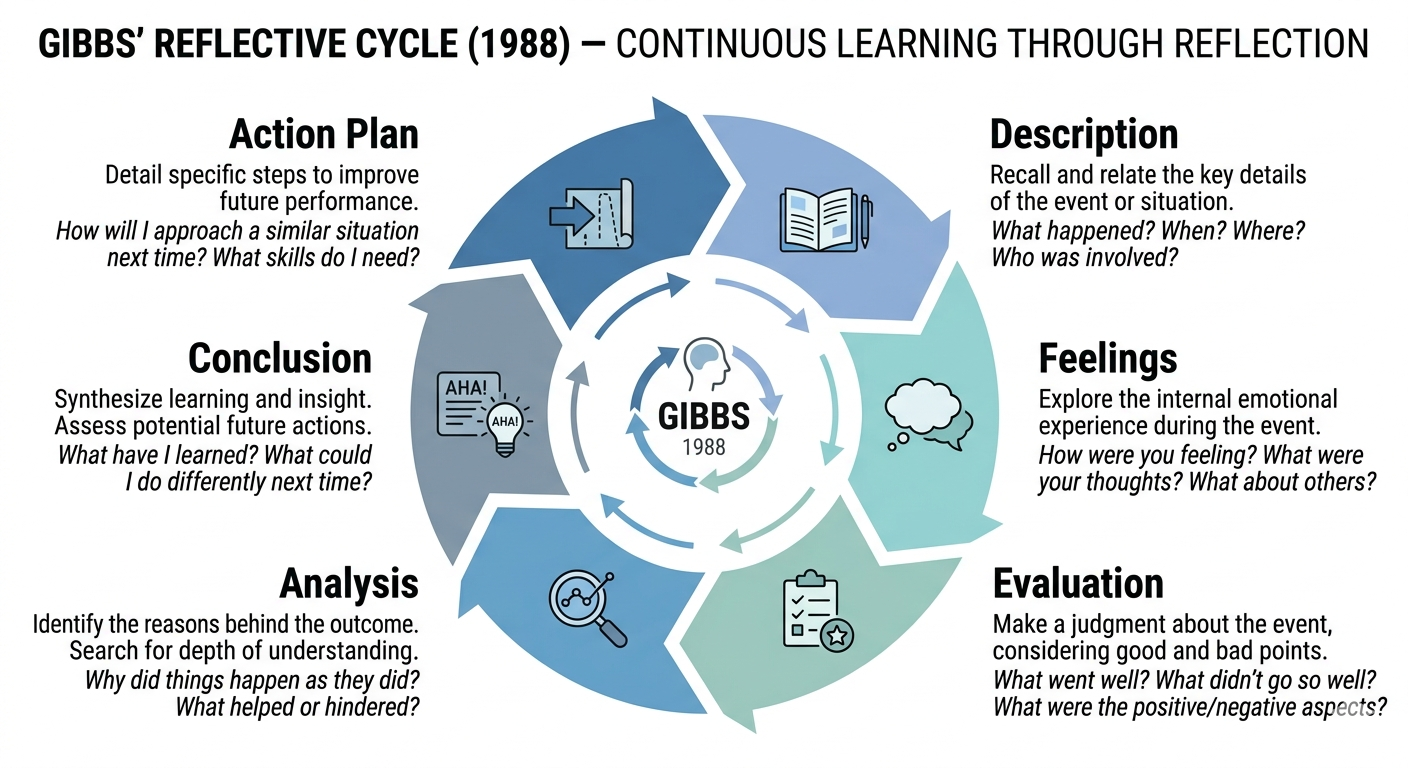
Reflective Writing Explained: Using Gibbs’ Reflective Cycle

For many UK students, the first reflective assignment is a genuine shock. You have spent years being told to write objectively, avoid “I”, and stick to the evidence. Then a nursing, teaching or CIPD module asks you to reflect on your own experience in the first person, and the rules seem to flip overnight. Reflective writing is a distinct academic skill, and once you understand its purpose and a reliable structure, it becomes one of the more rewarding things you will write.

This guide explains what reflective writing is, walks through Gibbs’ Reflective Cycle stage by stage, and shows with a worked example how to stay analytical rather than slipping into a diary. By the end, you should be able to approach a reflective task with a clear plan rather than a blank page.

What reflective writing is (and isn’t)

Reflective writing explores an experience to learn from it. Rather than reporting facts about the world, you examine something you did or witnessed, unpack what happened and why, and draw out lessons that will change how you act in future. It is personal, but it is not casual. The goal is structured learning, not storytelling.

This is where many students go wrong. A reflective piece is not a diary entry that simply recounts events, nor is it a confession of feelings for its own sake. Feelings have a place, because they affect decisions, but they are a starting point for analysis, not the destination. The marks come from what you make of the experience: the insight, the connection to theory, and the concrete plan for doing better.

It is also not the place for vague generalities like “I learned a lot and will try harder. Strong reflection is specific. It names what happened, identifies exactly what you would change, and explains why that change is grounded in evidence or professional standards. That specificity is the difference between a pass and a strong mark.

Gibbs’ Reflective Cycle, stage by stage

One of the most widely used frameworks in UK courses is Gibbs’ Reflective Cycle, developed by Graham Gibbs in 1988 to give structure to learning from experience. The University of Edinburgh’s Reflection Toolkit explains the model clearly and is a reliable reference if you want to read more. The cycle has six stages, and its strength is that it carries you from simply describing an event all the way to planning future action.

Description and feelings

The first two stages set the scene. In the description stage, you explain what happened factually and concisely: the situation, who was involved and what you did. Keep this tight, because it is the lowest-scoring part. In the feelings stage, you note what you were thinking and feeling at the time. This matters because emotions shape decisions, and naming them honestly is the foundation for the analysis to come.

Evaluation and analysis

This is where the real marks live. In the evaluation stage, you weigh up what went well and what did not. In the analysis stage, you go deeper and ask why, bringing in theory, research or professional guidance to make sense of the experience. This is the point where reflective writing becomes genuinely academic, because you are connecting personal experience to a wider evidence base rather than just narrating.

Conclusion and action plan

In the conclusion stage, you summarise what you have learned and what you might have done differently. The action plan is the most forward-looking and often the highest-value stage: you set out specific, realistic changes for next time. Vague intentions score poorly here; concrete, evidence-informed actions score well. If you take one thing from Gibbs, make it a strong action plan.

Writing in the first person without rambling

Because reflective writing is about your experience, the first person is not only allowed but expected. “I felt unprepared because I had not reviewed the care plan” is exactly the right register. The challenge is keeping that personal voice analytical rather than chatty.

A useful discipline is to make sure every personal statement does some work. If you write “I felt anxious”, follow it with why that mattered and what it led to. The structure of a PEEL paragraph can help even here, with your point and feeling, the evidence of what happened, the explanation that links to theory, and the link forward to your action plan. The same critical instinct covered in our guide on descriptive vs critical writing applies: do not just describe the experience, interrogate it.

A worked reflective paragraph

Here is a short, anonymised example using the cycle. “During a placement shift, I was asked to explain a medication change to a patient and realised I did not fully understand the rationale myself (description). I felt exposed and worried about giving incorrect information (feelings). On reflection, I handled it reasonably by saying I would check and return, but I should not have been caught unprepared (evaluation). Linking this to the principle of evidence-based practice, my discomfort came from acting beyond my current knowledge rather than pausing to confirm it (analysis). I have learned that admitting uncertainty is safer than guessing (conclusion). In future, I will review medication rationales at the start of a shift and confirm anything unfamiliar before speaking with a patient (action plan).”

Notice how brief the description is and how much weight sits on analysis and action. That balance is what markers look for.

If a reflective assignment is looming and you would value expert guidance, our CIPD assignment help service supports HR and people-profession students with the reflective tasks built into many CIPD qualifications.

Where reflective writing is used: nursing, CIPD and education

Reflective writing is most common in professions where learning from practice is essential. Nursing and other healthcare courses use it heavily, partly because the Nursing and Midwifery Council expects reflective practice as part of professional development. CIPD qualifications in human resources and learning and development build reflection into many units, and teacher-training courses use it to develop classroom practice.

In each of these fields, reflection is not an academic box-ticking exercise; it mirrors what qualified professionals do throughout their careers. Learning to do it well now is a transferable skill that will follow you into practice. For healthcare students specifically, reflection sits alongside other discipline conventions, which we cover in our guide on how to write a nursing assignment.

How to balance your word count across the cycle

A practical question students always ask is how much to write at each stage. While there is no fixed formula, a useful rough split is to keep description and feelings to around a quarter of your word count combined, devote roughly half to evaluation and analysis, and use the final quarter for the conclusion and action plan. This deliberately starves the part that earns fewest marks and feeds the parts that earn most.

Many students do the opposite by instinct, because describing what happened is the easiest stage to write. If you find your draft is two-thirds description, that is a clear signal to cut. A good editing test is to ask of every sentence in the description: does the reader actually need this to understand my analysis? If not, remove it. The space you free up can go into deeper analysis or a more specific action plan.

Linking reflection to theory and models

What separates strong reflective writing from a personal account is the use of theory. In the analysis stage, naming a relevant model, concept or piece of evidence shows your tutor that you are making sense of the experience through a professional lens rather than relying on instinct alone. For a nursing student, that might mean referencing evidence-based practice or a communication framework; for an HR student, a model of feedback or change.

You do not need to drown the reflection in citations, but one or two well-chosen connections lift the whole piece. The trick is relevance: the theory should genuinely illuminate what happened, not be bolted on to look academic. When the link is real, your reader can see the moment where experience and knowledge meet, and that is exactly what reflective assessment is designed to capture.

Common reflective writing mistakes

A few recurring errors hold reflective writing back. The most common is spending too long on description and too little on analysis and action. Another is keeping the reflection entirely internal, with no link to theory, research or professional standards, which leaves it feeling like a personal anecdote. A third is writing an action plan so vague it could apply to anyone, such as “I will communicate better”, rather than a specific, checkable step.

Avoiding these comes down to balance and specificity. Keep the story short, do the thinking in the middle, and finish with an action plan you could actually be held to.

Conclusion

Reflective writing asks you to learn out loud, turning experience into insight and insight into a plan. Gibbs’ Reflective Cycle gives you a dependable route from describing what happened to deciding what you will do differently, with the analysis in the middle carrying most of the marks. Write personally but purposefully, link your experience to evidence, and finish with a concrete action plan.

If you would like support producing a polished, academically sound reflective piece, the team at Assignment Fix can help through our professional assignment writing service. We provide model reflective work that shows you exactly how to apply the cycle in your own field, so you can build the skill for the long term.

Descriptive vs Critical Writing: How to Add Critical Analysis to Your Assignments

Descriptive vs Critical Writing: How to Add Critical Analysis

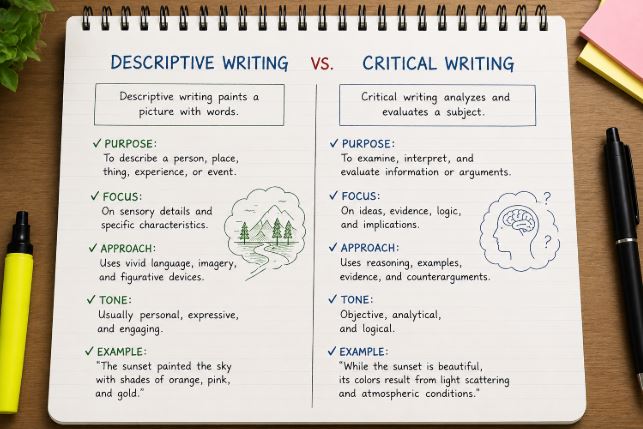
There is one comment that appears on more UK assignments than almost any other: too descriptive, needs more critical analysis. If you have seen it, you know how frustrating it is. You understood the material, explained it clearly, and still lost marks. The problem is rarely effort or knowledge. It is that university rewards critical writing over description, and the two are genuinely different skills. This guide shows you the difference and, more importantly, how to make the switch.

The good news is that becoming more critical does not mean reading more or writing more. It means doing something different with what you already have. Once you can see the gap between describing and analysing, you can close it deliberately, paragraph by paragraph.

The feedback every student dreads: ‘too descriptive’

Description tells the reader what happened, what a theory says, or what a source claims. It is necessary, but on its own it is low-value at degree level. Critical writing goes further: it asks why something matters, how convincing the evidence is, and what follows from it. Markers reward that second move because it shows you are thinking, not just reporting.

Most students are excellent describers by the time they reach university, because school and college often reward accurate recall. The leap to critical analysis is not about abandoning description; you still need it to set up your points. The difference is the ratio. A descriptive answer is mostly what. A critical answer uses a little what and far more so what and how do we know.

This is also why working harder at the same approach rarely helps. Adding more description to a descriptive essay just makes it longer, not better. The fix is qualitative, and that is encouraging, because it means a relatively small change in how you write can lift your grade significantly.

Description vs analysis vs evaluation

It helps to separate three levels, because critical writing usually blends the last two on top of the first.

Description states the facts: The 2008 financial crisis led to widespread bank failures. Analysis breaks that down and explains relationships: Bank failures spread because institutions were highly interconnected, so one collapse undermined confidence in others. Evaluation makes a judgement about significance or quality: This suggests that interconnection, more than any single bank’s behaviour, was the critical vulnerability, which is why later reforms focused on systemic risk.

Notice that the facts barely change across the three. What changes is the work you do with them. Strong assignments move fluidly between these levels, anchoring each point in evidence and then interrogating it. If your writing tends to stop at the first level, that is your single biggest opportunity for improvement.

A side-by-side paragraph rewrite

Abstract advice only goes so far, so here is the shift in action. Imagine a paragraph in an education assignment.

Descriptive version: Formative assessment is assessment used during learning to give feedback. Many teachers use it. Black and Wiliam wrote about it. It is different from summative assessment, which happens at the end.

That is accurate and entirely descriptive. Now the critical version: Formative assessment is valued because it feeds back into learning while there is still time to act, unlike summative assessment, which arrives too late to change the outcome. Yet its impact depends heavily on what teachers do with the information; feedback that is not acted on adds little. This suggests the real variable is not whether assessment is formative in name, but whether it changes subsequent teaching, which complicates simple claims that formative assessment improves results.

The second paragraph uses the same sources and facts but weighs them, draws a conclusion and even raises a complication. That is critical writing, and it is the level markers are asking for when they write too descriptive.

If you would find it useful to see critical writing modelled in your own discipline, our professional assignment writing service produces subject-specific model answers you can study to see exactly how the analysis is built.

Question prompts that force critical thinking

The fastest way to become more critical is to interrogate your own sentences. After each point you make, pause and ask a short set of questions:

  • So what? Why does this point matter to my argument?
  • How do we know? What evidence supports this, and how strong is it?
  • According to whom? Whose claim is this, and do others disagree?
  • What follows? What does this imply or lead to?
  • What are the limits? Where might this not hold true?

You do not need to answer all five every time. Even applying one or two converts a flat statement into an analytical one. With practice, these questions become automatic, and your writing shifts from reporting to reasoning without you having to force it. Understanding the instruction words in your brief helps too, which is why our guide on UK assignment command words explained is a useful companion to this one.

Using sources to build an argument, not pad it

A subtle cause of descriptive writing is treating sources as things to report rather than tools to think with. If each paragraph simply says Author A found X, Author B found Y, you are summarising, not analysing. The critical move is to put sources into conversation: where do they agree, where do they clash, and what does that tension tell us?

For example, instead of Smith argues markets self-correct, and Jones argues they need regulation, you might write Smith’s confidence in self-correction sits awkwardly against Jones’s evidence of repeated market failures, suggesting that self-correction may work in stable conditions but break down precisely when it is most needed. Same sources, but now they are building an argument.

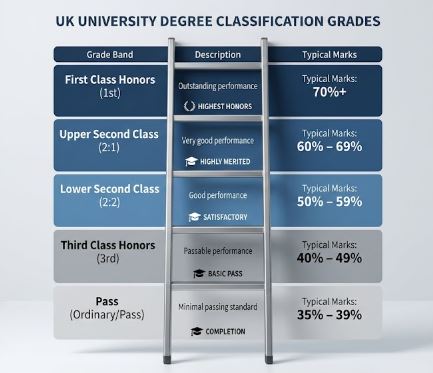
This skill underpins higher grades, which is why it connects so directly to the UK degree classifications markers use. It is also the engine of a strong PEEL paragraph, where the explain step is where your critical analysis lives.

Why critical writing feels hard at first

If critical writing feels uncomfortable, that is normal and even a good sign. Description feels safe because it is hard to be wrong when you are simply reporting facts. Analysis and evaluation require you to commit to a position, and committing feels risky. Many students hold back not because they cannot think critically, but because they are nervous about asserting a judgement in case the marker disagrees.

Here is the reassurance: markers are not looking for the right opinion. They are looking for a position that is reasoned and supported by evidence. You can argue that a theory is flawed or that a study is convincing, as long as you show your working. A well-argued conclusion the marker personally disagrees with will still score well, whereas a safe, fence-sitting summary will not. Permission to take a defensible position is often the unlock that turns a capable describer into a confident critical writer.

It also helps to remember that critical does not mean negative. Evaluating fairly means acknowledging strengths as well as weaknesses. A balanced critical paragraph might concede that a model is useful in certain conditions before explaining where it breaks down. That even-handedness is itself a marker of sophisticated thinking.

How this looks across different subjects

Critical analysis takes slightly different forms depending on your discipline, which is worth bearing in mind. In the sciences and social sciences, it often means evaluating methodology, sample sizes and the strength of evidence behind a claim. In business and management, it means weighing the practical limits of a model against real-world conditions. In the humanities, it means interrogating interpretations, assumptions and competing readings of a text or event.

Despite these differences, the underlying move is identical everywhere: do not just report, interrogate. Whatever your subject, the prompt questions in the previous section will guide you to the kind of critical engagement your markers expect, because they all push you from what towards so what.

A practical routine for your next assignment

To make this stick, try a simple editing pass. Once you have a draft, go through it highlighting every sentence that only describes. For each highlighted sentence, ask one of the prompt questions above and add a sentence of analysis or evaluation. You will often find your paragraphs roughly double in analytical content without becoming much longer, because you are replacing filler with reasoning.

If you are juggling several deadlines and want targeted help raising the analytical quality of a specific piece, our university assignment help service can review your draft and show you, line by line, where description could become analysis.

Conclusion

The difference between descriptive and critical writing is the difference between telling the reader what you know and showing the reader how you think. You do not need more facts; you need to do more with the facts you have, by asking why they matter, how strong the evidence is, and what follows. Apply the prompt questions, put your sources into conversation, and run an analytical editing pass before you submit.

If you want to see exactly what strong critical writing looks like in your subject, the team at AssignmentFix can help. Our model assignments and detailed feedback are designed to build your own analytical skills, so the next time you get feedback, it says something far better than too descriptive.

How to Avoid Plagiarism at University: Turnitin Similarity Score Explained

How to Avoid Plagiarism at University (Turnitin Similarity Score Explained)

The night before a deadline, a lot of students do the same thing: they submit to Turnitin, see a percentage, and panic. Is 18% too high? Is 8% safe? The truth is that learning how to avoid plagiarism has very little to do with chasing a magic number and everything to do with how you research, write and cite. This guide clears up the biggest myths, explains what your similarity score really shows, and gives you practical habits that keep your work genuinely original.

Plagiarism is one of the most serious issues in UK higher education, but it is also one of the most misunderstood. Most students who get into difficulty never intended to cheat. They simply did not realise that a habit they had picked up counted as plagiarism. Understanding the rules properly is the surest way to stay safe.

What plagiarism actually means in UK universities

At its simplest, plagiarism is presenting someone else’s words, ideas or work as your own. That covers obvious cases like copying a paragraph from a website, but it also covers subtler ones: paraphrasing a source too closely, reusing your own previously submitted work without permission (known as self-plagiarism), and failing to cite an idea even when you have rewritten it.

UK universities treat plagiarism as a form of academic misconduct, and crucially, intent is not always the deciding factor. You can breach the rules accidentally through poor referencing and still face consequences. This is why the most effective protection is not a clever tool but a careful, honest writing process. If you understand what counts as plagiarism, you can avoid it by default.

It also helps to know that universities distinguish between different behaviours. Sloppy referencing by a first-year is usually handled very differently from deliberate, large-scale copying. The system is designed to be fair, but it does expect you to learn the conventions, which is part of what your degree is teaching you.

The types of plagiarism students don’t realise

Most students picture plagiarism as copying and pasting from a website, but the cases that catch people out are usually quieter. Direct plagiarism, lifting text word for word without quotation marks, is the obvious one. Mosaic plagiarism, sometimes called patchwriting, is more common: you take a sentence and swap a few words for synonyms while keeping the structure, which still counts because the underlying expression is not yours.

Then there is plagiarism of ideas, where you correctly avoid copying the words but present someone’s argument or finding without crediting them. Self-plagiarism happens when you reuse your own earlier coursework in a new submission without permission. Finally, accidental plagiarism through lost or muddled references is perhaps the most frequent of all, and it is entirely preventable with good note-keeping. Recognising these categories is the first step, because you cannot avoid a problem you do not know exists.

How Turnitin works (and what it doesn’t do)

Turnitin is the text-matching software most UK universities use. When you submit, it compares your work against a vast database of websites, journals, books and previously submitted student papers, then produces a similarity report highlighting matching text and where it came from. You can read more about the tool on the official Turnitin website.

The single most important thing to understand is what Turnitin does not do: it does not detect plagiarism, and it does not understand meaning. It detects matching strings of text. A high score does not automatically mean you cheated, and a low score does not automatically mean you are in the clear. The report is a starting point for a human to interpret, not a verdict. Your marker decides what the matches mean.

That distinction matters because legitimate features of academic writing produce matches. Direct quotations, reference lists, common technical phrases and the assignment question itself can all light up a report without anything being wrong. Many universities configure Turnitin to exclude quotes and bibliographies, but not all do, which is one reason raw percentages are so unreliable.

What similarity percentage is ‘safe’?

This is the question everyone asks, and the honest answer is that there is no official safe number. Anyone who tells you “stay under 10%” or “20% is fine” is guessing. Context decides everything.

Consider two reports. The first shows 25% similarity, almost all of it from correctly quoted and cited sources and a reference list. The second shows 9%, but it is a single block of uncited text lifted from a website. The first is usually perfectly acceptable; the second is plagiarism despite the lower number. Markers look at where the matches are and whether they are properly attributed, not just the headline figure.

So rather than aiming for a percentage, aim for honest attribution. If everything that is not your own wording is quoted, cited and clearly someone else’s, the number will take care of itself. Trying to game the score, by swapping words or breaking up sentences to dodge matches, is both risky and a misuse of your time.

If you would rather hand in work you know is original and correctly referenced from the start, our custom writing service produces model assignments to your brief, written from scratch and checked for originality, so you can use them as a reliable learning reference.

Seven habits that keep you original

Staying original is mostly about process, not last-minute fixes. The students who never have to worry about a similarity report are usually the ones with good research habits, because original writing is a by-product of how they work rather than something they bolt on at the end. These seven habits do almost all of that work for you.

  1. Take notes in your own words from the start, rather than copying chunks you intend to reword later.
  2. Keep a clear record of every source as you research, including page numbers, so citing is easy.
  3. When you use an exact phrase, put it in quotation marks immediately, before you forget it was a quote.
  4. Cite every idea you borrow, even fully paraphrased ones, because the idea still belongs to its author.
  5. Separate your sources from your screen when you write, so you express ideas from understanding rather than copying.
  6. Reference as you write, not at the end, so nothing slips through unattributed.
  7. Leave time for a final check, reading your in-text citations against your reference list.

These habits matter more than any software setting. Our guide on how to paraphrase without plagiarising goes deeper on the rewriting skill behind habit five, and our UK referencing styles explained guide covers habits two and four in detail.

What about AI and Turnitin?

A newer worry is whether AI-written text triggers plagiarism flags. This is a fast-moving area, and AI detection is far less reliable than text matching. We cover it fully in our guide on whether Turnitin can detect ChatGPT, but the short version is the same as the rest of this article: submit work that genuinely reflects your own understanding and you have nothing to manufacture or hide.

What happens if you’re accused of misconduct

Knowing the process takes a lot of the fear out of it. If a marker has concerns, your work is usually referred for review under your university’s academic integrity procedures. You will typically be told what the concern is and given a chance to respond, often in a meeting or written statement. An academic conduct panel or officer then decides the outcome, which can range from advice and a capped mark to more serious penalties for deliberate, repeated breaches.

The key points to remember are that you have a right to put your side, that genuine mistakes are treated differently from intentional cheating, and that keeping your drafts and notes can be powerful evidence that the work is your own. Panic helps no one; preparation does.

If English is not your first language, or you are returning to study after time away, do not assume the rules are obvious. Referencing conventions vary between countries and even between schools, and what was acceptable elsewhere may not be here. Asking your tutor or academic skills team early is a sign of diligence, not weakness, and it is far better than discovering a problem after submission. Universities would much rather teach you the conventions than penalise you for not knowing them.

Conclusion

Learning how to avoid plagiarism comes down to a single principle: be honest about what is yours and what is borrowed, and make that clear through quotation and citation. Once you do that, the Turnitin similarity score stops being something to fear and becomes what it was always meant to be, a tool that confirms you have referenced properly. Forget the mythical safe percentage and focus on a clean, attributed writing process.

If you want the reassurance of original, properly referenced work to learn from, the team at AssignmentFix can help. Through our professional assignment writing service, every piece is written from scratch and checked for originality, giving you a trustworthy model to build your own skills on.

What Do UK Degree Classifications Mean? First, 2:1, 2:2 & Marking Criteria

What Do UK Degree Classifications Mean? (First, 2:1, 2:2 Explained)

Few things cause more quiet anxiety than not really understanding how your work is being judged. You hand in an assignment, get a number back, and have only a vague sense of what it means for your degree. Understanding UK degree classifications removes that fog. Once you know what each band actually requires, you can read your feedback differently and start writing towards the grade you want rather than hoping for it.

This guide explains the UK grading ladder in plain terms, then goes further than most by showing what genuinely separates a 2:2 from a 2:1 and a 2:1 from a First. The percentages are the easy part. The writing behaviours behind them are what really move your grade.

The UK classification system at a glance

UK undergraduate degrees are usually awarded in four classes. A First-class honours (often just “a First”) is the top band. Below it sits the upper second-class, written as 2:1 and spoken as “two-one”. Then comes the lower second-class, the 2:2 or “two-two”, followed by the third-class, or “third”.

The typical percentage boundaries are straightforward: a First is 70% and above, a 2:1 is 60–69%, a 2:2 is 50–59%, and a third is 40–49%. Your final classification is built from your module marks over the relevant years of study, usually with later years weighted more heavily. The exact weighting is set by your university, so check your programme regulations rather than assuming.

It is worth saying early that a 2:1 is the most commonly awarded class and the standard minimum for many graduate schemes and postgraduate courses. It is a strong result, not a consolation prize.

What each grade band actually requires

Percentages tell you where a piece of work landed, but not why. The real story is in the quality of thinking and writing. Here is what markers are typically looking for at each level.

First-class (70% and above)

First-class work does more than answer the question correctly. It argues a clear position, engages critically with evidence, and draws on wide and current reading. The structure feels deliberate, the referencing is accurate, and the writing is polished. Crucially, a First shows independent thought, where you are not just reporting what sources say but evaluating how convincing they are and reaching your own reasoned judgement.

Upper second / 2:1 (60–69%)

A 2:1 is solid, well-organised work that demonstrates good understanding and some critical analysis. The argument is generally clear and supported by relevant sources. What usually holds a 2:1 back from a First is depth: the analysis stays a little safe, the reading could be wider, or the argument does not push beyond the obvious. Closing that gap is often about adding evaluation rather than more content.

Lower second / 2:2 (50–59%)

A 2:2 shows reasonable understanding but tends to be more descriptive than analytical. It often summarises sources accurately without weighing them up, or answers the question on the surface without digging into the “why” and “so what”. Many capable students sit at a 2:2 not because they lack knowledge, but because they are describing when they should be analysing.

How tutors read a marking rubric

Marking is more consistent than it can feel. Most modules use a rubric with criteria such as critical engagement, use of evidence, structure and coherence, and presentation including referencing. When a marker assesses your work, they are matching it against grade descriptors for each criterion, then forming an overall judgement.

This is good news, because it means rubric language is a map. Phrases like “critical engagement with the literature” or “evidence of wider reading” are not vague praise; they are instructions. If your feedback repeatedly mentions one criterion, that is exactly where your marks are leaking. Our guide on UK assignment command words explained helps you decode the instruction verbs in your brief, which is the first step to hitting the rubric.

To make this concrete, imagine a rubric line that says “demonstrates critical evaluation of sources, worth 30% of the mark”. A descriptive answer that lists what three authors say might score poorly on that line even if every fact is correct, because it never evaluates. An answer that compares those authors, notes where they disagree and explains which is more convincing scores highly on the same line with broadly the same reading. The content is similar; the marks differ because of how the evidence is used. Reading your rubric this way, criterion by criterion, tells you precisely where to spend your effort.

If you want help interpreting your own rubric and feedback, our university assignment help service pairs you with subject specialists who can show you, on your own work, where the grade is being lost.

Turning feedback into a higher grade

Feedback is the most undervalued resource you have. Most students read the mark, feel a flash of emotion, and move on. The students who climb a classification do the opposite: they treat feedback as a checklist for the next assignment.

A practical method is to collect comments from several pieces of work and look for patterns. If “too descriptive”, “needs more critical analysis” or “where is your argument?” keeps appearing, the fix is consistent. After each point you make, ask “so what?” and “how do we know?”, then add the evidence and evaluation that answers those questions. This single habit is often what moves a paragraph from 2:2 to 2:1 quality.

Our guide on descriptive vs critical writing shows that shift in action with a before-and-after rewrite, and our breakdown of how to write a first-class university assignment covers the planning and structure habits that support higher marks.

A quick before-and-after example

Imagine a sentence in a marketing assignment: “Social media is widely used by brands to reach customers.” That is descriptive and true, but it earns little. A 2:1 version adds analysis: “Social media lets brands reach customers directly, but its effectiveness depends on platform fit; a campaign that thrives on a visual platform may fail on a text-led one, which suggests channel choice matters more than presence alone.” The second version weighs the idea, draws a conclusion, and signals critical thinking. That is the level shift markers reward.

Why so many students stall at a 2:2

The honest answer is that university rewards a different style of writing than school often did. Many students arrive able to explain and summarise extremely well, which is precisely what a 2:2 looks like. The leap to a 2:1 or First is not about working harder at the same thing; it is about changing what you do, by analysing, evaluating and arguing rather than reporting.

There is no trick or shortcut here, and you should be wary of any service that promises one. Genuine improvement comes from building the underlying skills, which is exactly what ethical academic support should help you do. If you are resitting a module after a disappointing result, our resit assignment help service focuses on understanding what went wrong so the next attempt is stronger.

What about Master’s grades and borderline marks?

Postgraduate study uses a different scale, which surprises many students moving up from a Bachelor’s degree. Taught Master’s degrees are usually classed as Distinction, Merit or Pass rather than First, 2:1 and 2:2. A Distinction is commonly awarded at 70% and above, a Merit at 60–69%, and a Pass at 50–59%, though the exact thresholds and any required average vary by institution and programme. Expectations also rise: at Master’s level, the critical analysis and independent argument that earn a First at undergraduate level are the baseline rather than the ceiling.

Borderline marks deserve a word too. If your average sits just below a boundary, many universities apply borderline or classification rules that can lift you into the higher band, for example where a certain proportion of your credits already sit in that band. These rules are set locally and are not automatic, so the safest approach is never to rely on them. Treat every assignment as if it could be the one that decides your classification, because cumulatively, it is.

A useful mindset is to stop thinking in terms of a single final number and start thinking module by module. Each assignment you lift from a 2:2 to a 2:1 nudges your weighted average upward. Small, consistent gains across a year add up to a different classification far more reliably than hoping for one standout result at the end.

Conclusion

UK degree classifications are not a mystery once you understand them. A First needs critical, well-evidenced, independent thinking; a 2:1 needs solid analysis with a clear argument; a 2:2 tends to describe where it should evaluate. Knowing this lets you read your rubric and feedback as practical instructions rather than judgements.

If you keep landing just below the band you are aiming for, focused support can make the difference. The team at AssignmentFix offers ethical guidance, model answers and detailed feedback through our professional assignment writing service, so you can see exactly what higher-grade work looks like in your subject and build the skills to produce it yourself.

UK Referencing Styles Explained: Harvard, APA & OSCOLA (With Examples)

UK Referencing Styles Explained: Harvard, APA & OSCOLA

If you have ever stared at a tutor’s comment that simply says reference this properly and felt none the wiser, you are not alone. Referencing is one of the few academic skills that almost every UK student is expected to master, yet very few are taught step by step. The result is lost marks for something entirely avoidable. This guide walks through the three UK referencing styles you are most likely to meet, shows you exactly how each one looks, and explains the small habits that keep you on the right side of the rules.

Getting referencing right is not about pleasing a marker for its own sake. It is about showing where your evidence comes from, letting a reader trace your sources, and protecting yourself from accusations of plagiarism. Once you understand the logic behind it, the formatting becomes far less intimidating.

Why referencing matters in UK universities

Every academic argument you make needs support. When you cite a source, you are signalling that a claim is backed by published evidence rather than personal opinion. Markers can tell the difference instantly. An uncited statement reads as your own assertion, and if it clearly came from somewhere else, it raises a red flag.

Referencing also forms part of the marking rubric on most modules. A well-referenced piece looks credible and shows that you have read widely. A poorly referenced one looks rushed, even if the underlying ideas are strong. Just as importantly, careful referencing is your best defence against unintentional plagiarism, which UK universities take seriously regardless of whether it was deliberate.

A quick note before we start: always check your module handbook. Departments set their own requirements, and a handbook instruction always overrides general advice, including this article.

Harvard referencing (the UK default)

Harvard is the most widely used system in UK business schools and across the social sciences. It is an author–date style, which means your in-text citation gives the author’s surname and the year of publication, and a matching full entry appears in your reference list at the end.

One thing that catches students out is that there is no single official Harvard manual. Universities publish their own variants, so punctuation can differ slightly between institutions. The widely recommended UK standard is Cite Them Right, which many libraries provide free access to and which gives consistent examples for almost any source type.

In-text citations

In Harvard, you weave the source into your sentence. If you mention the author by name, the year follows in brackets: according to Smith (2021), the policy failed. If you do not name the author in the sentence, both surname and year go in brackets at the end: the policy failed (Smith, 2021). When you quote directly, add a page number: (Smith, 2021, p. 14).

Reference list format

Your reference list sits at the end, ordered alphabetically by surname. A book entry typically looks like this: Smith, J. (2021) Public policy in practice. 2nd edn. London: Routledge. A journal article includes the article title, the journal in italics, and the volume and issue. A website adds the date you accessed it. The exact punctuation should follow your university’s Harvard guide, but the elements stay the same.

APA 7th edition: when your department uses it

APA is closely related to Harvard, since both are author–date systems, but it is more prescriptive about formatting. You will see it most often in psychology and some education and health courses. The official rules come from the American Psychological Association, whose APA Style website is the authoritative reference.

The main differences from Harvard are in the details: APA uses an ampersand between two authors in brackets (Jones & Lee, 2020) but “and” in running text, and it has specific rules for capitalisation and for listing multiple authors. If your department asks for APA, do not assume it is the same as Harvard with a different name. Use an APA-specific guide so you get the small conventions right, because those are exactly the things markers notice.

If juggling these conventions while also writing the actual content feels overwhelming, it can help to see how an experienced writer handles it. Our professional assignment writing service produces fully referenced model work you can learn from, with citations formatted to your required style.

OSCOLA: referencing for UK law students

If you study law in the UK, you will almost certainly use OSCOLA, the Oxford Standard for the Citation of Legal Authorities. It works very differently from Harvard and APA. Instead of author–date brackets, OSCOLA uses numbered footnotes at the bottom of each page, with full citations there and minimal punctuation.

OSCOLA also has its own logic for citing cases, legislation and secondary sources, and the bibliography is usually split into separate lists for cases, legislation and other materials. It takes practice, but it is the expected standard in law schools, so it is worth learning early. The full guide is produced and maintained by the Oxford Law Faculty and is freely available.

A typical case citation gives the party names, the year, the court and the report, for example: Donoghue v Stevenson [1932] AC 562 (HL). Footnotes are numbered continuously through the document. If you are moving from another subject into a law module, expect a learning curve and budget time for it.

The three styles side by side

Seeing the same source formatted three ways makes the differences much clearer than any description. The table below shows how you would handle the same types of source in each system. Use it as a quick mental model, then confirm the fine detail against your own university’s guide.

Element Harvard APA 7th OSCOLA
Core Principle Author–date in text Author–date in text Numbered footnotes
Common Subjects Business, Social Sciences Psychology, Health Law
In-text Style (Smith, 2021) (Smith, 2021) Superscript number ¹
Reference List Alphabetical by surname Alphabetical by surname Split lists for cases, legislation, and sources
Direct Quote (Smith, 2021, p. 14) (Smith, 2021, p. 14) Pinpoint page in footnote

The key takeaway is that Harvard and APA share the same family logic, while OSCOLA is a different animal built for legal sources. If you ever move between subjects, that is the shift to watch for.

A practical tip from experience: when a marker writes inconsistent referencing,they almost always mean you have mixed conventions, not that you got everything wrong. Picking one guide and following it from the first citation to the last solves most of these comments before they happen.

Common referencing mistakes that lose marks

Most referencing errors are small and repetitive, which is good news because they are easy to fix once you know them. The most common problems include:

  • Mismatched citations, where a source appears in the text but not the reference list, or the other way round.
  • Inconsistent formatting, such as switching between styles or punctuating entries differently within the same list.
  • Missing page numbers for direct quotations.
  • Forgetting to cite a paraphrase. Putting an idea in your own words does not remove the need to credit the source.
  • Citing a source you never actually read, based only on someone else’s summary of it.

Each of these is avoidable with a final pass before submission. Reading your reference list against your in-text citations, one by one, catches the majority of errors in a few minutes.

If you would rather have a second pair of eyes on your citations, our editing and proofreading services include a referencing check so you can submit with confidence.

Free tools vs. doing it manually

Reference generators and citation tools can save time, but they are not infallible. They frequently miss details, apply the wrong style variant, or produce entries that look right but are subtly incorrect. Treat any tool’s output as a draft, not a finished product, and always check it against a trusted guide such as Cite Them Right.

The most reliable approach is to record your sources as you research, not at the end. Keep a running list with all the details you will need, so that when you write your reference list it is a matter of formatting rather than detective work. This single habit removes most of the last-minute panic that surrounds referencing.

If you are building a longer piece such as a dissertation or research paper, referencing sits alongside other skills like critical reading and synthesis. Our guide on how to write a literature review shows how citations come together into a coherent argument, and our explainer on how to paraphrase without plagiarising covers the rewriting skills that go hand in hand with good referencing. For the wider picture of what counts as original work, see our guide on how to avoid plagiarism at university.

Conclusion

Mastering UK referencing styles is one of the quickest ways to lift the quality of your assignments without changing a single argument. Once you know whether your course uses Harvard, APA or OSCOLA, and you understand the logic behind it, formatting becomes routine. Record sources as you go, check your list against your citations, and lean on authoritative guides rather than memory.

Last-Minute Assignment Help: Can You Get Quality Work in 24 Hours?

It is the night before, the brief is still blank, and panic is setting in. Take a breath last-minute assignment help is real, and quality work in 24 hours is genuinely possible within limits. This guide tells you honestly what is achievable, how good services protect quality at speed, and exactly how to brief a writer in minutes.

What’s realistically achievable in 24 hours

For many standard-length assignments say, an essay or report up to a few thousand words a subject-matched writer can produce original, referenced work inside 24 hours. What does not fit a one-day window is the very long or highly specialist piece: a dissertation chapter, complex data analysis, or niche technical work needs more time to do well. Honesty about that limit is itself a sign of a trustworthy service.

How quality is protected on urgent orders

Speed should not switch off the safeguards. A reputable provider still matches your work to an experienced writer, still runs plagiarism and AI checks, and still has an editor review before delivery. The biggest quality risk on a rush job is not the clock it is an unclear brief, which is the one thing entirely in your control.

Realistic 24-hour scenarios

To set expectations, here is roughly what a single day allows:

  • Comfortable a 1,000–1,500 word essay or reflective piece in a familiar subject.
  • Achievable with a clear brief a 2,000–3,000 word report needing standard research.
  • Tight longer work, heavy data analysis, or a specialist topic; possible, but quality is easier to protect with more notice.
  • Not realistic in 24 hours a full dissertation or anything requiring primary research.

Knowing where your task sits helps you brief honestly and avoid disappointment. If it falls in the ‘tight’ band, flag that early so the writer can plan accordingly.

How to brief a writer fast (and well)

The 5 details that save the most time

  1. The full assessment brief or question, exactly as set.
  2. Word count and referencing style (Harvard, APA, OSCOLA).
  3. Module materials, lecture slides or a reading list.
  4. The marking rubric or grade descriptors, if you have them.
  5. Your firm deadline, including the time, not just the date.

Hand those over up front and a writer can start immediately instead of chasing you for basics. When you are ready, you can write my assignment and get matched fast.

Why briefs go wrong under pressure

When you are panicking, it is tempting to fire off half the information and hope the writer fills the gaps. That is exactly when quality slips not because the writer is rushed, but because they are guessing. A missing referencing style, an unstated word count or a forgotten module text can send a strong piece off in the wrong direction, and on a 24-hour job there is little time to fix course. Five minutes spent assembling a complete brief is the highest-value five minutes of the whole process.

What you can do yourself while you wait

Use the waiting time well: gather your sources, sketch a rough outline, and confirm your referencing style so you can slot citations in cleanly. Reading even two or three key sources means you will understand and be able to defend the finished work which matters, because the work should support your learning, not replace it.

Avoiding panic decisions and scams

Urgency is exactly when scam sites pounce. Do not pay upfront with no written terms, ignore ‘guaranteed undetectable promises, and avoid anyone who will not confirm originality or confidentiality. If you have a little more breathing room than you think, our guide to beating deadlines as a working student can help, and our cost guide explains why urgent work costs a little more.

Deadline tomorrow? Get urgent help now → write my assignment.

Want to order fast? Get matched with a writer when you buy assignment online.

Conclusion

A looming deadline is stressful, but it is not always a disaster. Quality 24-hour help is possible for standard work when a real service keeps its checks in place and you provide a complete brief fast. Stay calm, avoid panic-driven scams, and use the time you have wisely. When you need a dependable hand at speed, Assignment Fix is built for exactly this moment.

How to Choose the Best Assignment Writing Service in the UK

Search for the best assignment writing service UK and you will find a wall of identical promises. The trick is not finding a site that says it is the best it is knowing how to test the claim. This guide gives you a 10-point checklist you can apply to any provider, the red flags that should stop you, and the questions to ask before you pay.

What best really means for students

Best is not the flashiest homepage or the lowest price. For students it means reliable quality, genuine confidentiality, fair terms and writers who actually understand UK marking. A service that is confident in those things will happily be scrutinised in fact, it invites it.

The 10-point vetting checklist

Qualified UK writers and subject match

Can the service evidence qualified, UK-experienced writers and match you to your subject? Generalists writing outside their field is the most common quality problem.

Originality, plagiarism reports and AI-free policy

Work should be written from scratch, plagiarism-checked, with a report on request and a clear AI-free policy. Be wary of undetectable claims.

Confidentiality and data protection

A published privacy policy, secure payment and a promise never to share your identity are non-negotiable.

Clear pricing and revision/refund terms

Transparent pricing with revisions and refunds in writing  not a vague from £X that balloons at checkout. For context on fair pricing, see our assignment help cost guide.

Genuine reviews and responsive support

Look for independent reviews and test support before you order a quick, straight answer tells you a lot.

The remaining points round out the picture:

  1. Real, contactable business details.
  2. Samples you can judge for quality.
  3. A track record across your academic level.
  4. Reasonable, honest turnaround promises.
  5. Responsible, integrity-first messaging study support, not beat the system.

Red flags that signal a risky site

  • No real contact details or company information.
  • Prices that look too good to be true.
  • No originality guarantee or plagiarism report.
  • Pressure to pay upfront with no written terms.
  • Fake-looking reviews or evasive answers about writers.

Trust your instincts here. If a conversation with support leaves you with more doubts than answers, that feeling is information. The best providers reduce your uncertainty at every step; the risky ones increase it and then push you to commit anyway.

Questions to ask before you pay

A reputable provider will answer all of these without hesitation: Who writes my work and what are their qualifications? Do you provide a plagiarism report? What is your revision and refund policy? How do you protect my confidentiality? Is the work AI-free? If you would like to understand the workflow behind good answers, see how a service actually writes your assignment.

Putting the checklist to work

A checklist only helps if you actually use it, so make it practical. Open two or three provider websites in separate tabs and score each out of ten as you read. Note where a site is specific UK-based writers with relevant degrees versus where it is vague expert writers. Specificity is a proxy for honesty: a service that hides behind generalities usually has something to hide. The provider that scores highest on evidence, not adjectives, is the one worth your money.

A confident, legitimate service welcomes this kind of scrutiny rather than rushing you past it. If a site pressures you to order before you have had your questions answered, that pressure is itself a red flag. Good help can wait for you to feel sure.

Comparing services like for like

Put two or three providers side by side and score each against the checklist. Compare the same word count, level and deadline so price differences are meaningful. The winner is rarely the cheapest it is the one that evidences the most checklist items with the least hedging.

Run the checklist on us. See how AssignmentFix measures up → professional assignment writing service.

Want pricing and guarantees? Compare them when you buy assignment online.

Conclusion

The best UK assignment writing service is simply the one that survives scrutiny: qualified writers, original checked work, real confidentiality, fair terms and honest messaging. Use the 10-point checklist, watch for red flags, and ask the hard questions before you pay. We built Assignment Fix to pass that test so hold us to it.

Write My Assignment for Me”: How It Actually Works

If you have ever typed  write my assignment for me into Google at 11 pm, you probably felt two things at once: relief that help exists, and unease about how it works. This guide answers the second part honestly. We walk through exactly what a professional UK assignment writing service does once you order, who writes your work, how quality and originality are protected, and how to use the result the right way.

What to expect from a professional service

A legitimate service is not a vending machine that spits out essays. It is a structured workflow run by real people: academic writers, editors and quality checkers. When you ask a provider like Assignment Fix to write my assignment, expect a clear brief stage, a subject matched writer, original work checked for plagiarism and AI, and free revisions. If a site cannot explain these steps plainly, treat that as a warning sign.

Step by step: from brief to delivery

Here is the journey a typical order takes, start to finish.

1. Share your brief and deadline

You submit the assessment brief, word count, referencing style, module materials and deadline. The more detail you give, the closer the result matches your marker’s expectations. Vague briefs are the biggest cause of weak work.

2. Get matched with a subject writer

Your order goes to a writer who knows your field not a generalist. A nursing reflection and a finance report follow different conventions, so subject matching separates a serviceable draft from a strong one.

3. Drafting, research and referencing

The writer researches credible sources, builds an argument around your brief, and references as they go. Good providers draft critically rather than descriptively, because UK markers reward analysis over summary.

4. Quality, plagiarism and AI checks

Before anything reaches you, an editor reviews the work and it is run through plagiarism and AI detection tools. You can read how detection behaves in our explainer on whether Turnitin can spot AI text. A reputable service supplies a plagiarism report on request.

5. Delivery and free revisions

You receive the work by your deadline, with a window for free revisions. If a section misses the brief, you flag it and the writer adjusts it within the revision terms.

What to prepare before you order

You will get a better result, faster, if you gather a few things first. Have the assessment brief to hand, note your exact word count and referencing style, and collect any module materials, lecture slides or a reading list your marker expects you to use. If you have the marking rubric, share it tells the writer precisely what earns the marks. A complete brief at the start removes the back and forth that eats into your deadline and is the difference between a draft that lands and one that needs heavy revision.

How your writer is matched to your subject

Matching is more than picking a free writer. A trustworthy provider screens for qualifications, UK academic experience and a track record in your discipline. At minimum, a service should confirm:

  • Subject expertise a writer qualified in your field, not a catch all generalist.
  • UK academic standards someone who understands British marking criteria and grade bands.
  • Referencing fluency accurate Harvard, APA, OSCOLA or your course’s style.

Originality, confidentiality and guarantees

Three promises should be in writing before you pay. Originality: every order written from scratch, plagiarism checked, report available. Confidentiality: your identity and data kept private. Guarantees: clear revision and refund terms plus an AI free policy. If you are weighing the value, our guide on whether it is safe to pay for help puts the trust questions in context.

How to use the work responsibly

In England it has been a criminal offence to provide or advertise contract cheating services since the Skills and Post 16 Education Act 2022 came into force in April 2022. The offence targets providers, not students but submitting purchased work as entirely your own is treated by universities as serious misconduct. So responsible help is study support, not a shortcut. Use a completed assignment as:

  1. A model answer that shows you how to structure and argue a topic.
  2. A research and referencing aid that points you to credible sources.
  3. A proofreading and structuring check on work you wrote yourself.

Always check your own institution’s academic integrity policy, which will align with QAA guidance. Used this way, professional support helps you learn and produce work you can defend.

Ready to start? Tell us your brief and get matched with a writer → write my assignment.

Prefer to talk it through? See how our do my assignment service works, or read the full best service checklist.

Conclusion

‘Write my assignment for me’ does not have to be a leap of faith. When the process is transparent a clear brief, a subject matched UK writer, original work checked for plagiarism and AI, and free revisions  you know exactly what you are paying for and how to use it well. Choose a provider that explains every step and treats integrity as seriously as you do, like our professional assignment writing service.

How to Beat Deadlines When You Work Part-Time

Working part-time while studying is normal and exhausting. The reason deadlines slip is rarely laziness; it is that shifts eat the exact hours you meant to study. Learning how to meet assignment deadlines around a job is a system, not a personality trait. Here is a realistic one, plus what to do when time genuinely runs out.

Why working students miss deadlines

Most missed deadlines come from three things: unpredictable shifts, underestimating how long writing takes, and leaving everything to one big block that never arrives. Tiredness then makes the work slower and worse. Naming the cause is the first step it tells you the fix is structural, not about ‘trying harder’.

It also helps to be kind to yourself about it. Balancing paid work and study is genuinely demanding, and the goal is not to become a productivity machine it is to build a routine sustainable enough that you are not constantly firefighting. A system you can actually keep to on a tired Tuesday beats an ambitious plan that collapses after a week.

Reverse-plan from the due date

Start at the deadline and work backwards. Block out the final day for editing and referencing, the days before for drafting, and the earliest days for reading and planning. This turns a scary single date into a sequence of small, doable steps and it instantly shows whether your timeline is realistic before it is too late to act.

Build weekly time blocks around your shifts

Look at your rota for the week and protect study time in the gaps you actually have, not the ones you wish you had. Treat those blocks like shifts you cannot skip:

  • Two or three fixed 60–90 minute blocks beat one vague ‘all weekend’.
  • Schedule demanding tasks for when you are freshest, not post-shift.
  • Set a tiny daily target 200 words or one source to keep momentum.

Avoiding the all-nighter trap

All-nighters feel productive and almost always backfire: sleep loss tanks the quality of your thinking, which is the one thing your grade depends on. Study-skills and student-wellbeing guidance is consistent on this protect your sleep. A rested 80% effort reliably beats an exhausted 100% attempt written at 4am. If you are regularly running on empty, that is a signal to ask for support early, not a badge of honour.

A worked reverse-plan example

Say a 2,000-word essay is due in ten days and you work four shifts a week. Working backwards: reserve day 10 for editing and referencing, days 7–9 for drafting (roughly 700 words a day on your free evenings), days 3–6 for reading and note-making, and days 1–2 for understanding the brief and finding sources. Suddenly the task is nine small jobs, not one impossible one  and you can see on day two whether the plan is holding or needs an early conversation about an extension.

Simple tools and tactics that help

  • Calendar blocking  put study slots in the same app as your shifts so clashes are obvious.
  • The two-minute start open the document and write one sentence; starting is the hardest part.
  • Single-tasking  phone in another room for one focused block beats three distracted hours.
  • Body-doubling study alongside a friend or in the library to borrow their momentum.

When the deadline is unbeatable: your options

Extensions and extenuating circumstances

If life genuinely gets in the way, ask early. Most UK universities allow short extensions or extenuating-circumstances claims for genuine, evidenced reasons illness, a clash you could not control, a family emergency. Contact your tutor or student-support team before the deadline passes, not after.

Getting expert help in time

When the clock has beaten you and an extension is not possible, a reputable service can help you produce work on time. You can ask us to write my assignment to your brief, and our last-minute assignment help guide explains what is realistic at speed.

Out of time after a long shift? Get fast, reliable help → write my assignment.

Want to see how it works first? Explore our professional assignment writing service.

Conclusion

You cannot add hours to the week, but you can spend them better. Reverse-plan from the deadline, protect small fixed blocks around your shifts, guard your sleep, and ask for an extension early if you need one. Build that system once and deadlines stop ambushing you. And on the weeks when the job wins, Assignment Fix is here to take the pressure off.